
It’s a weak nation that must behave with bluster . . .
Jimmy Carter on quiet strength. (The Commonplace Book Project)
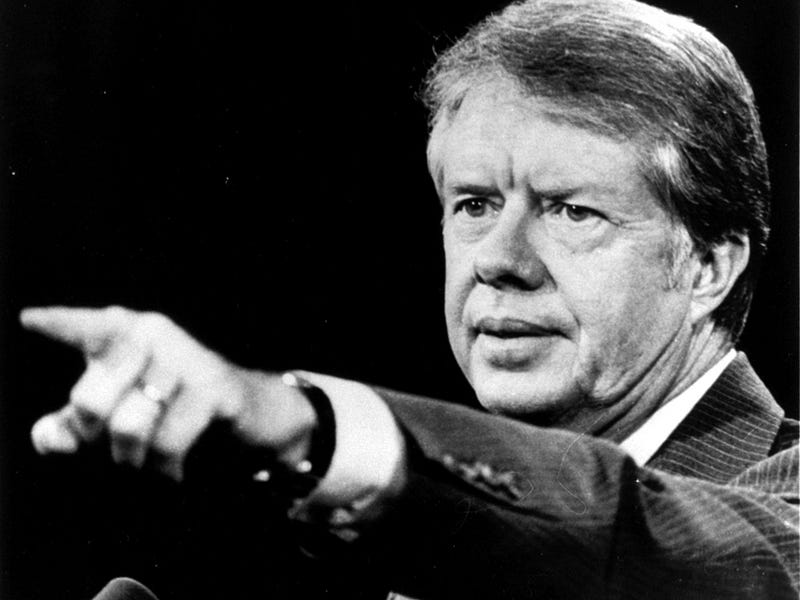
“A strong nation, like a strong person, can afford to be gentle, firm, thoughtful, and restrained. It can afford to extend a helping hand to others. It’s a weak nation, like a weak person, that must behave with bluster and boasting and rashness and other signs of insecurity.” — Jimmy Carter
As I write this, Donald Trump is two hours away from addressing the American public from the Oval Office, to make his case for the kind of behavior that Jimmy Carter identified as weak in a nation and weak in a person.
I’ve gone back and forth all day about whether or not I’ll watch Trump’s speech, or boycott it. I still don’t know what I’ll do. I often think that one of the best, really only, things I can do is be a witness. To not close my eyes.
I think, in times like this, it’s important to remember that there have been times when we were better than this, so that we can hold on to hope that we can be that again. So, I decided to spend a couple of hours with Jimmy Carter.
Here’s Jimmy Carter’s iconic speech about an American caught in a Crisis of Confidence. He addressed the nation during the 1970s recession and energy crisis. The difference between Carter and Trump is startling. You can read the transcript for this speech here.
It helps me to know that once upon a time, when I was a little girl, my country had a president who stood in front of the nation and said that every act of conservation was an act of patriotism.
It’s clear that the true problems of our Nation are much deeper — deeper than gasoline lines or energy shortages, deeper even than inflation or recession. And I realize more than ever that as President I need your help. So, I decided to reach out and listen to the voices of America.
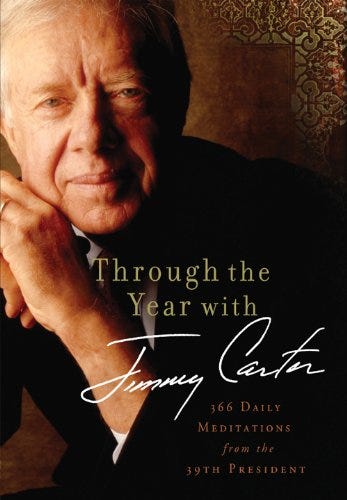
I bought this book today. A year of Jimmy Carter wisdom. I strongly feel the need to be reminded, regularly of our better angels. Especially as we move into another election season.
First — here’s a cool link where you can take a virtual tour of the Carter Library in Atlanta, GA.
Here are a few more quotes that I think are important today.
“War may sometimes be a necessary evil. But no matter how necessary, it is always an evil, never a good. We will not learn how to live together in peace by killing each other’s children.” (Nobel Lecture, Dec. 10, 2002)
“The most serious and universal problem is the growing chasm between the richest and poorest people on earth. Citizens of the ten wealthiest countries are now seventy-five times richer than those who live in the ten poorest ones, and the separation is increasing every year, not only between nations but also within them.” (From the same Novel lecture.)
We have a tendency to condemn people who are different from us, to define their sins as paramount and our own sinfulness as being insignificant. (Interview with The San Francisco Chronicle, Jan. 12, 1997)
Here’s my secret weapon for sticking with whatever your thing is.
Shaunta Grimes is a writer and teacher. She is an out-of-place Nevadan living in Northwestern PA with her husband, three superstar kids, two dementia patients, a good friend, Alfred the cat, and a yellow rescue dog named Maybelline Scout. She’s on Twitter @shauntagrimes and is the author of Viral Nation and Rebel Nation and the upcoming novel The Astonishing Maybe. She is the original Ninja Writer.


