
It’s A Climate Emergency, Nature Has Given The ‘Brief’ And Advertising Is Too Slow To Act On It
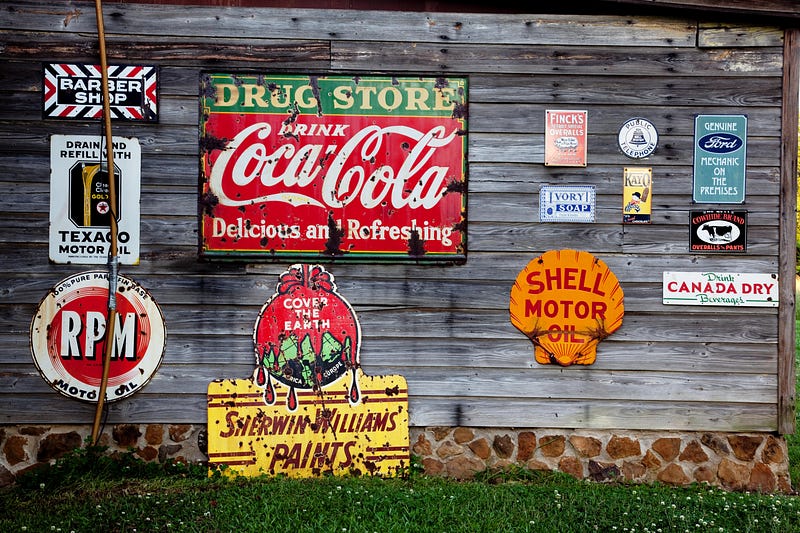
Is it possible to entice children to consume harmful levels of sugar and junk food, make some of the world’s worst polluters look generous and eco-friendly and bring to power a government with life changing repercussions for voters, and get paid handsomely and win awards and accolades for doing so at the same time? Welcome to the world of advertising.
When pushed on such issues, advertising is probably the only industry which in spite of wielding tremendous influence and power of persuasion, and claiming to be the closest to the consumer comes back with a diffident explanation, “But what can we do about it? We work for the clients.” Douglas Kysar, a Yale Law School professor specialising in climate change believes that it’s unlikely the ad firms would be held liable for misleading communications since the primary duty of those firms is to their clients, the companies, and not to the public.
Since we are in a climate and ecological emergency, we can talk about the role which advertising has played in creating some of the most iconic brands at some other time. In fact, we have talked a lot about it anyway. What we aren’t talking about enough is their complicity in prolonging the intensity of global challenges, the role their greenwashing has played in exacerbating them and how they have been getting away with no accountability.
Tim Kasser, an emeritus professor of psychology at Knox College, Illinois and co-author of the Badvertising report says, “If humanity hopes to make progress in addressing and reversing climate and ecological degradation, it would be prudent to rein in and change the practices of the advertising industry.”
It’s true that clients (brands/ companies) brief and pay ad agencies on the work they want them to do. The primary motive of a company is to sell products and services, acquire and retain consumers and increase the value for their shareholders. Beyond this, they have a responsibility towards the environment, the people who work for them and their consumers. But we have seen ample evidence of profit maximisation taking precedence over these. It’s safe to say that we can neither rely on nor wait endlessly for the companies to drive sincere changes aimed at the good of the society and the planet. Companies like Exxon and Shell did their best to hide the adverse impact of their products and practices on climate for more than 40 years. For ad agencies to continue depending upon the largesse of their clients by way of an eco-centric sponsorship here and a public service campaign there and then feeling good about being part of some noble and altruistic initiatives is not only lazy and convenient but dangerous too. Helping clients to cover up and normalise their actions and behaviour, and passing the buck to them when pushed has gone on for far too long and shouldn’t be allowed to continue any further.
We don’t need a reminder that almost all the global challenges we are facing today have a basic ethical and moral question at their very core. The role of companies like Coca-Cola, Pepsico, Unilever, Nestle, McDonald’s, Mars, Kellogg’s and owners of several household consumer brands in ecological degradation is well documented. We have similar examples from other industries as well. The pressure on companies to transform their business models in line with the urgent requirements thrown up by the realities of the climate and ecological emergency shouldn’t always be brought upon by the activists, campaign groups, scientists, universities, not-for-profit organisations and in rare cases, the governments. With some of the smartest, creative and intellectually stimulating people, which better industry than advertising to take the onus and lead the charge now? In fact, advertising of all the industries needs to carry this special responsibility on behalf of everyone, it is after all one of the most reasonable ways it can redeem itself for its inertia and reluctance to do anything meaningful on this front and driving mindless consumerism at the same time.
It may be horrifying for some readers to know that from 1930 till the mid 50s, cigarette brands like Lucky Strike, Philip Morris and Camel not only pitched their cigarettes as healthy, even to youth and pregnant mothers, but also used doctors in their advertising claiming to be preferred by the medical fraternity. When the U.S. Surgeon General’s report in 1964 linked smoking to cancer, the cigarette companies stopped using doctors in their advertising, but, having formed the Tobacco Industry Research Committee by then, decided to carry out their own investigation. Right up till 1998, these companies continued to maintain, through their research committee, that there was still a ‘controversy’ over whether cigarettes were unhealthy.
The only reason these companies managed to peddle their alternative facts for so long was because of the creative advertising and slick PR. The Journal of the American Medical Association in a study in 1991 found that 6 year old children could recognize Joe the Camel just as easily as Mickey Mouse.
We have seen advertising failing us when it comes to other global challenges as well — socio-economic problems, refugee crisis, racism and toxic nationalism, pandemics, geo-political upheavals, never-ending wars, etc. These problems are tearing apart our social fabric and threatening our very survival. Where is advertising in all this? Why is it just looking from the sidelines? What has it done to stem the tide of such dangerous developments? Isn’t it time that the industry shakes itself and gets up from this self-induced helplessness?
An industry whose very lifeline is ideas and consumer insights shouldn’t need tips from others on how it can lead on mobilising public opinions and help address these challenges. They literally do it for a living, albeit for their clients. But since it hasn’t shown the required will and commitment to take the lead, here’s what the advertising industry can get started with on a war footing:
- Lead by example — the UK advertising industry has a carbon footprint of close to one million tonnes. It will continue to face growing pressure to decarbonise its operations and thus has to choose the campaigns it works on wisely. It’s time the industry showcases the carbon in its portfolio and publishes regular updates on achieving a net zero target. Ad Net Zero is just a small step but a lot more needs to happen
- Advertising industry needs to invest in increasing the understanding and knowledge of climate change and relevant aspects of sustainability and resilience. It’s important that it trains its professionals before embarking on the mission of changing consumer behaviour
- While a single ad page in a popular magazine can represent up to seven tonnes of CO2 emissions, the online advertising is multi-dimensional in its impact. In 2018, online advertising was estimated to produce 60 Million tonnes of CO2 emissions with the share of fraudulent online advertising traffic being at 13.87 Million tonnes. With hundreds of billions of ad dollars being exchanged annually generating huge revenue, an urgent plan of action needs to be put in place to address this
- From artists to scientists to Extinction Rebellion to eco-conscious companies to an old couple trying to decipher the meaning of sustainability, advertising has to take everyone along. Everyone needs to be a stakeholder and involved from here onwards. We can’t afford to leave anyone behind now. With effective, engaging and inclusive communications at the heart of successful campaigns, advertising can work its magic and drive the much required behaviour change
- Practice diversity, inclusion, fairness and respect in the truest sense. Let the sincerity and genuineness reflect in your hiring, the salaries you pay and the promotions you give. Make it clear to your clients that you will ensure to demonstrate the same integrity in your campaigns too, regardless of any pressure from them
- Climate emergency is non-discriminatory in its impact, it will affect everyone, sooner or later. Efforts to tackle it need to be equally non-partisan, making it even more important to represent all the segments of the society equitably. The reason this needs to be done equitably and not equally is because the most vulnerable sections of our society and regions need much higher allocation of our efforts, time and resources
- Conceive and execute a global platform on the lines of Cannes but dedicated solely to raise awareness and mobilise public opinions in order to help address the global challenges. Hold it every quarter, not on the French Riviera but in some of the most vulnerable and ecologically fragile places on the earth on a rotational basis. I would have recommended holding it every 6 months or even once a year but the urgency of the situation demands that the industry gets into a huddle more frequently. Don’t throw it open as a sponsorship opportunity for corporates and partners, the aim is to create an impartial and unbiased global voice on behalf of advertising industry, free from any influence in any shape or form that will hold the powers that be to account and drive the required change at various levels on a priority basis
- Pool in money to create a worldwide budget and divide the key global challenges among yourselves with teams pulled in from all the regions of the world. Set measurable and time bound targets and mobilise companies and consumers into tangible action by running such campaigns on your own, eliminating the need to depend on the client budgets thus unshackling yourselves from their influence and demands
- Help your clients transition from fossil fuels and guide them to change their business models and practices. They need all the help with imagination and creativity, who better than advertising to provide the necessary spark? And those who refuse to see the writing on the wall and don’t change, stop working with them and issue an industry wide blacklist of such clients
- Treat fossil fuel companies at par with tobacco manufacturers. Tobacco industry used to be one of the biggest advertisers, in fact, some of the advertisements which I can recall the most belong to this category. However, a concerted effort not only erased the cigarette brand names, logos and messages from our offline and online lives, but also led to a decline in the smoking rates
- Any advertising agency which refuses to answer this clarion call and continues to engage with polluters in spite of warnings should be, very simply and plainly, sidelined from the industry till the time they change their position
While there have been some developments on this front, till the time big networks don’t sign up we won’t see the desired momentum and further action.
For how long is advertising going to continue in a state of inertia and non-accountability? For an industry which prides itself as a problem solver and an initiator of behaviour change, here is unarguably the biggest problem our planet faces and where the desired consumer behaviour means the difference between survival and extinction.
Advertising needs to stop waiting for briefs from clients when it comes to global challenges. Churning out videos telling people to use less plastic and some occasional posters about wildlife protection on behalf of clients, and giving a fraternal pat on each other’s backs thinking you have done your bit for the planet and the most vulnerable communities is nothing but a fig leaf. You may even win awards for some of these campaigns under some impressive sounding category name like ‘Social Impact’, but you know it’s not enough. It’s well past that stage and that’s why it’s being called an emergency. Nature has not only been serving us briefs for the past few decades but is also getting increasingly impatient with its reminders now. There has never been a better and a more urgent brief to work on. Subsequent reminders will be even more harsh.