
It’s A Big Mistake To Think “AI” Will Somehow “Solve” Therapy Or Mental Health Issues
We worship the ideas of Big Tech a little bit too much sometimes.
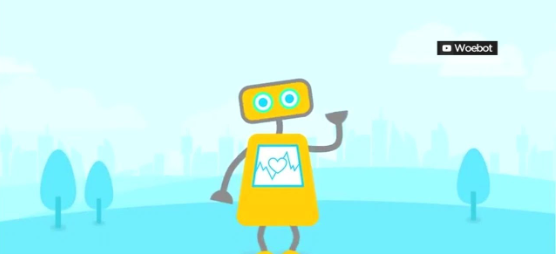
I myself used “Woebot,” which is AI-guided therapy, probably in August and September of 2023. I disliked it pretty quickly, but kept doing it for a bit. For life context, at the time I had just been laid off by one job for seemingly no reason except my new boss didn’t like me, I was two rounds of IVF down with no hope of biological fatherhood, and I was so fed up with white-collar work that I was bartending. But, because I was also generating crappy money via “tips during inflation” + “I wasn’t a very good bartender really,” I couldn’t afford a “true therapist.” Plus, my last experience with therapy at that time had been a dud:
… so, I tried WoeBot.
Again, not the best experience. WoeBot is based on what everyone who loves AI says is good: “lots of user data.” So basically, you text with it and use some emojis, and it discerns how you are feeling and walks you through some exercises and discussions. The thing is, though, most of WoeBot is essentially “closed-loop,” or “restricted” in terms of … let’s say you want to type a full paragraph or two to the AI and say, “Hey, so, this is what’s really going on…” The system won’t let you usually, and instead will mostly tell you to select 1 to 3 pre-planned responses or emojis.
It’s restrictive in that sense, but it almost needs to be, as outlined last night on 60 Minutes:
The other notable, but not revolutionary, aspect of that report is: Um, these things are not human. When you do therapy “properly,” insofar as therapy makes sense and can even be done properly, it is rooted in moments of both empathy and connection, I.e. clarity, between the patient and the provider. It is much harder to establish that with a robot texting with you and limiting your responses to 1–3 emoji choices.
I would never deny the following:
- We have some mental health problems in America and the world.
- It can be hard to find, or get to see, a provider.
- COVID made a lot of this all worse.
- It’s especially bad for adolescents.
So we do need a solution, yes. But I am not sure this is one of the buckets where “AI!” or “Tech!” is automatically the solution. This one requires a bit more of a personal touch.
Now, no one wants their deli cook working on their plumbing, or their plumber operating on their daughter. I get it. And while therapy is a specialized profession, I think sometimes we get into our feelings about exactly how specialized it is, and thus how much training someone needs. If we’re talking about a MD “shrink,” then yes, I get it. If you are going to prescribe meds to people, especially mind-altering meds, you need some advanced schooling.
I think it’s kinda ridiculous, though, that for base-level providers (social workers or general therapists, non-MD), they need two years of extra schooling and practicum hours and all that. I inherently understand why, but you could take a hefty amount of good bartenders and turn them into mental health providers in less than eight months. I know that sounds trite, but when the core skill is listening and responding and offering a few “Hey, tried this?” or “Man, I feel you!” — it’s not as trite as you think.
We need more human-to-human connection to solve these problems. Ideally, the tiers of this would be:
- Parents
- Neighborhood
- Extended family
- Friends
- Those in the schools with the kids
- Coaches and teachers
- Tech
I would say “tech” shouldn’t even enter the discussion until Slot №7 if we’re talking about mental health for adolescents. That begins with parents, and extends to some conversation about neighbors, caregivers, and those within the schools and activities your kid attends. But it’s a personal discussion about human connection, not about solving real mental challenges and stigmas with bots and beeps and boops.
Long story short: this is a complicated issue with multiple inputs (mental health in general, but especially under-resourced mental health populations like teens), but the immediate answer is not “tech.”
Your take?