
It’s 3 Years Since My Family Moved From the (Almost) Happiest Place on Earth to the U.S.
Reflections so far
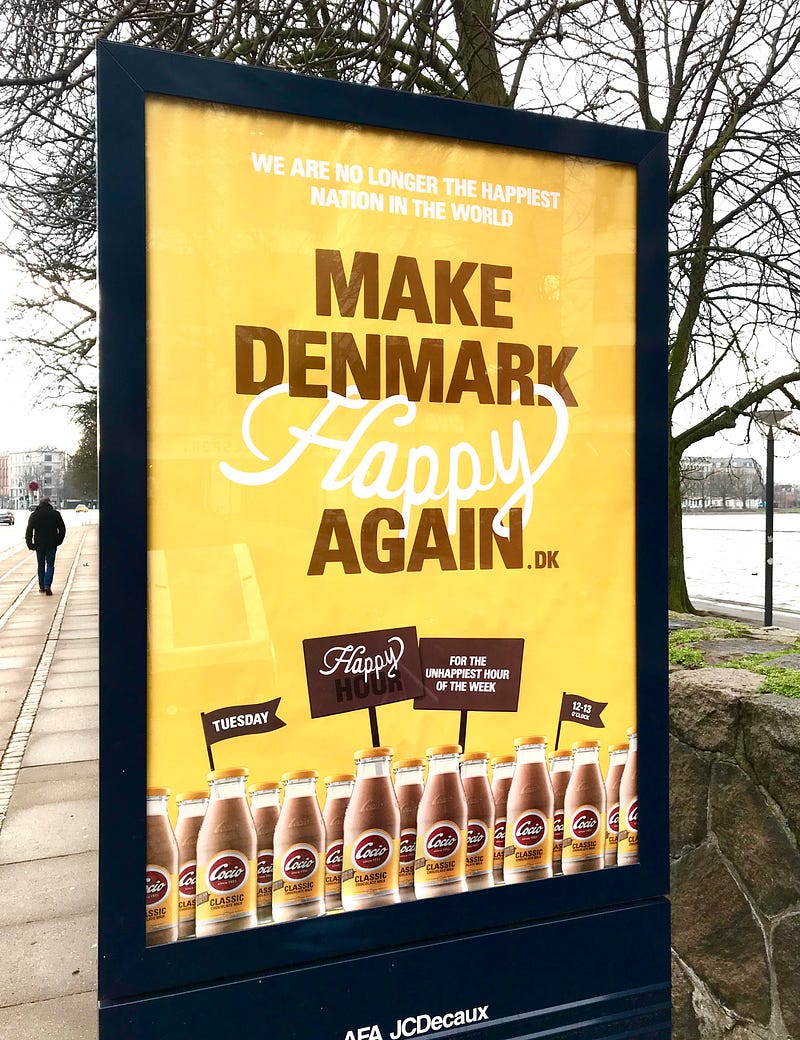
My family moved from Denmark, named the world’s second happiest country, to the U.S. exactly three years ago and three months before Covid-19 hit. Their initial excitement was quickly replaced by a culture shock, then prolonged depression (hello, lockdown), followed by a slow recovery and, finally, acceptance.
These days, I rarely hear complaints about America, especially from the kids who settled well in the city of Santa Monica, on the edge of Los Angeles. Just me and my husband left grumbling about yet more paperwork that needs to be filled out to move our lives along.
Yesterday, I was going through my old notebooks, laughing at ideas that I thought were brilliant at the time, when I stumbled upon a page inspired by my family’s many opinions on the United States after just a few months of living here.
Surprisingly, all of these remain true to this day.
So here a few things my Danish family has noticed about the United States in the past three years. And all the things I learned from them.
Aproach to education
Perhaps, the biggest difference between public education in Scandinavia and the U.S. is the focus we place on testing which results in to-the-test teaching, while educators in the Nordic countries focus on developing resilience, adaptability, and curiosity in children.
This was obvious to my step-daughters as soon as they started their schooling in America: homework, lack of recess, lack of outdoor play, test-focused teaching instead of in-depth learning, and endless testing were all new to them.
Luckily, they love their current schools in Santa Monica, but it took us moving cities and then neighborhoods to find a school district that’s “the closest to Denmark,” as they say. Surely, as it’s often the case in the States, it comes with a high housing price tag for parents.
Utilitarian architecture
While Danes are world-famous for their modern and innovative architecture and focus on quality design, the United States, as my husband pointed out, has a utilitarian approach to its buildings.
My husband calls it “it stands” design: it’s a building, it stands, it’s good enough.
“As with everything, architecture can be extreme in America: it’s either over-the-top luxury or plain ugly, with not much in the middle,” he points out.
Surely, most of his observations are based on our life in New York and then Los Angeles, but he has a point. In America, not much attention is given to constructing beauty and, certainly, not for the 99%.
One of our family’s favorite observations in the U.S. was the metal fence that surrounded my step-daughter’s elementary school in Brooklyn. But without her pointing it out, I wouldn’t have even noticed that yes, the building looked like jail.
There’s no other civilized country we can think of that would have schools that look like correctional facilities.
Lack of coziness
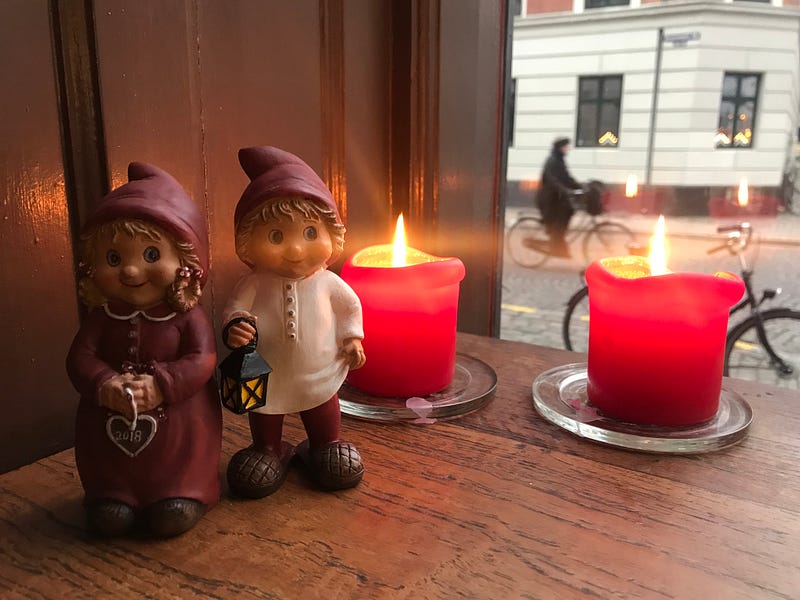
Danes are obsessed with coziness. They even have a special word for it: hygge, which is both a noun and a verb. “Let’s hygge” is a thing you can hear in our family, and all over Denmark.
But hygge goes beyond cushions and candles in your house. My co-working office had hygge: they lit candles at lunch (which everyone ate together), dimmed lights throughout the day, had textiles and cushions throughout the space, and only played soft relaxing music in the cantina (yes, we had a cantina). And this is Denmark in the nutshell.
In the States, my husband was blinded by glaring “hospital lighting” and loud party music, on top of loud conversations, everywhere he went. Forget candles in the office. We once walked out of a restaurant because the lights were so bright it was impossible to relax.
“America is the opposite of cozy,” my husband concluded many times.
To overcompensate for this, I go big on hygge in our house.
Bye bikes, hello cars
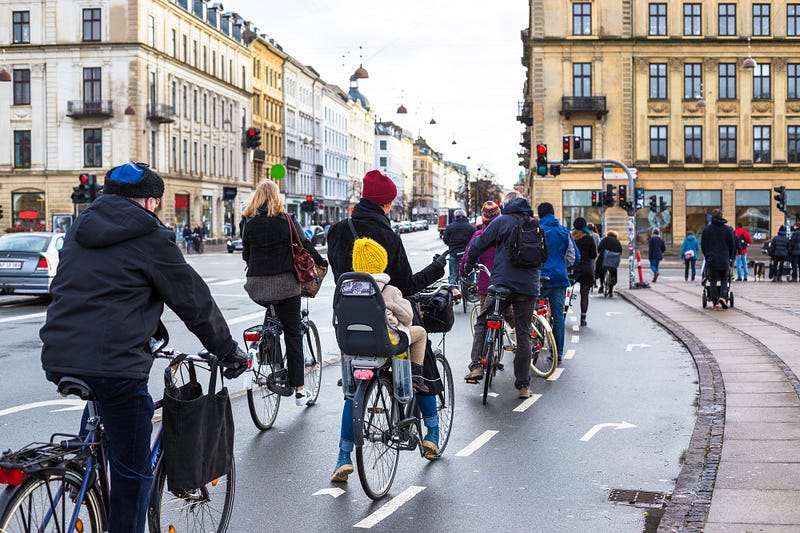
Before moving to the U.S. my family’s main mode of transportation was a bicycle. Kids biked to school from an early age, my husband biked to work, and so did everyone else in the city of Copenhagen, where 60% of people commute on two wheels. Cycling was just the norm in the country so devoted to biking infrastructure.
Moving to New York and then Los Angeles, we naively tried to keep up and bought bicycles for all of us. The youngest gave up first. Her bike sold in a day. The oldest biked to school for a whole semester before her bike got stolen (of course) and the replacement just “wasn’t quite right.” She now prefers to walk or bus. Sadly, a bit of a Dane died in her.
The truth is though, even in a bike-friendly city like Santa Monica, when biking is considered a recreational activity and not a commuting option for most, you give up and adapt.
My husband and I still take our bikes out, and we even got a new bike seat for the baby (the old one got stolen with the bike, of course). Yet we’re never fooled into thinking that this isn’t a car-dominated city and country.
Reckless inefficiency
One thing that’s mentioned the most in my husband’s comments about America is the amount of useless, repetitive paperwork we have to deal with, and the inefficiency of our bureaucratic system.
“This is the biggest and most unforgivable misuse of resources I have ever seen in my life. And it’s the regular people who suffer from this efficiency,” my husband pointed out.
“Just look at your medical system,” he continued, “It’s cold hands vs. warm hands. The time and resources go into paperwork and not into treating the patient,” he concluded.
America’s obsession with litigation is only one side of the coin. It’s our resistance to innovation and change that is to blame, my husband and I firmly believe. Perhaps, it takes living in a paperless and efficient country like Denmark to understand the difference. I, for one, was clueless before I spent a year in Copenhagen.
If that’s what it takes, a paid-for semester abroad in Scandinavia should be mandatory in America’s private universities.
But so much diversity
When the kids first started in their American schools, they were blown away by the diversity around them. They were learning about new countries every day by making other immigrant friends. After having spent their lives in one of the world’s most homogenous countries, it was an eye-opener.
There’s no place like the U.S. for meeting people from all over the world. And that’s an amazing gift to my family, as I see it.
After three years of talking to and learning from my Danish family, I realized that if only more people (or at least those in charge) took the time to learn about how other, more efficient, societies operate, we could finally bring our “greatest country of all” up to date.
Subscribe to my newsletter: Danish Secrets to a Better Life (In the U.S.)