
Italian Proverbs to Apply to Your Life
These 10 proverbs are timeless and offer amazing wisdom and insights into your life
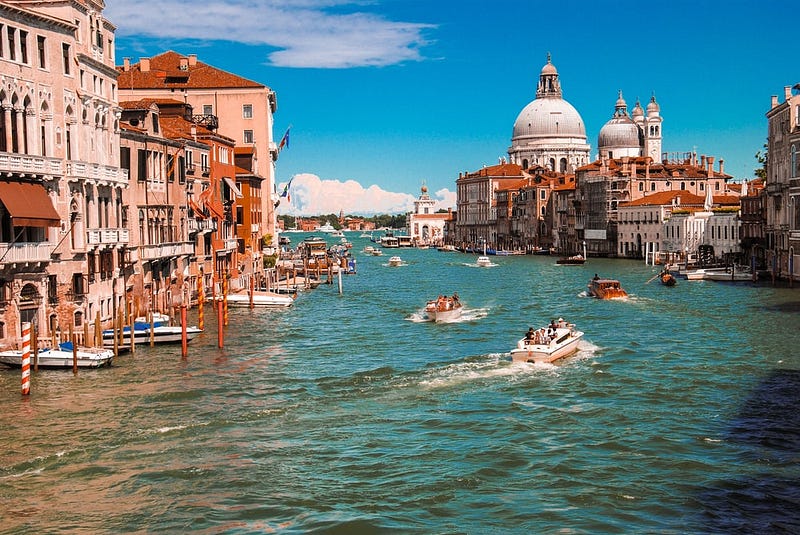
Growing up in a traditional Italian family in Australia I have come to really appreciate my heritage with its food, history, and culture.
One of the things I particularly love about being Italian is the countless proverbs that my culture has.
Just like with quotes, there is no shortage of proverbs in Italian to describe just about everything in life.
So for this piece I wanted to share with you some timeless proverbs many of them hundreds of years old yet so relevant to today’s life.
You dont need to be of Italian descent to appreciate them.
They are universal.
They add depth and flavor just like a good Italian meal.
Here they are in all their glory:
1. Per il cuore vedo la face.
Translation: “For the heart, look to the face.”
This has to be my favorite one and one which I still hear a lot from my dear mom. You can tell a lot about a person’s heart from looking at their face. Don't interpret this to mean that if someone is physically attractive they have a good heart. Someone can be physically attractive but not a nice person. I have found that the face and the eyes combined with a myriad of expressions tell you a lot about a person.
2. Il gatto che si è precipitato ha dato alla luce bambini ciechi.
Translation: “The cat that rushed gave birth to blind children.”
This is a reminder to not rush and in today’s world where people want things at the flick of a switch, it's relevant. Nothing good comes from rushing. The only exception would be when your life is in danger and you have to rush (ie: (a building is burning down). By all means, rush but in other situations learn to slow down and appreciate life. Find your inner tortoise. This is what being in the now is all about. It's hard to be in the now if you're in a rush.
3. La vita e una faccita alla finestra.
Translation: “Life is a look out the window.”
Life is a brief stay like looking out the window so you must make the most of it and live each day with purpose and meaning. Even if you live to be 100 years old my dear mom says it's still brief compared to our death. Life is finite whereas death is infinite. Are you living your life with meaning and purpose?
4. Gesù si è prima rasato la barba.
Translation: “Jesus shaved his own beard first.”
This isn't to promote selfishness, rather it's to say you must take care of yourself first before taking care of others. It's putting on the oxygen mask in the plane first. By first taking care of yourself you can take care of others better. It's the ultimate self-care.
6. Aiutati che Dio t’aiuta
Translation: “Help yourself so that God will help you”
Self-sufficiency is a great thing and opens you up to assistance from a higher power. I'm convinced the nuns and the priests invented this proverb. Its resourcefulness at its best. That is do your best to help yourself and then turn to GOD. In this day and age, Google It, Bing It, App It, Read It as I like to say to find out what you need to know. Then ask GOD for help.
7. Dopo la pioggia, arriva il sole.
Translation: “After the rain comes sunshine.”
This is a gentle reminder that after tough times comes the sunshine. Hang in there and ride the storm no matter how severe. The sky will eventually clear. Even if you don't get a rainbow, things eventually improve. Remember life is cyclical and things are always changing.
8. In bocca chiusa non entra mosca.
Translation: “No flies enter a closed mouth.”
This proverb is a reminder to refrain from speaking unwisely or without good cause. In other words, if you can’t say something nice or constructive don’t say anything at all. I will add if you have something not so nice to say ensure it's constructive feedback not destructive criticism aimed at tearing people down. I will also add Australia is the land of flies so closing your mouth is indeed a good practice!
9. Ricordi sempre il male che hai fatto e dimentichi il bene che hai fatto
Translation: “You always remember the bad you did.”
Unless you are the exception of people you always tend to remember the bad you did whether it's a lie you told, a bad action, a bad choice, etc. But you tend to forget the good you've done. This proverb is a reminder to not do bad as it will come back to haunt you. Do good wherever you can, even daily acts of kindness count even if you end up forgetting them.
10. Meglio solo che male accompagnato.
Translation: “Better alone than in bad company.”
Tony Robbins says “You become who you spend time with.” You must be vigilant of the company you keep as it shapes the trajectory of your life. It's not just people, I would also extend it to books and information you consume day in and day out and also your thoughts as they shape your life.
I hope you've enjoyed these proverbs and perhaps one or two stand out the most for you.
Just like with quotes when something speaks to you, there is a message in it for you.
It's always best to write it down and reflect on it.
To keep these timeless proverbs alive the best way is to pass them on and share them with others.
Remember proverbs in a gentle way help to make a better you through their timeless wisdom and advice.
To Creating a Better You,
Sandra Gabriella Di Francesco
Feel free to connect with me on Linkedln


