
GLIMPSES OF GERMANY
It Took Us 45 Minutes Instead Of 15…
…But this extra half hour spent ensured enough time was gained
When you are heading to a somewhat remote destination, it is always a smart idea to drive. We could have driven to the Harz Mountains as well. However, there were a couple of reasons that dissuaded us from doing the same, one owing to mentality… and the other related to reality.
While driving to a location that is not very far from home, or renting a car for that matter, will always remain an alternative, it is also a fact that both of us have, over the years, become reluctant to drive. Besides the fact that one never enjoys the journey when he/she is driving, the fatigue factor cannot be ruled out, especially if it involves driving for longer hours.
Secondly, the area around the Harz Mountains was never meant to be our final destination. On the contrary, it was our first stop on what was a fairly elaborate year-end vacation. As such, we palpably opted for public transport to reach Wernigerode, the town that served as our first base, even if it meant changing multiple trains en route.
Opting for the centrally located Wernigerode increased our possibilities to explore the area in great detail. At the same time, we had to get used to the fact that getting to some of the planned destinations would require a change of trains, and that the regional trains wouldn’t be as frequent as in bigger cities.
Despite our best efforts…
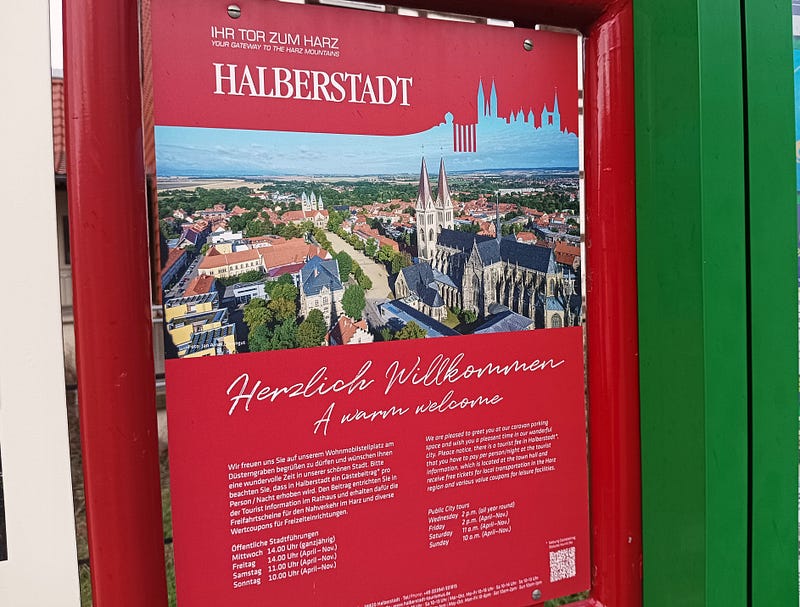
After spending a few days exploring the countryside around Wernigerode, it was time to visit a few nearby towns. First on the agenda was Halberstadt, the capital of Harz district. We were aware of the fact that this town has a lot of history and an impressive center as well, and this was our chance to have a detailed look.
It would not have taken much time to reach the destination that happened to be our first choice. In any case, we browsed a related website and zeroed in on the train, rather the time we were keen to board. The journey was meant to last for only 15 minutes, with just one stop in between.
As mentioned previously, the breakfast in our hotel was not great, so it did not take us long to leave the table and head towards the station. There was clarity on one thing. Almost all the trains in Wernigerode arrive at and depart from the same platform. As such, we were aware we did not have to get anywhere else but the first platform.
Our best efforts notwithstanding, we entered the platform only to find we could not board the train anymore. It had started moving, and with it went our hopes for an early start. Missing this intended departure translated into a wait of about 80 minutes before the next train was scheduled. At least, it seemed that way.
However, a second look at the monitor indicated something besides the next trains scheduled for the day. The bus timings, also on display, made us aware of the fact that we could catch one in five minutes. It seemed like a smarter alternative as opposed to waiting for the next train. The bus station was palpably adjacent to the Wernigerode Hauptbahnhof, and we headed straight to the bay as indicated on the monitor.
From meandering roads and sprawling fields…
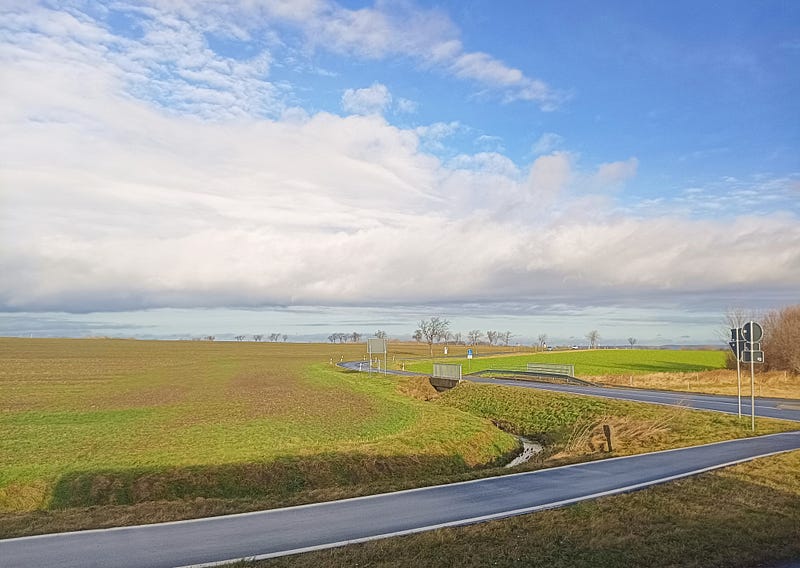
There was only one other passenger on our bus, and even he was busy on the computer. As such, we not only had the freedom to sit anywhere we wanted but also to enjoy the pristine beauty of the German countryside. Instead of sitting next to each other, both of us took separate window seats, with the iPhone for company.
It was a matter of minutes before we had left Wernigerode behind and got into the countryside. There were hectares of sprawling fields, with contrasting hues, on either side of the meandering road. With clear skies and the weather holding up well on that morning, the combination made for an idyllic setting.
A cluster of trees could be seen once in a while. Odd dilapidated structures also stuck out like a sore thumb every few kilometers. However, there was hardly a soul in sight.
… To old churches and quaint towns
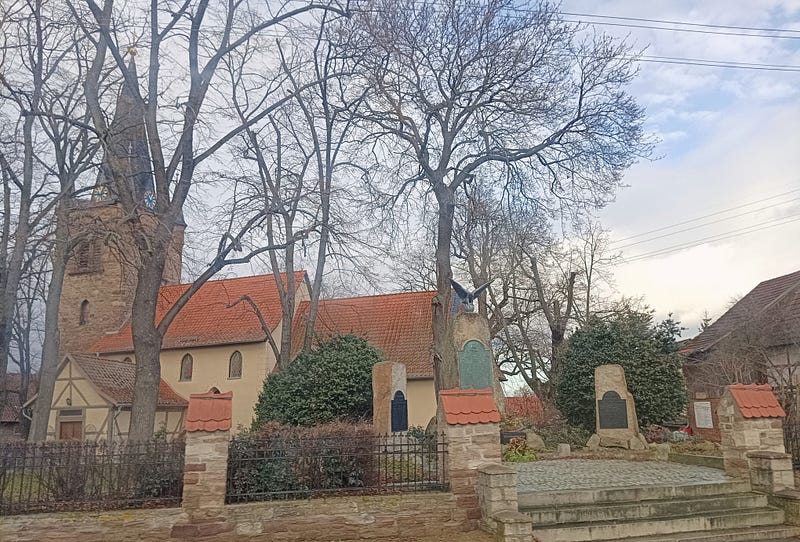
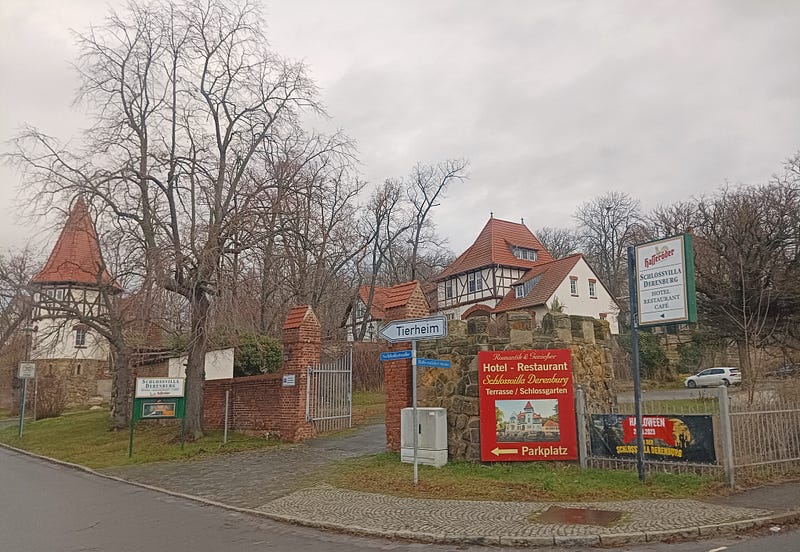
Then, there were a couple of old churches that we passed by. The church of St. Nikolai in Silstedt seemed distinctly different in terms of architecture. As the bus passed the church from different sides, it was possible for us to have a more detailed look. Later, we became aware of the fact that it was the oldest building in the village.
The bus passed through a host of district towns and villages like Minsleben Petersburg, Langenstein, Böhnshausen and Silstedt. These are places with a permanent population of a few hundred people, all of them palpably people who were born there. We also passed through Derenberg, which is a bigger town and home to a few thousand people.
All the places above aren’t exactly places one has heard of, or would otherwise visit. That being said, they somehow seem like a soothing sight to the roving eye. In fact, it was refreshing to witness glimpses of the simple life in the German countryside. It was in sharp contrast to the hustle and bustle one is used to in the big cities.
It turned out to be a masterstroke
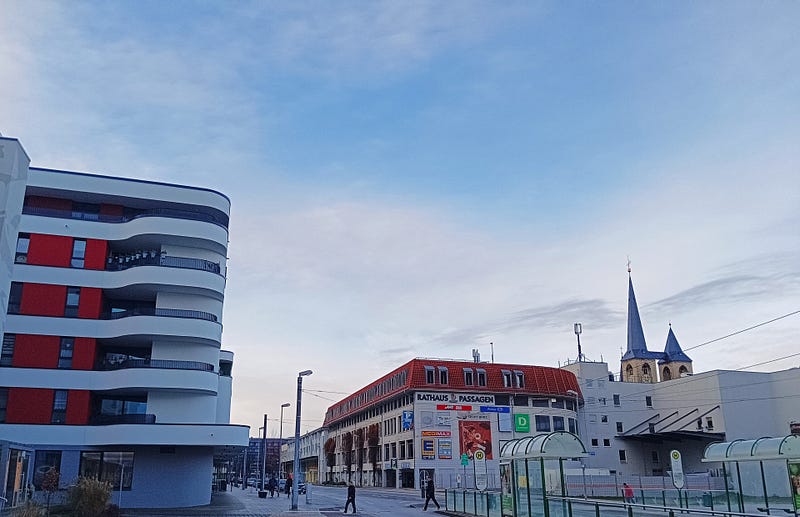
We had initially planned to get down at the final stop. However, we have never found buses to be as comfortable as trains. Having spent 45 minutes inside one, it was time to take a walk. We opted to get down close to the Halberstadt Rathaus (Town Hall). The decision turned out to be a masterstroke.
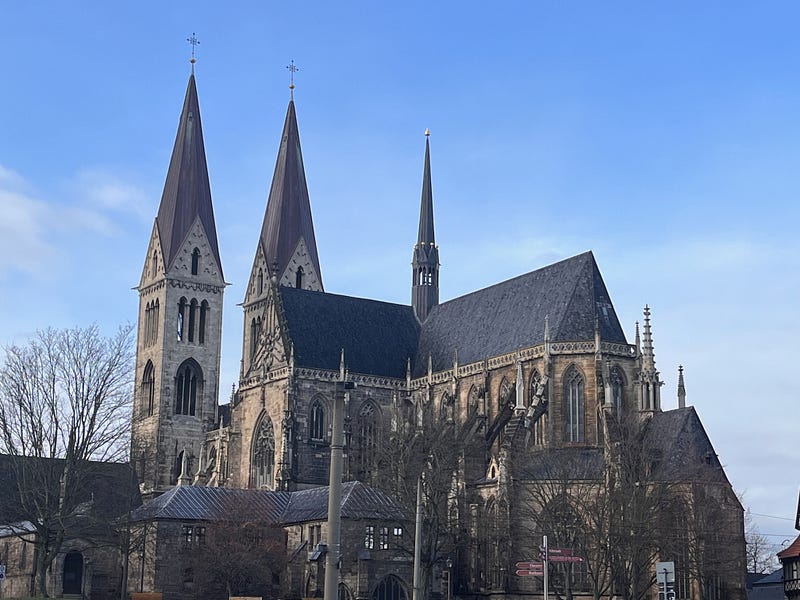
Having passed some colorful apartment blocks, market complexes and the town hall, we came across the striking St. Martini. Even as we marveled at the Gothic facade, with two towers of different sizes, we were greeted by a local. A brief conversation followed, and she told us the old town was across the road, and all the major highlights were right next to each other.
As soon as we had crossed, we came across the Gleimhaus — one of the oldest German literature museums. Probing further, we became aware that the 150-year-old building was, in fact, the home of the eminent poet and writer Johann Wilhelm Ludwig Gleim (1719–1803). It is a great place where history is beautifully showcased by using modern technology.
Right next to this museum is the Dom zu Halberstadt (Halberstadt Cathedral), the town’s centerpiece. Also known as the Church of St. Stephanus & St. Sixtus, the structure is built on a small hill and feels like a fortress. It is by far the highlight of this quaint town. We spent considerable time wandering in and around this imposing Gothic structure, appreciating the architecture and the intricate details.
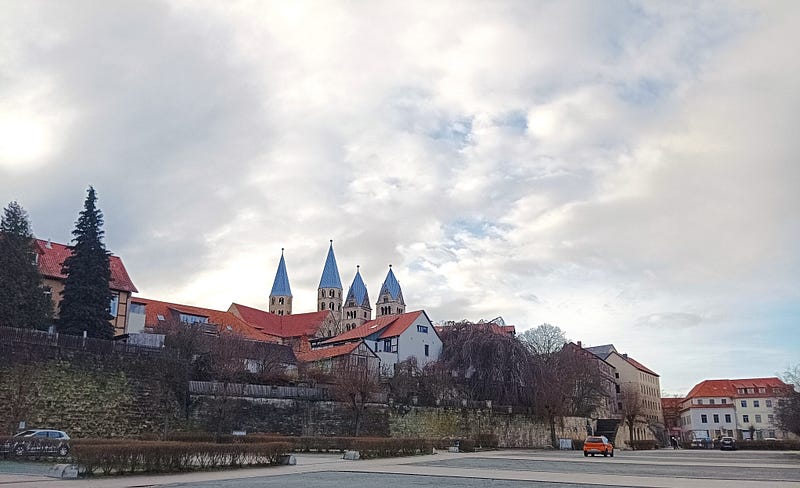
The Domschatz (Cathedral Treasury) is situated in a new building next to the cathedral. We found the entire complex stunningly beautiful, and something that merited a detailed look. Having come out to the grounds, we could see another iconic structure on the other side. The Liebfrauenkirche (Church of Our Lady) is a Romanesque masterpiece, with four identical towers, that is over a thousand years old.
The longest piece of music in the world
While we admired the Liebfrauenkirche from a distance, we didn’t get any closer. The plan was to explore the town more and get to see the diverse architecture, as opposed to spending more time in every significant structure. As such, we moved further, in search of something that was designed to be the longest piece of music in the world. It took some effort.
We asked three people for directions, got confused and even lost our way on one occasion. However, we finally managed to reach St. Buchardi Kirche, an ancient Cistercian monastery located just on the outskirts of the Halberstadt center.
It was at this old church premises that in 2001 began a performance of an adaptation of American composer John Cage’s musical piece As Slow as Possible (originally written in 1985), something that is scheduled to end in the year 2640. Confused? Or are you keen to learn about the story behind the project? Well, we looked for the details and learned quite a few interesting things in the bargain.
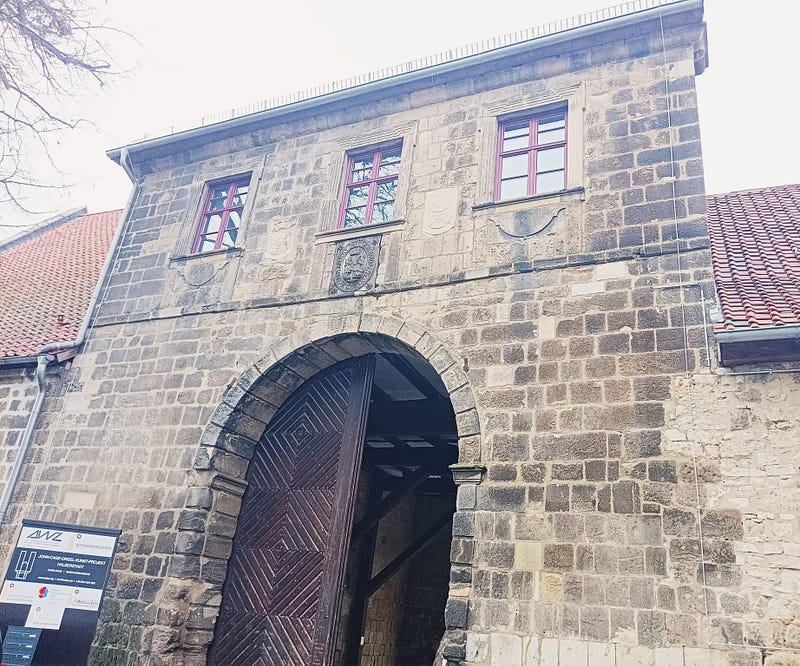
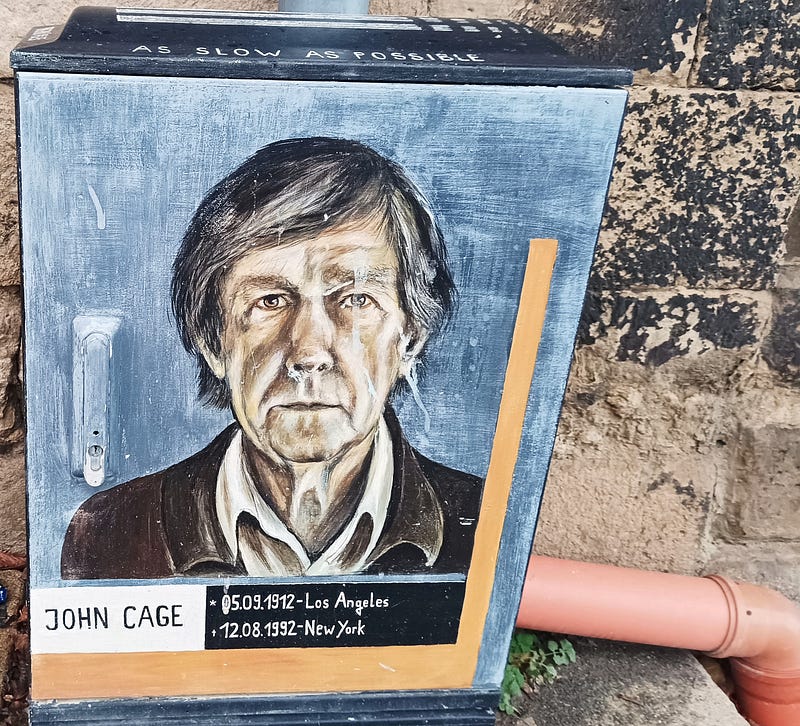
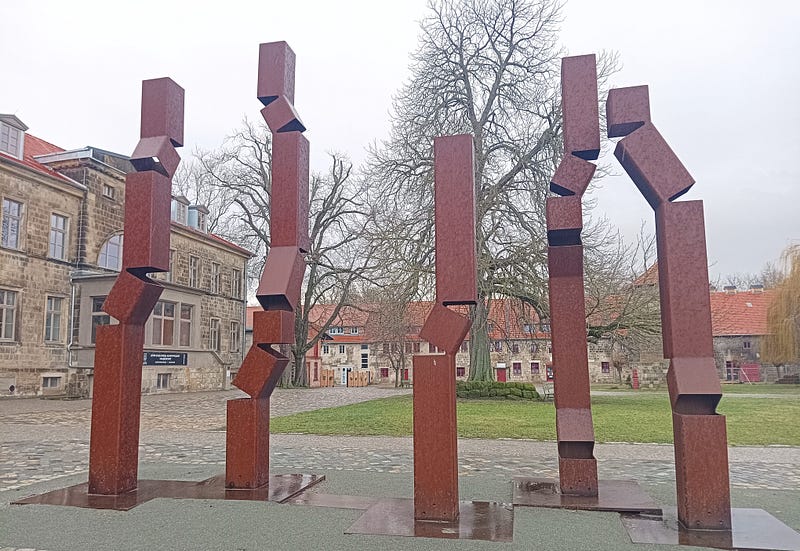
In fact, we found the idea of a music piece that takes 639 years to complete quite fascinating. To elaborate a little, there was an organ, apparently the first with a modern keyboard, that was installed in the Dom zu Halberstadt in 1361. In the year 2000, the time lapsed following the installation (639 years), was chosen as the length of Cage’s piece. As such, what visitors keep hearing is a single note.
Interesting. Isn’t it? We had never imagined a sleepy town like Halberstadt could boast of a concept as interesting as this. But this is what traveling is, after all. It teaches you something that you can never learn in an educational institute. While we will not live to know the eventuality of the John-Cage-Orgel-Kunst-Projekt (John Cage Organ Art Project), we at least got the opportunity to see it for ourselves and understand it to an extent.
Things had fallen into place
Having spent some time in the St. Buchardi Kirche premises, we made our way back to the Rathaus area, boarded a bus and headed to the railway station. It took some time before the bus reached its final destination, and even longer before the train meant for Wernigerode arrived at the platform.
Even as we made ourselves comfortable in what was surprisingly a less crowded regional train compartment, we could not help but discuss the events that had happened during the course of the day.
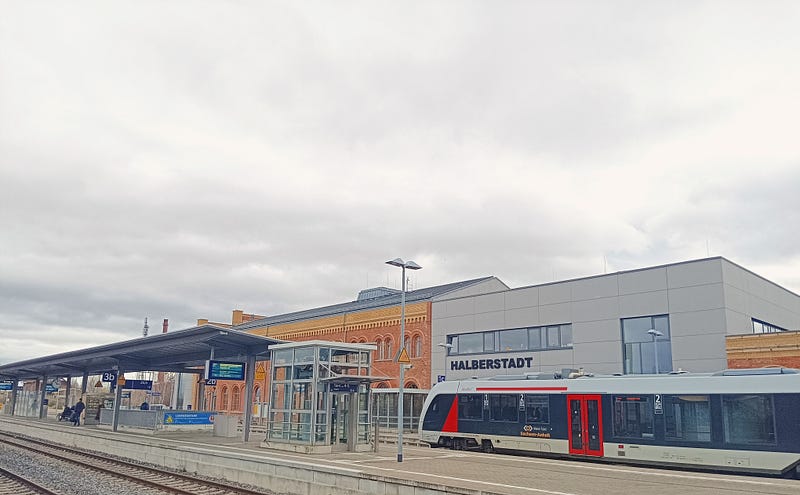
Our day had begun with a missed train, alright, but it turned out to be a blessing in disguise. The alternative option took more time, but it was a memorable journey through the countryside, giving us the opportunity to soak in the idyllic landscape. Most importantly, our decision to get down early was among the better choices we have made.
During the bus ride from the Rathaus area to the Halberstadt Hauptbahnhof we were made to realize that had we not missed the train in the morning or, for that matter, insisted on alighting at the final bus stop, it would have taken us more time to reach the center. Fortunately, we got to a stop that served our purpose the best.
It ensured we had ample time to experience both the Dom zu Halberstadt and the John-Cage-Orgel-Kunst-Projekt, and learn more about what we have since come to believe are the two must-see alternatives for anyone heading to this small town in Saxony-Anhalt.


