
It Takes A Whole Village And A Whole Lot Of Belief
Especially if you have Down Syndrome
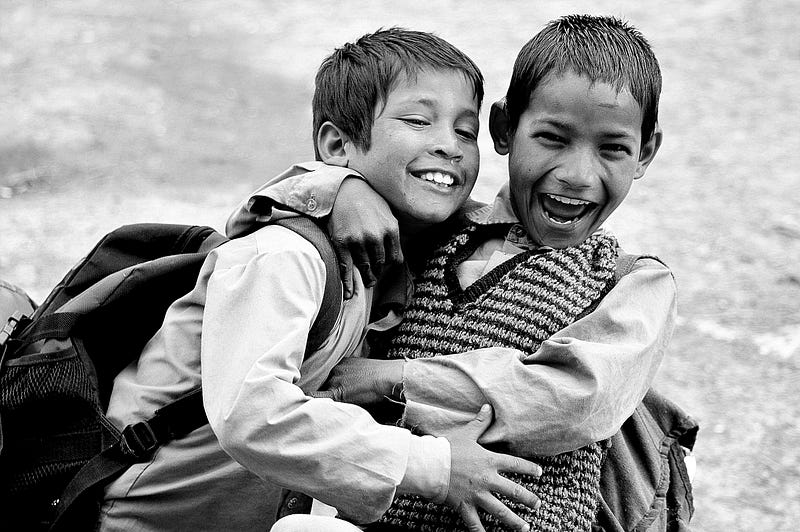
Isn’t it interesting when a new child is born, and all is well, everyone pours out their love and admiration for this miracle of life, for it is, indeed, a miracle.
We hear comments such as:
Your child has beautiful blue eyes
It’s a ‘feel-good’ statement, and we as parents, stand proudly, basking in the sunshine.
Your child has lovely, slender fingers. Perhaps he will be a pianist.
A statement that will make you look for all the signs, rhythm and movement, and once again, it’s yet another ‘feel-good’.
But what about when things don’t quite go to plan?
Your child has Down Syndrome.
Not so good, eh?
One simple sentence that evokes incredible fear in the hearts of many new parents. Down Syndrome, and suddenly, there is pain.
There is pain because we are instantly scared about what the future holds.
How on earth will our child fit in?
We had dreams for our child, and now they’re dashed.
Our dreams were about perfection.
A child with Down Syndrome was never part of that dream.
But then our child came into the world and we were in love.
Still, we worried.
Our minds were alive with worry.
Will people be kind?
Will they judge?
Will they accept?
Will they share their friendship with our child?
More importantly, will they appreciate this precious child, with all her uniqueness, her personality, her sense of fun?
Will they rejoice when she reaches her milestones?
Or will my Down Syndrome child be little more than an embarrassment?
‘Having Down syndrome is like being born normal. I am just like you and you are just like me. We are all born in different ways, that is the way I can describe it. I have a normal life.’
Down Syndrome is not a death sentence. (Read Julia’s inspirational story here), but in giving a fair go to people with Down Syndrome, a whole village must swing into action.
- a loving, supportive family
- health authorities
- educational groups
- social workers
- carers
- friends
- employers
Well now! Imagine that. I just realized that these marry with the ‘villagers’ who help support all of us, those without Down Syndrome, and allow us to reach fruition!
When I was studying Special Needs education, I came across a young couple with Down Syndrome. They were married, with a child, a perfectly normal child, one that was clearly loved, and thriving.
Their being parents wasn’t in the grand plan of the couple’s respective parents. They were happy for their children to be married, but not for them to be having babies.
But the deed was done, and Clare and Andrew, with the help of their ‘village’, were doing their level best to parent their child.
From my perspective they were doing a darned good job. The child was well cared for, clean, happy, and reaching her milestones. There was a lot of love and fun in their little family.
Undoubtedly there would be issues to address as the child grew older:
- help with schooling
- and homework
- attitude of students
- and parents
- counseling
But the supportive parents were ready for that. They had a plan for the future, and it was all about positivity.
Fortunately, attitudes to those with Down Syndrome have changed, and continue to change, so that people like Claire and Andrew can take their place proudly in society.
But in times gone by, things would have been so different
Places would have been found for Down Syndrome children, a settle-in-and-forget approach, in a ‘home’, assigned to children, there to languish…the price to pay just for having an extra chromosome!
The understanding was that these people were unteachable!
Some countries even took the approach of sterilizing those same children.
Parents were told not to expect much. There was little chance of their reaching significant milestones like, crawling, walking, being toilet-trained, or speaking.
And the very idea that they might develop personalities of their own, or be role models for others, was not even up for consideration.And yet: here, here, and here, we have a model, a gymnast, and an advocate, (once an actor).
Who could not be impressed by these inspirational success stories?
Better to institutionalize them…that’s how attitudes once were, and yet, today these superstars are thumbing their noses at authorities who got it wrong.
Let’s have a look at how things panned out for two people born many years apart
‘Fifty-five years and an awful lot of unhappiness separates the births of Gordon and Grace. When Gordon arrived in the world, at home in Willesden, London, in March 1951, no one said a word. “I knew at once,” recalls his mother Jessica, who had three children already and a certificate in childcare to boot. “There was something about his eyes; something in his face. It was quite plain to see. Of course, no one mentioned it.” It was six weeks before her baby son had his first official check-up: “The doctor looked at me. She said, ‘Not to worry, there are plenty of places for children like him.’ And she said, ‘In any case, they don’t live long.’”
‘When Grace was born, also at home, in a quiet west London suburb in May last year, there was “never any question, not for a moment, of us not keeping her”, says her mother, Jane. “I was in shock at first; I couldn’t imagine what our life was going to be like. It was hard. But it was a matter of weeks before I realised she was really just like her sister. Now she has home visits, health visits, physiotherapy, speech therapy. She’s making huge strides. She’ll go to the local playgroup and primary, we hope, and a mainstream secondary school. She’ll have friends. We have no reason not to think that she’ll have a long and happy life.’
Thank goodness we now know better. We know these children, like any other children, will embark on a life-long learning journey.
Like all of us they will experience highs and lows, successes and failures, sad times and happy times, and our role is to navigate them successfully through them.
And they might fall in love
Tom and Maryanne Pilling met and fell in love some twenty-five years ago. Not having money to buy an engagement ring, Tom intended to buy a plastic one from a vending machine.
His mother, on learning about the ring, took him to a jewelry store where he bought a much more special one.
But was it? A ring, is a ring, is a ring…in this case a commitment between the two, and a recognition of their love, a love that has lasted so long.
Their advice? Be honest, and spend as much time together as is possible. There is never a hidden agenda.
Both sets of parents have been right behind their children, supported them, and consequently allowed them to live and love together, in a simple happiness many of us might envy.
They were married for twenty-five years, but in recent times Tom succumbed to Covid-19, and died.
They want to work
Like all adults, people with Down Syndrome want, and to enjoy a measure of independence.
They also want to be skilled, and through that, are developing confidence.
They are eminently teachable, they can follow simple, clear instructions, do a great job, and help the rest of us better understand them as people.
Some years ago I was in a supermarket on holidays and I was unable to locate a particular item. The store was largely run by Down Syndrome staff, stacking shelves, and picking up abandoned trolleys.
I asked one of them if he could help me.
He stopped and thought for a minute, then said, “I really don’t know if we have any. BUT, I will find out.”
I waited for a while and then did the rest of my shopping, and when I was about to pay, he arrived breathlessly to say he’d found it. I will never forget the look of joy on his face.
He will never know the effect that this one encounter meant to me.
I can think of so many Down Syndrome people who hold down jobs, one is a barista, one works in child care, and another in McDonald’s. All of them approach their positions with smiles…ALWAYS.
But we should not believe that this is as far as they can achieve.
Julia Hales, for example, is a successful actress and activist, who also has Down Syndrome. She has much to say about achieving goals and not being defined by a diagnosis.
“I want everyone to know that people with Down syndrome are able to live in the world and achieve their goals. I want their voices to be heard and the world to be a better place for them.”
She feels strongly too, that if there is an acting role about someone with a disability (Forrest Gump, for example), then why shouldn’t someone with a disability be chosen for the role?
How differently lives have turned out for people with Down Syndrome, because attitudes have changed, and are still changing, but we need to be constantly diligent to ensure that this will continue to improve.
We are also called upon to recognize, and support latent talent, to arrest poor attitudes towards disability, so that theirs will be a much fairer world, not just for them, but also for those who lend support.
Remember: it takes a whole village to get all of us from A to B, even if we don’t have Down Syndrome! So why not act as true villagers, and give Down Syndrome people the opportunities they so richly deserve.