
PERSONAL ESSAY
It Isn’t Easy to Keep Wood Apples Safe From Elephants
Same goes for your office colleagues
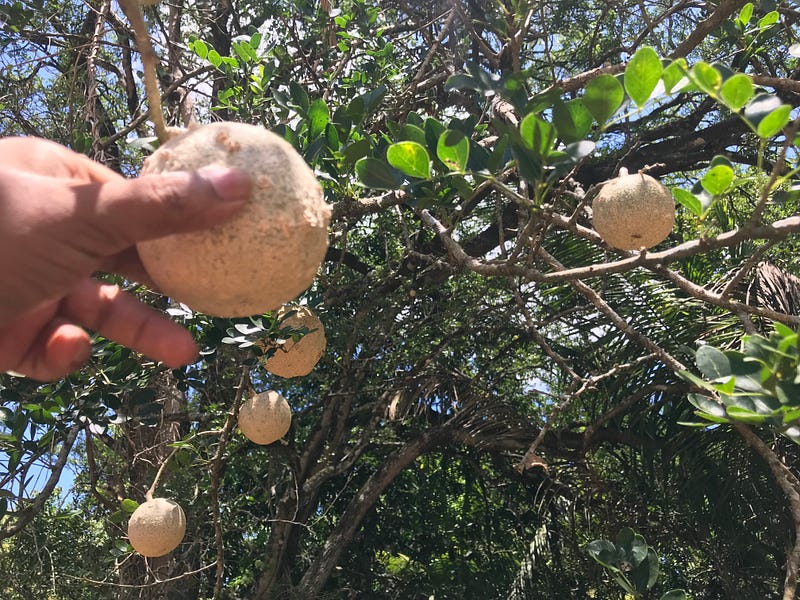
For our site work, we needed an empty piece of land to stockpile our materials. Therefore, we searched for some vacant land close to our site area. We learned about such a piece of land, and I also joined the visitation, even though it was not within my work scope.
While others were busy examining the nature of the land and its compatibility with environmental guidelines, I took the liberty to walk around.
I must say, it was indeed fortunate because I witnessed a lovely sight: a tree laden with wood apples. The tree wasn’t a small one, but its branches were bent towards the ground, allowing me to easily reach the wood apples.
I love wood apples. Their creamy brown texture is a sight for the eyes, and they have a sweet, savory taste. You can consume them directly as a fruit, or you can make a delightful juice from these fruits.
Imagine receiving a bunch of raw fruits — there’s no need to wait for them to ripen. You can enjoy them by grating the wood apples and adding a bit of salt and ground bird’s eye chilies. Just writing about it is mouthwatering for anyone who has ever experienced that taste.
I needed to have some wood apples.
I searched for the property owner. There was a nearby house, and I approached it. A lovely elderly woman emerged from the house.
I asked her, “Mother, could I have a wood apple?” In our culture, it is totally acceptable to address any older woman as “mother.”
She responded, “No need to ask, son. You can pick as many fruits as you wish, but they’re not ripe yet. Please wait here for a moment.” She then disappeared into the house.
A moment later, she returned with a handful of wood apples. “Take these fruits instead; they fell down yesterday. You can eat them tomorrow when they will have ripened perfectly.”
I thanked her for her kind gesture. A large quantity of wood apples, six of them, exceeded my expectations.
“You could have had more, but the elephants don’t allow it. They drank most of them,” the older lady remarked.
“Wait, are elephants passing by here?” I asked.
“Yes, if you want to see elephants, come in the evening. There is a herd close by, and they visit this area often, mainly to drink wood apples.” the older lady said.
Now, don’t imagine that an elephant is sipping wood apple juice with a long straw — it’s just a local expression for swallowing.
In reality, it’s quite an interesting phenomenon. Elephants have a fondness for wood apples, but they don’t chew them when eating. Instead, they swallow the entire fruit.
The interesting part is that the next day, they expel the fruits, which appear unchanged. However, if you crack one open, you’ll find that the fruit is empty, with only the shell remaining.
The enzymes in the elephant’s stomach digest only the flesh, leaving the hard shell intact. This peculiar behavior has been termed ‘drinking the wood apple fruit’ by our elders.
We have a specific idiom in our culture related to this whole thing, ‘Like a wood apple swallowed (or drank) by an elephant.’ It means a person who appears perfect on the outside but is empty on the inside.
When I was returning to our vehicle, the others had already returned and were waiting for me. Upon seeing the wood apples, they welcomed me with open arms.
I wanted to take some photographs of these ripe fruits, especially of cracking them open. I placed them in the kitchen and continued with my usual works. About half an hour later, our cook brought a tray filled with glasses of wood apple juice, and handed me one.
He assumed that they were meant for making juice and used all of them. I was left with just one question, so I asked him whether they were ripened enough?
Our cook replied, “Not perfectly, but they are matured enough, so I proceeded anyway. However, I added a bit of extra sugar, just in case they weren’t sweet enough. I placed a bottle filled with the remaining juice in the fridge. You can enjoy it later.”
I replied, “Thank you.” What else could I say?
Special thanks to our beloved editorial team at The Narrative Arc. And Thank you very much Conni Walkup Hull for your guidence.