
Hip Hop 50th Anniversary
It Is About Time We Give Uncle Luke His Flowers
This rapper’s fight at the U.S. Supreme Court created generations of new millionaires and billionaires.
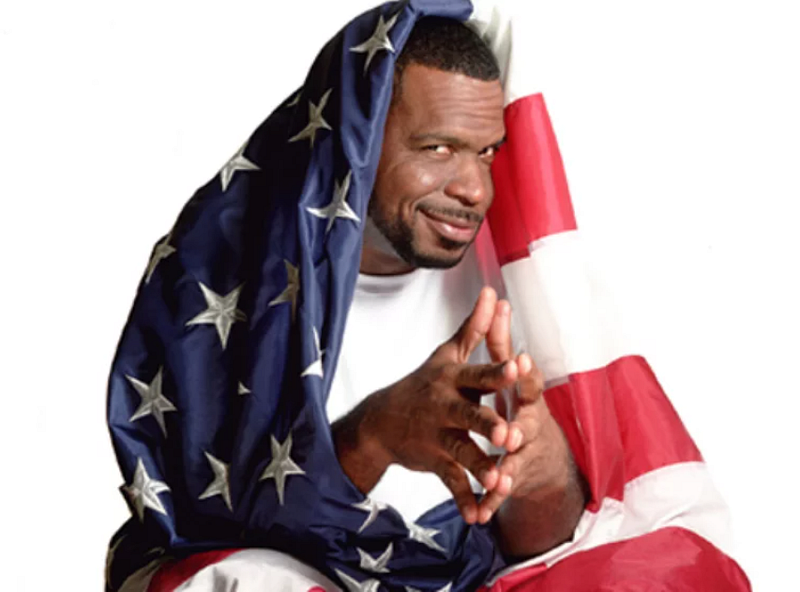
Uncle Luke has been complaining a lot lately.
He said he feels left out of features, tributes, and concerts in celebration of Hip Hop’s 50th anniversary.
He is right. He has been left out.
And I am giving him his flowers right now.
Doo doo brown/doo doo brown doo doo brown/doo doo brown. — Luther “Luke” Campbell, “I Wanna Rock”
Let’s start with the obvious — Luke Campbell will never be known for his lyrical prowess.
He may never be known as a great artist, though few will argue he is a great if not crude, entertainer.
His music sucks. Not completely, just mostly. And that’s fundamentally why he is not feeling the love he deserves.
But Luke Campbell does indeed deserve some honors this year.
Follow me for a moment.
I recently received a late-night e-mail from the Biden Administration. The e-mail informed me my student loans were forgiven. I wanted to shout my joy out loud, but it was late, and I didn’t want to wake up everyone in my household.
So, I reached for my headphones to find some shouting music — and I wasn’t thinking Gospel music.
I wanted the most raucous, nut-clutching music I could find to match the party in my soul.
I didn’t even want to hear good music. I just wanted to hear the most primal, raw, and inappropriate version of hell yeah that I could find.
Take it off/take it off Take it off/take it off” — Luther “Luke” Campbell

And, with all respect to Sexyy Red’s current antics, no rapper on earth has risen to the levels of inappropriateness of Luke and his Get Live Crew.
Luke was so inappropriate and so obscene that he was fought and sued by an entire generation of people all the way up to the U.S. Supreme Court.
More on that in a minute.
I Wanna Rock Right Now
Luke’s most popular song, “I Wanna Rock,” was a party in stereo. It was the party you snuck out of the house to attend.
The song is rooted in a simple interpolation of the first words spoken on Rob Bass & DJ E-Z Rock’s party song, “It Takes Two.”
Ironically, Rob Bass’ song lyrics were clean: “I don’t smoke budda/don’t smoke sess.” The one curse word featured in “It Takes Two” was censored by the artist himself. Rap fans could dance to this song with their parents and grandparents without offending them.
Luke’s version of the song was fun but certainly not clean. The track was tight, with a distinctive Miami bass line with a snare kick peppered throughout the song. Debaucherous lyrics were woven between ancestral call-and-response chants from the Get Live Crew.
Luke’s other popular songs were catchy and still inspire nostalgia for some people.
Luke does not deserve flowers for the quality of his music. He deserves flowers for the fact that his music existed at all.
The Book of Luke
America has a short memory.
We forgot that Luther “Luke” Campbell’s case at the U.S. Supreme Court was the most significant contemporary stress test of the 1st Amendment of the 20th Century.
His case determined who could control the content of Hip Hop. Thus, his case affected who would control our voices — the very kernel of the culture.
To be clear, no one supported Luke because his music was precious. In fact, many people who supported him were also repulsed by his music.
We supported Luke because he had a right to be as nasty as he wanted to be. He was a showman and a rags-to-riches businessman with an independent music label selling millions of records.
Uncle Luke preceded Master P.
The system wasn’t coming for his music; they were coming for him. For his money, for his agency, for his identity.
Indeed, they were coming for all of us.
America and Hip Hop were in transition in 1992.
Black and Brown America barely survived Reagan and his so-called war on drugs. The nation was reeling from riots triggered by the Rodney King beating by Los Angeles police. Spike Lee’s Malcolm X, featuring Denzel Washington, was in theatres. Bill Clinton was elected as President.
Our parents and national leaders began hearing N.W.A., Public Enemy, and Geto Boys on the boomboxes in our bedrooms and street corners.
Rappers started showing up on Phil Donahue in real conversations about race and politics.
This wasn’t the fun party music our parents remembered from the '70s and '80s. Hip Hop was turning into something else.
Rebellious anti-police music scared some adults, but they understood the struggle from which it was born. Gangster rap was harder for them to stomach, but they saw or heard some version of it in the blaxploitation films of their era.
But, the audio porn of Luther Campbell was too much for the adults to bear.
They pushed back hard. The pushback had no race, color, or creed.
We found ourselves in a new generational battle about freedom of speech on the nation’s biggest stage. And, as fate would have it, Uncle Luke was our primary delegate to the assembly.
Not the East Coast’s intellectual, Chuck D. Not the West Coast’s audacious pitchman, Eazy-E.
An unrepentant heathen named Luke Campbell would be the warrior to defend our rights and our beloved, vulnerable Hip Hop.
Our elders threw the book at him. Even the U.S. Constitution.
Luke took his fight for his rights to make sexually explicit music to the U.S. Supreme Court and won. His case created a new legal precedent and interpretation of obscenity.
Equally significant, he tested and won his argument regarding federal copyright law, likely preserving a path for generations of new millionaires and eventual billionaires. Or to keep people out of jail.
Hey Young Thug. Hey Sexyy Red.
I was 18 years old when Luke argued his Supreme Court case. It was the very first time I saw Hip Hop beat the system.
Make no mistake about it — Luther “Luke” Campbell stands alone in Hip Hop history.
Conclusion
In hindsight, Luke’s “I Wanna Rock” was the most appropriate song for me to play when I received that student loan forgiveness letter.
Luke’s music should remind us that not everything and everyone is set up against us. We are not destined to be swallowed up by fate.
We can engage the system and win.
For this reason alone, we should celebrate Luke Campbell. He does indeed deserve his flowers.
Luke’s success should inspire all of us to make systems work for current and future generations. We must participate in the process — electing leaders that drive policies like student loan forgiveness and supporting artistic rights to free speech, among other actions.
We must keep it going.
Don’t stop. Get it!
Get it?
Honestly,
Ed.
I am a poet, essayist, and civic strategist celebrating 50 years of Hip Hop in Birmingham, Alabama. Get to know me better here.