
It is a medium which lends itself to manipulation.
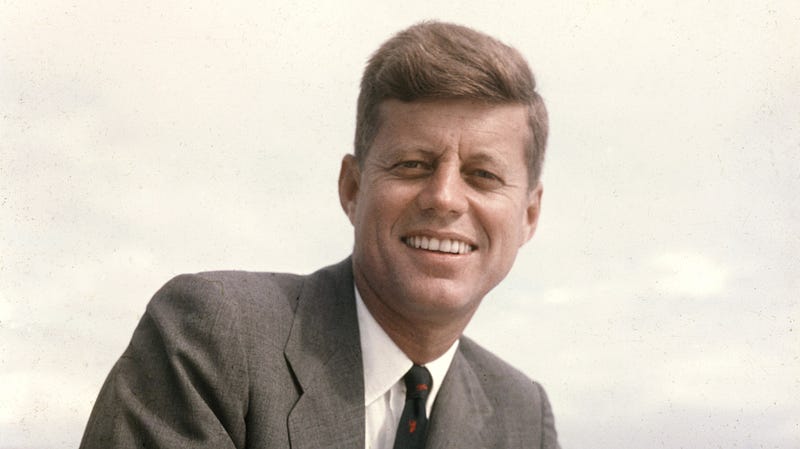
John F. Kennedy on television. (The Commonplace Book Project)
The Commonplace Project is a daily post based on Ray Bradbury’s advice to aspiring writers: read a poem, a short story, and an essay every day for 1000 days. These posts start with a quote and go wherever the rabbit hole leads. Follow The 1000 Day MFA so you don’t miss a thing.
“But political success on television is not, unfortunately, limited only to those who deserve it. It is a medium which lends itself to manipulation, exploitation and gimmicks. It can be abused by demagogs, by appeals to emotion and prejudice and ignorance.” — John F. Kennedy, in Reader’s Digest magazine, as quoted in The Atlantic.
On January 25, 1961 — Exactly 57 years ago, today — John F. Kennedy gave the first ever televised presidential speech. It was five days after his inaugeration.
I wonder if he could have even imagined a world where the US President not only could give a live television conference at any moment — but could wake up in the middle of the night and issue a Tweet Storm, speaking directly to the American public without any filters or middle men of any kind.
President Kennedy was born in 1917. He was part of the GI (Government Issue) or Greatest Generation. Those Americans who came of age during the Great Depression, which also happened to be a time of huge technological advance. (Witness a Greatest Generation president giving the first televised conference.)
This week Pete Buttigieg, born in 1982, became the first Millennial to announce a presidential candidacy. Millennials have a lot in common with JFK’s generation — they also came of age during a time of incredible technological advance and the worst US economy since the Great Depression.
In his first address to congress, five days after JFK’s death, Lyndon Johnson said, “No memorial oration or eulogy could more eloquently honor President Kennedy’s memory than the earliest possible passage of the civil rights bill for which he fought so long.”
Kennedy’s Civil Rights bill was passed posthumously.
Television played a role in the Civil Rights Movement. Including JFK’s June 11, 1963 televised Civil Rights Address, given just a few months before his death.
One hundred years of delay have passed since President Lincoln freed the slaves, yet their heirs, their grandsons, are not fully free. They are not yet freed from the bonds of injustice. They are not yet freed from social and economic oppression. And this Nation, for all its hopes and all its boasts, will not be fully free until all its citizens are free.
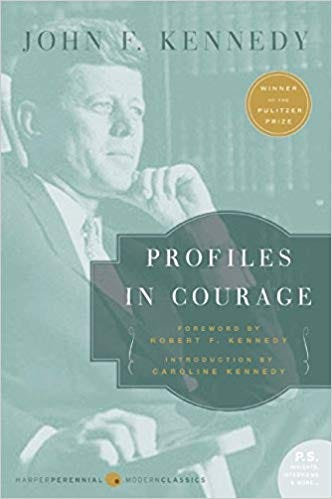
I’ve added JFK’s Profiles in Courage to my reading list. I need the reminder that what’s happening in Washington now isn’t how it’s always been. Kennedy was a Jr. Senator from Massachusetts when he won the Pulitzer Prize for this book.
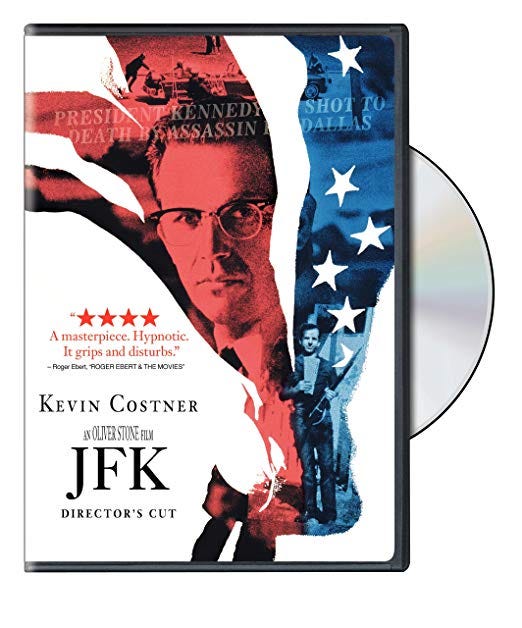
I wanted to watch the 1991 biopic JFK (starring Kevin Costner) as I wrote this post, but I couldn’t find it streaming anywhere.
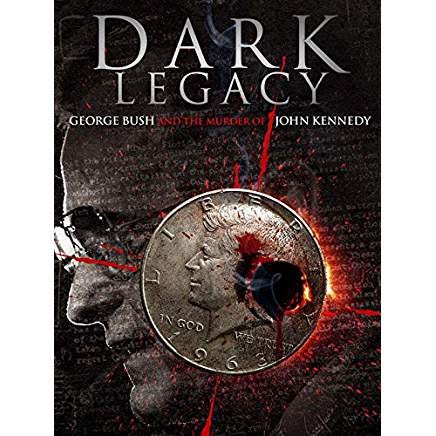
I ended up watching a documentary called Dark Legacy instead, which was way more conspiracy theory-ish and involved George H.W. Bush. I found it chilling and very interesting. One of the most interesting parts, for me, was not the theory it posits, but the stark difference between that president and our current POTUS.
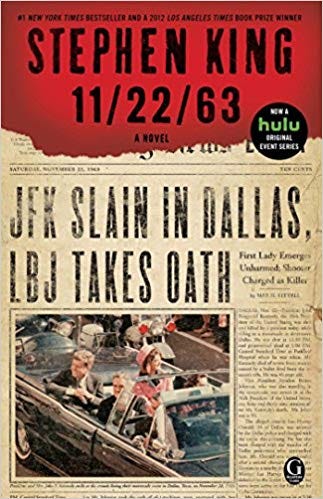
If you’re more into fiction, Stephen King’s 11/22/63 is a big old doorstop of a book that imagines what would happen if a man had the opportunity to go back in time and save JFK’s life by killing Lee Harvey Oswald. I throughly enjoyed it.
Today’s Poem:
The Gift Outright by Robert Frost (Read by the poet at JFK’s inaugaration.)
The land was ours before we were the land’s She was our land more than a hundred years Before we were her people. She was ours In Massachusetts, in Virginia, But we were England’s, still colonials, Possessing what we still were unpossessed by, Possessed by what we now no more possessed. Something we were withholding made us weak Until we found out that it was ourselves We were withholding from our land of living, And forthwith found salvation in surrender. Such as we were we gave ourselves outright (The deed of gift was many deeds of war) To the land vaguely realizing westward, But still unstoried, artless, unenhanced, Such as she was, such as she will become.
Here’s my secret weapon for sticking with whatever your thing is.
Shaunta Grimes is a writer and teacher. She is an out-of-place Nevadan living in Northwestern PA with her husband, three superstar kids, two dementia patients, a good friend, Alfred the cat, and a yellow rescue dog named Maybelline Scout. She is the author of Viral Nation and Rebel Nation and the upcoming novel The Astonishing Maybe. She is the original Ninja Writer. Follow her on Twitter and Instagram.


