
It Costs A LOT More to be Cheap—Here’s a Much Better Way to Spend
Invest better and reap the rewards in your life.
Recently, I crossed off a bucket list item: I visited the island of Santorini in Greece.
Since I was a solo traveler and most things were closed during the off-season, I booked a private tour of the island—and it wasn’t cheap. In fact, a few people were shocked I did that. "It's so expensive!" they cried.
But I’m not a fan of that mindset. To me, I think it’s a little misguided when people complain about something being “expensive”—because it's not about “expensive.”
It's about value.
I have no problem paying high prices if the value is worth it.
And the private tour was far better than I could've imagined. In fact, it would've taken me a week to see everything my guide showed me in six hours—and I still would've missed a ton of things. (My guide had insider knowledge because he was born and raised in Santorini.)
To me, this is indicative of a larger issue.
How to Rethink Your Spending
Too many people think, “Why should I pay when I can just do it for free myself? Why should I buy this book when I can just find the information online for free? Why should I pay for this membership when there are freebies out there?”
Because, oftentimes in life, it costs more to be cheap.
It might seem like a short-term setback because of the initial cost, but you can’t only fixate on the dollar amount. You have to look at what you gain too. What benefits will it give you? What memories it will bring? How will it motivate you or change your life?
You also have to look at what you save.
For example, let’s say you’re debating buying a book. Sure, it’s true you could try to find all the information yourself for free. But that would take hundreds of precious hours from your life, combing the internet, filtering all the good lessons from the bad (and how would you even know what’s good or bad advice?), and getting real-world experience by testing that information.
Ultimately, it would cost more to DIY it. Instead, you could just buy the damn book, get all the answers you want in a fraction of the time, and save yourself all the effort and stress.
Going back to my private tour in Santorini, if I tried to do everything myself, it would’ve cost more with renting a car for several days, paying for fuel, paying for parking, getting lost, and the opportunity cost of not being able to do more important things.
Instead, the guide took me to places I would’ve never found myself—and I’ll have those memories forever.
Sure, there are times when your budget simply doesn't allow something—I understand that. So don’t get me wrong: I’m not saying you need to take out a second mortgage on your home just to buy an online course, and I’m not saying you should spend all willy-nilly on trivial things.
But if you're constantly telling yourself, "That's too expensive," be very careful because that mentality could be sabotaging you.
For example, years ago, I bought a very (very) expensive online course and it’s still easily the best course I’ve ever bought. I got 10X value and I’m still getting value today.
But if I decided not to buy because I thought, “I don’t want to spend all those thousands of dollars,” I would’ve missed out on all of those benefits and made a lot of mistakes in the meantime that would’ve cost me far more than the price of the course.
As I learned from Ramit Sethi, be frugal in the areas that don’t matter to you and spend luxuriously on the things that do.
For example, my health is extremely important to me so I will gladly pay more for better quality food, memberships at better gyms, better health insurance, or higher quality supplements because, if I cheap out on any of those things, my results won’t be as good.
“I have always believed that the only way to cope with a cash crisis is not to contract but to try to expand out of it.”
— Richard Branson
Also, buying higher-quality versions of things you use frequently (like computers, phones, shoes, etc.), which are often more expensive, can save you a lot of money over time because they last much longer and provide more benefits and convenience.
Years ago, when I wanted to buy a new laptop, I paid more for the best one. After all, I knew I would use it every single day for work, writing, music, movies, life, etc.—so why cheap out on it? (Ultimately, it held up perfectly for over 7 years of heavy use, travel, and random adventures.)
Even better, when you use something very often, you amortize the initial cost over a longer period of time. For example, if you decide to pay $200 more for a computer that you’ll use for thousands and thousands of hours, the difference in cost is negligible over its lifetime.
How to Use This In Your Life
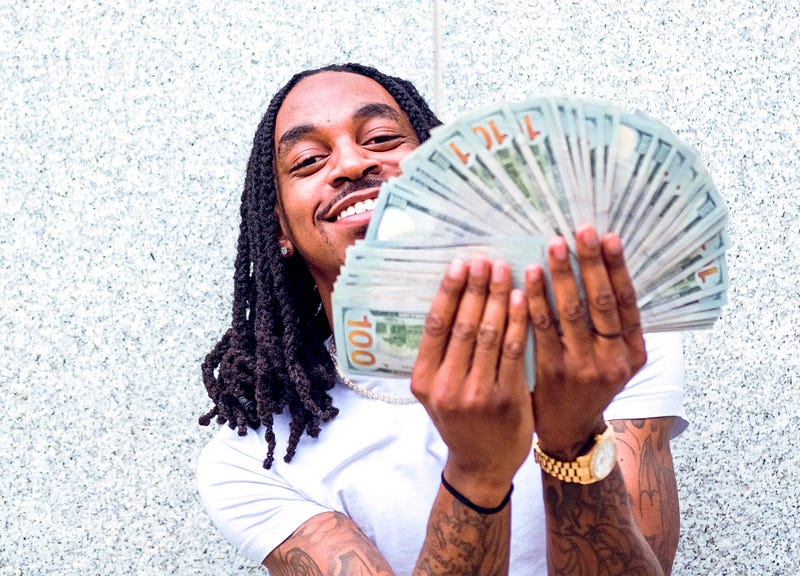
Not everyone will agree and that’s fine. In fact, some people will read this, get angry and offended (lol), and think, “Hmph! Easy for you to say! Not everyone has a swimming pool full of $100 bills like you!”
But that psychology will probably keep them stuck.
Some people carry an unfounded inner belief that spending more money is evil. Some people feel guilty spending more money on themselves.
While that goes beyond the scope of this article, I highly recommend you confront those barriers because feeling evil or guilty when you didn’t do anything wrong is only going to hold you back.
Instead, a winning mindset will think, “I might not be able to afford everything I want right now, but I see the point. What can I incorporate? Maybe I can try a small variation.”
After all, not every piece of advice will apply perfectly to your unique life. But the message is still valid: Focus on value, not just cost. How can you add this into your life? Where in your life can you spend more to get more?
Spend more where it matters—and reap the benefits.
Ready to upgrade your success? I’ve created 5 free life hacks that will boost your results. If you use them, your life could change very quickly.