
Israel’s Attack on Gaza: A Gift to Religious Fundamentalists in the Muslim World
The relationship between Western nations, particularly the United States and Israel, and fundamentalism in the Middle East is a complex one, spanning over half a century.
In the latter half of the 20th century, the Arab world witnessed a power struggle between nationalist leaders like Egypt’s Gamal Abdel Nasser and fundamentalists supported by Saudi Arabia. The 1967 and 1968 Israel-Arab conflicts, with Western backing, led to the defeat of Nasser and marked a shift away from Arab nationalism towards the rise of Muslim fundamentalism.
Similar dynamics were observed in Iran during the early 1950s, where nationalist Prime Minister Mohammad Mosaddegh’s nationalization of the British-owned Iranian oil industry clashed with the interests of the fundamentalist monarchy supported by the United States. The 1953 CIA and MI6 orchestrated coup led to the overthrow of Mosaddegh and set the stage for a different course in Iranian history.
Additionally, during the Soviet invasion of Afghanistan, the Western Bloc provided support to the mujahideen, who later evolved into the warring factions of the 1990s Kabul civil wars and eventually formed the Taliban, a group the U.S. would later confront during the following decades.
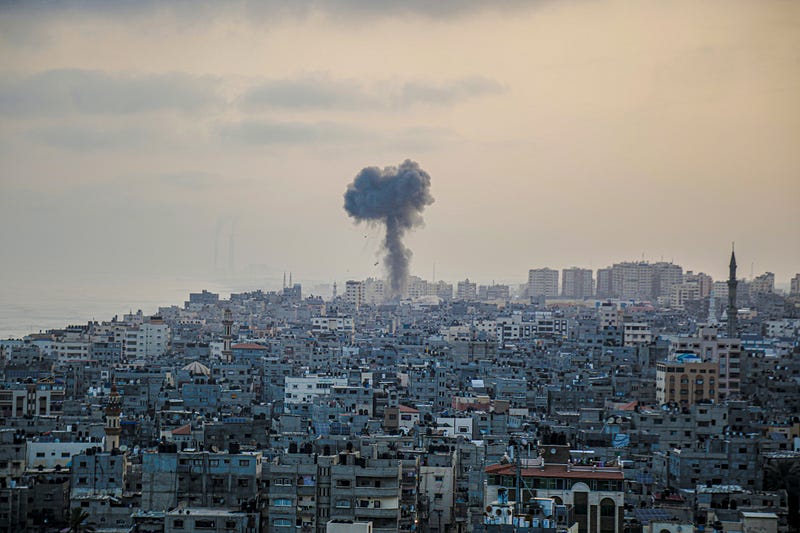
Furthermore, the United States and Israel indirectly contribute to the legitimization of fundamentalist groups, weakening the positions of Muslim liberals and left-leaning factions in the region. Recent bombardments of Gaza by the Israeli army stifle voices that advocate for human rights, women’s rights, child rights, equality, and democracy — values often associated with the West.
This has given rise to a narrative from right-wing religious figures who argue that Western nations, including the U.S., Israel, and the EU, are hypocritical in their promotion of democracy, human rights, and international law when their actions in places like Palestine contradict these principles.
The ongoing conflict in Gaza, with its high civilian casualties, has had a significant impact on disarming voices of moderation and liberal reform in the Muslim world. This, in turn, plays into the hands of radicals and fundamentalists, who capitalize on these grievances to gain ground in Muslim-majority countries.
The cumulative effect of recent developments, including the U.S. withdrawal from Afghanistan and the Gaza conflicts, may embolden fundamentalist movements in the long run. This could have negative consequences for Israel’s security and regional stability.