
Israel & Palestine — Awful Neighbors in the Holy Land
Mr. Rogers weeps but keeps on trying
It’s a beautiful day in this neighborhood A beautiful day for a neighbor Would you be mine? Could you be mine? Won’t you be my neighbor?
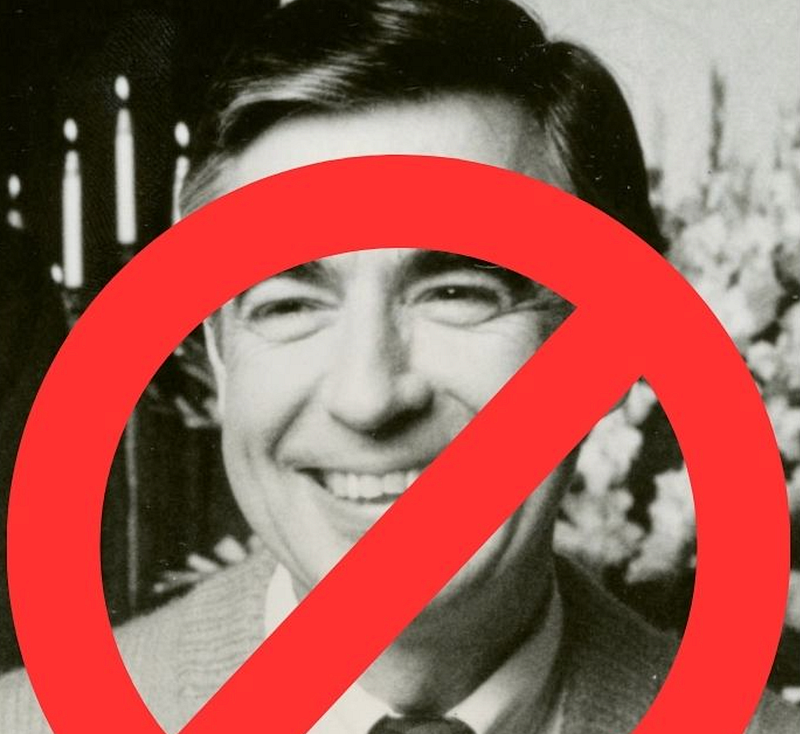
Mister Rogers, like everyone, has been cancelled in the Holy Land. In much of America, too.
.jpg)
A beautiful day for a neighbor.
Hamas fighters visited their neighbors in Israel on October 7th. No tea in hand. They hunted, shot, and brutalized 1,400 people.
Mr. Fred Rogers, creator and host of the 2nd-longest running children’s show of all time, Mister Roger’s Neighborhood, would have been appalled, though not surprised.
Would you be mine?
Later that same day, 34 Harvard student groups signed on to a letter condemning Israel.
“We hold the Israeli government entirely responsible for all unfolding violence.” — Harvard Palestine Solidarity Groups
“Entirely responsible” is an irrational statement about most everything in most human conflicts. I’m usually more wrong when debating my wife but very rarely entirely so.
Could you be mine?
Over the next few days, billionaires and CEO’s made statements on X. They wanted to learn the names of all the neighbors they thought undesirable.
“I have been asked by a number of CEOs if @harvard would release a list of the members of each of the Harvard organizations that have issued the letter assigning sole responsibility for Hamas’ heinous acts to Israel, so as to insure that none of us inadvertently hire any of their members.” — Bill Ackman
They would make certain to never offer those students employment.
Won’t you be my neighbor?
In the days since, we have heard cancellation after cancellation.
Billionaires Bill Ackman, Idan Ofer, and Leslie Wexner canceled Harvard. Billionaires Jon Huntsman and Marc Rowan canceled Penn. Turkish Pianist Fazil Say was canceled by Switzerland. Jordan canceled the visit of President Joe Biden. An award ceremony for Palestinian novelist Adania Shibli was canceled. Former Maryland Governor, Larry Hogan, canceled his participation in Harvard fellowship programs. Israel’s Foreign Minister has called for the cancellation of the head of the UN.
What to do with the lessons of Mr. Rogers?
Where were these people during the half-century of Mister Roger’s Neighborhood? Some were not even born, but others, I imagine, were tasked at young ages with much more important, real world assignments. Certainly nothing as silly as a television show that teaches children to listen and understand their fellows.
Most of us don’t really listen.
Or believe.
Or act.
Mr. Fred Rogers did all three.
He knew full well it is a bloody world. But he also believed it better when we speak to our neighbors. He believed that people can improve life, not just make it worse.
Mister Rogers would have welcomed everyone in the latest cancellation fest to his neighborhood. He would have invited each person to speak. He would explain that, “It’s OK to feel the way you feel.”
It’s OK to feel the way you feel
Israeli Jews: Yes, Israel was invaded by Arab states in 1948 and 1973 and fought multiple battles to preserve its citizens. Palestinian violence has injured and killed thousands of Jews since the founding of the state of Israel. Israel feels isolated in a sea of Arab nations and hundreds of millions of perceived enemies.
Hamas Palestinians: Yes, you have been literally walled up into Gaza by the state of Israel for two decades. In a space the size of Delaware, your movements have been controlled, your commerce constricted, your electricity and food limited, and thousands killed.
Billionaires for Israel: Yes, you have every right to support the only explicitly-Jewish country in the world, a democracy among autocracies, a place that — amidst its growing celebration of traditional values—still accepts differences around gender and defends equality for women.
Students for Palestinians: Yes, you have the right to call out for justice for the millions of Palestinians not even alive during the last Arab-Israeli war. 3 million on the West Bank officially remain under military occupation that makes them second-class humans, not citizens of any state.
After sharing everyone’s feelings, Mister Rogers would have advised them all, “Your feelings are important and real and based upon many truths. However, our feelings are not an excuse for bad behavior.”
Our feelings are not an excuse for bad behavior
The guests in Mister Rogers neighborhood go silent. One begins, “What right does Israel have to…”
Another jumps in, “The Palestinians have attacked…”
The room explodes with a cacophony of voices, complaints, and accusations.
In this dream world, Mister Rogers quietly asserts control. Considering he died twenty years ago, he is, after all, a ghost. He might have a better chance than anyone at making this work.
He acknowledges the realities about which all of his guests speak and then declares, “It is important to care for ourselves. Each of you is right to argue for safety.”
It is important to care for ourselves
That dampens some of the negative energy.
“Every single one of you are right to care for yourselves. We have to do that as people.
“I imagine that if we keep on talking, each of you will explain that you are fighting for those among you who are most vulnerable: the civilians, the young and the old, the people who are not able to find food or access electricity or get a job to feed themselves.
“All of you are here for a noble reason, to care for the most vulnerable among your families and towns, cities, and nations. To build a better tomorrow.”
And also to care for the most vulnerable
After one good session, Mister Rogers facilitates another. After two, he manages three and four. After a dozen or so, his neighbors begin making progress on solutions that involve sacrifice but direct the whole towards a better future.
The possibilities for war seem so many and so powerful. So mesmerizing.
Mr. Fred Rogers understood that attraction, but he also lived a life of hope and action.
“Because whenever people come together to help either another person or another creature, something has happened, and everyone wants to know about it — because we all long to know that there’s a graciousness at the heart of creation.” — Mr. Fred Rogers
The 1998 Esquire article Can You Say…Hero? inspired the 2019 movie A Beautiful Day in the Neighborhood. The author of that article was a ne’er do well journalist selected to get under Mr. Fred Roger’s skin. Instead, Mister Rogers got under the skin of Tom Junod. Junod re-thought his life and his relationships with the people around him.
When asked about how Fred Rogers would approach events like the mass killings that have become common, Junod responds,
“We know what Mister Rogers would do, but even now we don’t know what to do with the lessons of Mister Rogers.” — Tom Junod
Most of us know that what has been happening in Palestine and Israel and other places in the world is not right. We struggle, however, to do something. It is especially hard when our leaders nearly universally inspire us to undertake violence for the sake of justice or goodness or whatever concepts they imagine move us.
After thinking about how Mister Rogers might approach the world 20 years after his death, it strikes me that the words from one of the most revered Jewish teachers, Rabbi Hillel, still seem fresh after 2000 years.
“If I am not for myself, who will be for me? If I am only for myself, what am I? And if not now, when?” — Rabbi Hillel
Mister Rogers would have warmly welcomed Rabbi Hillel into his neighborhood.
Comments are welcome. Claps are deeply appreciated.
J. Andrew Shelley has spent years in startups that did nice stuff. Some stalling. Some selling. One for over half a billion dollars. But none making him rich. He now distills life into worthwhile stories that bring to light the many sides of truth.
Please subscribe to read his stories and check out his book American Butterfly. It tells the story of America’s Culture War through the lens of a Southern family suffering great loss.