
Israel Drops Dollars From Its Foreign Reserve. 6 Important Takeaways for Investors
What happens if the US dollar loses its status as a reserve currency?
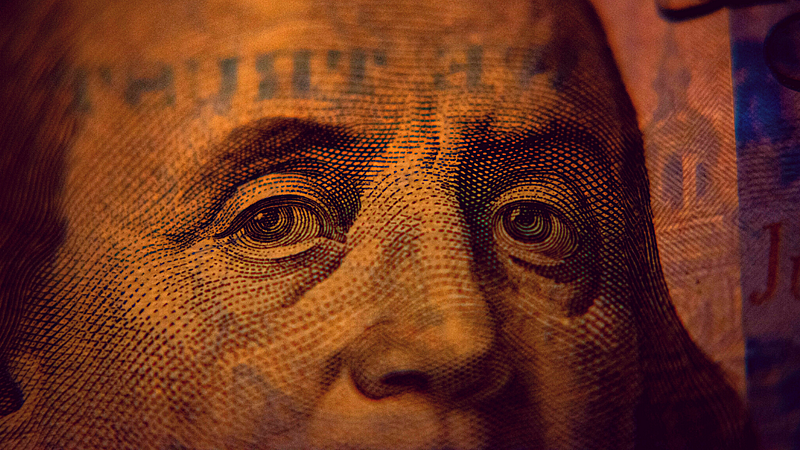
The central bank of Israel readjusted its reserve holdings. It added Yuan to its portfolio, reducing its exposure to US dollars, euros, and the British pound.
But, what does it mean, and how does it affects your financial health?
Before I share my 2 cents on it, let me tell you a story of Uncle Sam and the others.
How do currencies come into existence?
A long time ago, our ancestors traded one commodity for another. Then, they started using gold for trading commodities or services.
And One day, Uncle Sam came(1). He said fxxk gold. I have too much of it, and it’s too heavy to carry around.
Here is some colorful paper that we should use instead. The number of colorful pieces of paper I printed equals the amount of gold I have.
We human beings like to copy others. Thus, others joined Uncle Sam in printing their colorful papers.
This led to each country having its currency.
Everyone has their colorful paper led to a few problems.
- Whose paper to use for trading.
- How do you value different currencies against each other?
Countries solved this first problem as per the law of nature, i.e., the strongest wins. So, as Uncle Sam is the strongest, others accepted his paper to use for trading.
Once everyone decided on the base currency, they pegged their currency’s value against it (2). Hence, solving the second issue.
Uncle Sam went berserk and started running the print factory 24x7
Time changed, and Uncle Sam decided to go to war. He needed more paper to pay the bills of war.
Thus, Uncle Sam started to print colorful paper of his own will. He didn’t care whether he had enough gold to back the paper.
It raised concerns among Mr. Panda and the others. If Sam continues to print paper at his will, it will increase the supply of his paper.
As we know, anything that has more supply than demand loses value. Thus, Sam’s paper that Mr. panda and others have will lose its value.
Mr. panda and others were no fool, and they started to dump Uncle Sam’s paper.
They said fxxk Sam and his paper.
But why the hell do Mr. panda and others have Sam’s paper in the first place?
Mr. Panda and others agreed to use Sam’s paper for trading with each other.
Reasons to choose Sam’s paper were:
- Sam’s strength and
- Using one reserve currency is cost-effective.
Now, one way to get Sam’s paper is to exchange theirs with Sam’s. But, whenever countries exchange their paper with Sam’s, they have to pay a fee.
Countries don’t want to pay this extra charge every time they make a trade.
Thus, they decided to create a reserve of Sam’s paper. Then, they could use the reserve to trade.
The foreign exchange reserve helps countries:
- To save money spent on exchange fees.
- To execute the trade faster.
- To have a backup if their currency devalues or goes insolvent.
You can also compare a country’s reserve with your savings. You save money for rainy days, get credit, and trade.
Likewise, when you travel to other countries. You exchange enough of your currency with theirs. By doing it, you avoid paying exchange fees multiple times.
I shared this little story to explain:
- How do currencies come into existence?
- What is a country’s reserve?
- Why do governments keep a reserve of foreign currency?
- Why a particular currency is a globally accepted currency?
- What happens when a country goes beserk with printing its currency?
What happens if a reserve currency crashes?
Countries keep the foreign currency reserve to have a cushion. The idea is to protect the country if its economic situation turns dire.
But, if the foreign currency crashes, it takes the country’s backup plan with it.
Thus, countries must hold a currency that fulfills the following criteria.
- It is a stable currency, which means its price does not fluctuate often.
- The currency belongs to a country that has a healthy and growing economy.
- It is the most traded currency in the world.
After taking all the precautions, the selected foreign currency may still crash. It is a likely situation for the US dollar nowadays.
So, if it does, the countries will look for other avenues to hold their reserve. The move by the central bank of Israel is a perfect example.
What does it mean for the US?
Being a reserve currency country has its pros and cons.
The biggest pro is the increased liquidity of the currency. Increased liquidity makes it easier for US firms to get loans in dollars.
We all know that companies need capital to expand and grow.
So, if the friction in raising capital increases, it harms the company’s growth. In the end, hurting the economic growth of the country.
Thus, if anything replaces the dollar as a global reserve currency, it will harm the economic growth of the US.
The takeaway for the investors
- No one can replace the dollar overnight with something else.
- Countries might gradually reduce their exposure to US dollars. Thus, keep an eye on it.
- Learn from Israel. Diversify your portfolio by adding investment products from other countries.
- The current monetary system has many flaws. But, no alternative is available as of today.
- Several crypto enthusiasts are betting on Bitcoin. They claim Bitcoin to be the alternative to the current monetary system. But it’s still too early to say anything for sure.
- I added crypto to my reserve as insurance against the current monetary system. I treat buying crypto as paying an insurance premium (mindset). It means I will not get the money invested in the crypto back. On top of it, insurance might not help me when required.
I hope you enjoyed reading this article. If yes, subscribe to my email list to receive an email when I publish a new juicy article.
If you are looking for ways to support me. Well, buy me a cup of coffee from here or join Medium using my affiliate link :-)
References
(1) Paper money was an invention of the Song Dynasty in China. For the sake of simplicity, I chose Uncle Sam (US).
Disclaimer: This article is for entertainment purposes only. It should not be considered financial, tax, or legal advice. Consult a financial professional before making any major financial decisions.


