
Islamophobia and Islamic Fundamentalism: A secret love story

First of all, this is a comment based on my Propre-vécu, my background. I’ve tried to remain as politically correct as one can be. Considerate it as one tinny perspective that flows in this big world. I don’t overlook geopolitical conflicts; I’m aware of them. However, I’d rather address this matter from a social angle. You may feel free to disagree, and we may even engage in a debate. That’s what some people call progress.
For the last decade, one of the most tackled topics on the media has been about the Muslim community, radical Islam/Fundamentalism, and now Islamophobia.
These 3 words seem connected one to another, and to some TV shows, they mean pretty much all the same. I’ve heard them over and over to the point that It felt like they made the perfect stuffing to every controversial show.
Coming from a Muslim family myself, I believe those labels have often been misused. Some Muslims blame everything on Islamophobia, whereas non-muslims label Radicals here and there.
Is Islamophobia a thing?
Phobia comes from the ancient Greek word Phobos, fear. In our days, it refers to a mental disorder, an irrational fear triggered either by specific objects or contexts. Claustrophobia or Hydrophobia, for instance, may need psychotherapy. In severe cases, medication could be necessary too.
However, Islamophobia, Xenophobia, and Homophobia carry a connotative meaning. They imply a biased behavior and even an intense dislike toward a group of people. Islamophobia would be the fear of Muslims for being Muslims, which is discriminatory. Many even claim that Islamophobia doesn’t exist, a tool that allows Muslims to play the victim card.
From where I stand, Islamophobia does exist. There’s often uneasiness when interacting especially with Muslim women, who are easily spotted. People stare at veiled women at supermarkets, in public transportations, or pretty much everywhere.
The range of Islamophobia varies, of course. It could go from a harmless-like scrutinizing and cringing to a complete lashing out and insulting.
The majority of Muslims of the western world are concerned about paying their taxes, bills, scholarships, rent. They worry about not getting a promotion, the cold weather, and now the Coronavirus. You know, the usual stuff!
That said, radicalism exists too. Radicals have big plans for blowing up train stations. Yet, It would be Islamophobic if one assumes that the Muslim dream is blowing up things. And somehow, that’s what western world guidelines suggest.
Ask any Mohamed how he felt about airport securities when being asked to step aside for secondary research. There is no relevant motive except, the name he carries, or the full beard he grew on his Semitic face.
Since 9/11 and later with #jesuischarlie, the mass media have implanted the idea that Muslims are somehow all potential bombers. Think of the National Rally, the Vox, La Lega, the Dank Folkblad, and others. All these right-wing parties have somehow contributed to inculcate this idea.
Many Muslim actors such as Riz Ahmed have opened up about their struggle in a non-inclusive Hollywood. The chance to be cast as a terrorist had been their only opportunity for some time. Luckily, Things are changing thanks to Netflix and other inclusive productions in the Showbiz industry. Hassan Minhaj is the living proof of that, with his daily show, The Patriot Act on Netflix.
‘’I don’t like to talk about diversity, it sounds like the fries and NOT the burger. It’s about representation.’’ Riz Ahmed
All communities share the fear of radicals terrorist attacks, and especially the Muslim one. Muslim Parents are concerned about having their teen kids recruited by jihadists. They fear society’s resentment, which they would have to cope with for a while. Legit dreads!
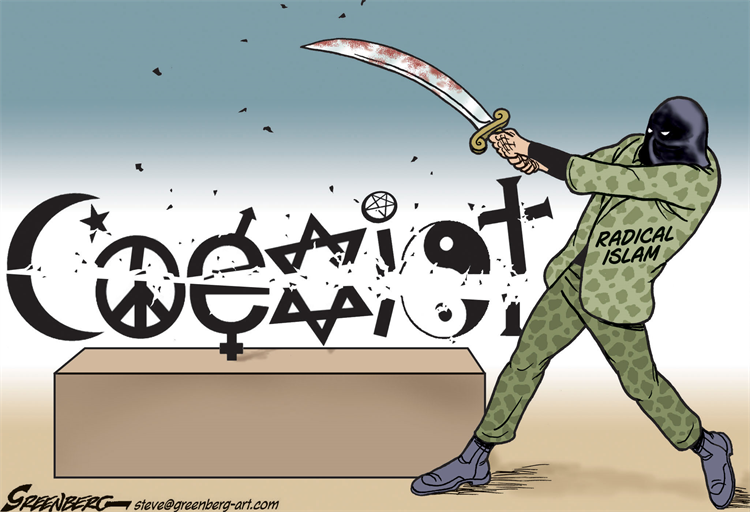
What about Fundamentalism?
How is Islam being different from Islamism? I believe it’s all a matter of interpretation. A crucial criterion that might define radicals is their viewpoint. How far one is ready to commit to texts dating back to 14 centuries.
According to Bassam Tibi’s theory, fundamentalism ultimate purpose is to politicize Islam instead of keeping it as a faith.
The Syrian-German political scientist asserts that radicals seek to install their model by tackling the four following components.
- Establishing Islam as the religion of State. By extension, it excludes non-Muslims as in many countries, in which non-Muslim minorities are being oppressed, and if not so, they’re not included.
However, counterpoints exist. The Moroccan king, for instance, has placed a committee to revise school books that contain anti-jewish content. And just last year, he inaugurated Bayt Dakira (House of the memory in Arabic), a center dedicated to Jewish culture, among other initiatives.
Libanon revolution is an illustration too. Since 2019, protests might have started for economic reasons. But down the road, Muslims sects and Christians came all together with their Lebanese flags, chanting:
Enough! we are all citizens.
The Lebanese government has been playing on the sectarian card for a long time. This revolution was a slap in the face.
- Constitutionalizing the Shariah. We’re talking about lapidating adulterous and apostates till death. It condemns who’s sexually active before marriage and LGBT for being who they are, and it supports women’s oppression. It also means cutting off hands for who shall steal.
Most of the Muslim countries are not applying these laws thanks to Ijtihad, which is a revision of religious texts. Still, it doesn’t mean that oppression doesn’t exist anymore for those who choose a secular path.
- Fundamentalists look upon totalitarian regimes. It’s unthinkable to shape Two billion people with the same mold, wiping out their uniqueness. They build Comrades, or in this case, the Muslim Brotherhood.
- Jihad is a tricky one. According to Jihadist Islamists like ISIS, it is fully legit to start a nasty war in the name of Allah. Yet, Jihadism is not supported by all Islamists. Some rather Institutional Islamism like Iran, achieving goals throughout political and economic approaches.
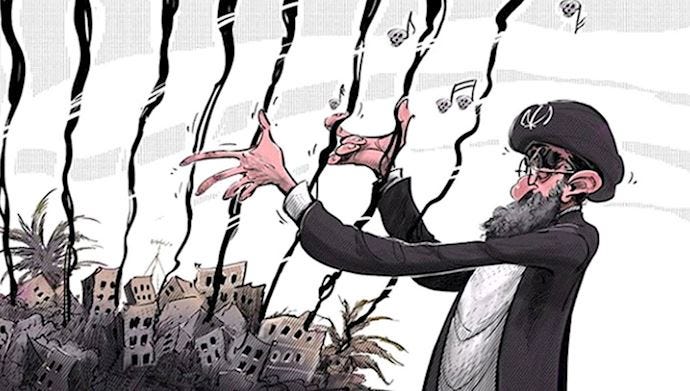
How do Radicals operate?
Radical activists spread Fatawas all over social media, the way the Coronavirus contaminates pretty much everything. They use a manipulated speech to enhance hatred towards both non-Muslims and Muslims, who are opposing their ideology.
Fundamentalists groups show no interest in peace. They virulently spread violent content. Their favorite prey, without any doubt, is teenagers. They kill any tolerant values left in them. These new brothers are no longer fit with this life, which explains why social distancing might be a prodrome of radicalism (before the pandemic). They’re convinced they are the one and only true believers, whereas all the others are infidels. They always seem to forget the part of Islam which word for the word says ‘’To you your religion and to me mine’’.
Fundamentalists glorify Islamic expansions as if they were the greatest religious achievement: ‘’Killing infidels which open the gates of heaven where Hoor-al-Ayn will be awaiting’’. Hoor-al-Ayn means somehow women with smokey eyes.
How can you spot a radical? I’m afraid you can’t; unless you have a heart to heart conversation, which is unlikely to happen. But I wouldn’t rush into judging outfits either. Behaviors speak out more than wardrobes. I’m not saying Burka isn’t a sign of radicalism, because for me it is. But again, there is a whole cultural background that plays part in clothing, and it isn’t always a religious one.
A love-hate story…
The fear of radicalism has unfortunately led to Islamophobia. But, unreasonable fear of Muslims is a two-edged sword. It would only make things worse. Fundamentalism finds its niche in Islamophobia, inside secular societies. Radicals bait the hook with right wings propaganda. As a consequence, the most disadvantaged in the Muslim community take that bait. And that’s how Islamophobia turns Muslims into fundamentalism.
One nourishes the other, and one needs the other to survive. It’s a toxic love story that has to end.
The hostility can still be brought to its knees by Help me help you. It would be revolutionary to:
- Open a fair debate about religion.
- Engage in self-criticism.
- Reinforce tolerance values.
- Make accountable those who spread Hate speech.
- Condemn Islamophobia or any other discriminatory behaviors.
- Create an inclusive environment in society.
- Rehabilitate victims of hate crimes.
Only measures taken from both sides could end an obscure era, and open a new enlightening chapter.