
Is Turkesterone a Miracle Supplement for Building Muscle?
Turkesterone is the most hyped bodybuilding supplement in a long time — but does it work?
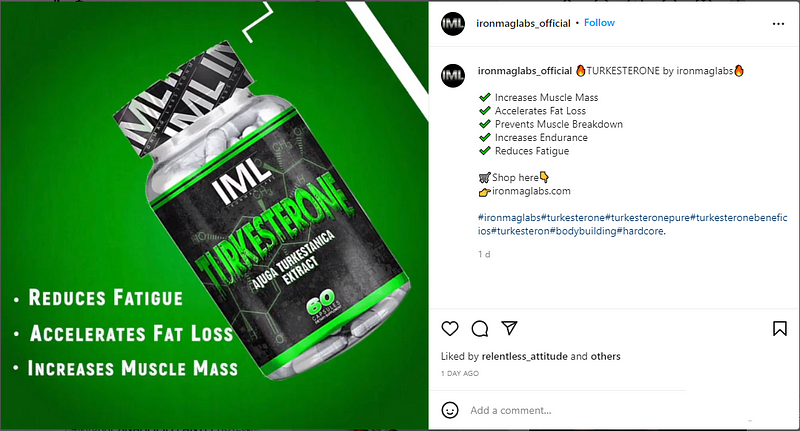
If you’re interested in bodybuilding and/or supplements, you have probably heard of Turkesterone by now.
2022’s most hyped supplement, Turkesterone is a natural compound that may help us build more muscle, improve performance and burn more fat.
No, it’s not made from Turkeys… Turkesterone comes from plants.
All the fitness YouTubers are talking about it — well, in the strength and bodybuilding niche at least.
In this article, I explore Turkesterone, the science behind it, and the likelihood of supplementation benefiting your quest to build muscle.
What Is Turkesterone?
Turkesterone, or Ajuga Turkestanica Extract, is a type of ecdysteroid.
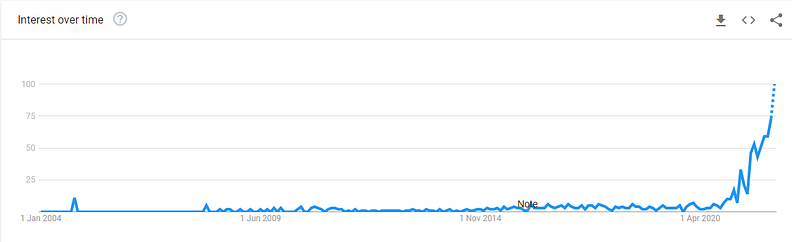
Although the Turkesterone buzz has only been around for around 6–12 months, the compound was first researched in 1975 in this Russian scientific paper.
Ecdysteroids are essentially the plants and insects equivalent to the human hormone testosterone. Because it is a natural anabolic agent, it is rumoured Ecdysteroids have been used by Russian athletes have been using since the 1980s.
The Russians believed Ecdysteroids could yield similar results to a low dose (10–15mg) of the steroid Dianabol.
“The most active phytoecdysteroid, ecdysterone (a “Russian secret”), was already suspected to be used by Russian Olympic athletes since the 1980s.” — WADA, 2019
The best sources Ecdysterone of are in the plants Maral Root (or Leuzea), Serratula Coronata and Ajuda Turkestanica (Turkesterone). However, finding reliable sources is difficult as those plants only grow in a few small areas on the planet.
The two best sources of Ecdysterone in a western diet are Quinoa and Spinach. But, it has such a low about to consume the food itself as an adequate source.
Hence, supplementation. The two of the derivatives of ecdysteroids thought to be most effective in a concentrated form are 20-Hydroxyecdysone (Ecdysterone) and Turkesterone.
How does Turkesterone work?
Scientists believe that ecdysteroids may have a binding reaction to estrogen receptors, stimulating anabolic and adaptogenic responses.
Ecdysteroids such as Turkesterone may also have the ability to metabolise lipids and carbohydrates.
Turkesterone may also activate the Notch receptors in skeletal muscle cells, helping stem cells develop into new muscle cells. It could also possess anti-stress effects to indirectly support our ability to build muscle by optimising cortisol levels.
The recommended supplementation of Turkesterone is 500mg-1000mg daily and the average cycle should last between 6 to 12 weeks.
What are the Potential Benefits of Turkesterone?
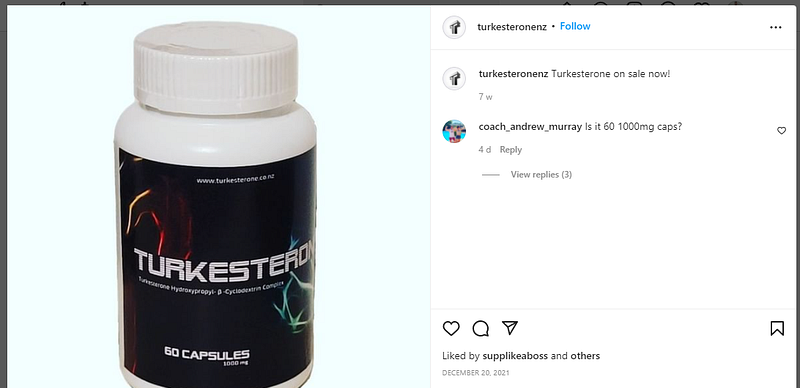
There could be many benefits to supplementing with Turk, hence the excitement from the fitness community and all the supplement companies quickly releasing their own products.
Some of the marketing and “experiences” of fitness influencers claim there’s anecdotal evidence of users gaining pounds of muscle (we’ll get into this).
“Significantly higher increases in muscle mass were observed in those volunteers that were dosed with the ecdysterone supplements. Even more relevant with respect to sports performance, also significantly more pronounced increases in one-repetition bench press performance were observed.” — WADA, 2019
Alongside an adequate eating and training program, potential benefits of Turkesterone are:
- Improved Fat Loss
- Increased Muscle Mass
- Enhanced Muscle Protein Synthesis
- Increased strength and endurance
- Improved recovery
- Little or no negative side effects
Because Ecdysteroids help promotes lipid and carbohydrate metabolism, they could assist with maintaining healthy body composition and improving fat loss.
Much of the excitement around Turkesterone and other Ecdysteroids is its potential to increase muscle mass, by enhancing muscle protein synthesis.
Through this increased rate of protein synthesis, we have improved recovery from strenuous exercise.
Users may also experience increased strength in the gym, the ability to exercise at a higher intensity and increased endurance.
All of this with little or no negative side effects, as Ecdysteroids don’t impede our natural testosterone levels.
What scientific evidence is there for Turkesterone?
There are very few reliable scientific studies on the effects of Ecdysteroids.
Studies on humans are very rare and many of the claimed benefits are found in studies on animals, such as this 1978 research on mice, and these studies on Beetles, Mice and Quail.
A 2015 study on rats compared ecdysterone to anabolic substances and found they yield similar results”
“The data reported in here demonstrate that ecdysterone induces hypertrophy of muscles with a comparable or even higher potency as shown for anabolic androgenic steroids, SARMs or IGF-1.” — Parr et al., 2015
There was no human research up until this 2006 study, that no evidence for muscle growth or improved performance in humans.
A 2018 Sports Nutrition Review from the Journal of the International Society of Sports Nutrition said “Ecdysterones are not recommended for supplementation to increase training adaptations or performance.”
Then in 2019, a study from Freie Universitat Berlin on an Ecdysterone derived from Spinach (not exactly the same as Turkesterone) and partly funded by the World Anti-Doping Agency (WADA), found dramatic results.
46 athletes trained three times per week over 10 weeks — some given ecdysterone and others a placebo.
Those who took ecdysterone saw their performance (such as bench press) improve by three times as much as those who did not, also experiencing an average muscle mass gain of 3.2kg.
The researchers recommended that ecdysterone be included on WADA’s banned list and since 2020, WADA has started monitoring ecdysterone to “assess the patterns and prevalence of misuse among athletes.”
Pretty crazy numbers and hence the excitement from the fitness industry.
However, instead of the listed 100mg of ecdysterone, the lab test found it only had 6mg. Therefore, the dose was 6%, making it harder to believe the results from such an underdosed supplement without any scientific evidence yet.
Unfortunately, this one study is the only evidence we have in human studies.
Trusted resources for scientific evidence on supplements, Web MB and Examine both say there’s no evidence of Ecdysteroids working.
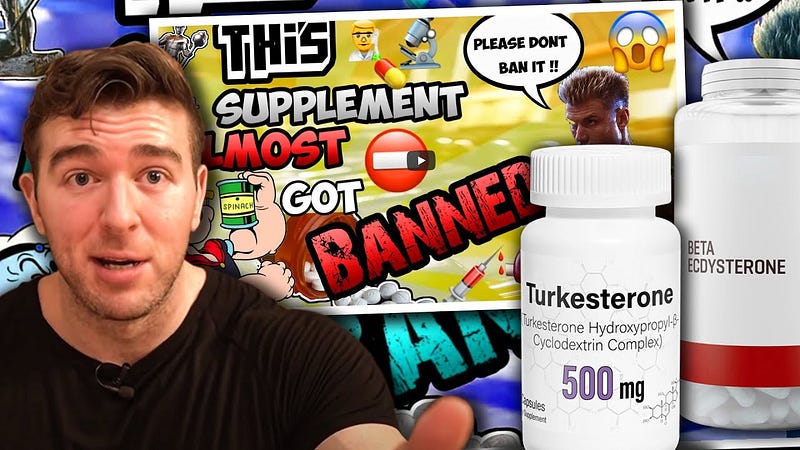
Opinions of Turkesterone from YouTubers Fitness Gurus
Derek “More Plates More Dates” was the first big YouTuber to start talking about Turkesterone and even produced his own variant and brought it to the market.
Greg Doucette, another popular fitness YouTuber, then brought out his own version to sell to his audience.
Another popular fitness YouTuber, Simon Miller, said he felt a small positive difference in strength and other perceived benefits. He has a handy 10% off discount code off Turkesterone in his video description. In my view, people shouldn’t give “impartial” advice on something they’re also selling.
Jeff Nippard errs on the side of caution, citing the lack of any real evidence as to the reason he hasn’t tried Turkesterone yet. Similarly, Bio Layne gives a good summary of the evidence, or lack of, behind Ecdysteroids.
If you’re interested in Ecdysteroids, you should watch this video below. Vitruvian Physique trialled Turkesterone for 60 days and gives a very objective rundown of his experiment and his results.
Vitruvian Physique concluded that Turkesterone could have a very small benefit, but its cost far outweighs the benefit. At the recommended dosage of 300 mg, it would cost approximately $450 (USD) for three months’ use.
Check out the article below for my five favourite fitness YouTubers.
Concluding Thoughts
Is Turkesterone a miracle supplement or hype?
This article has explored the science behind 2021’s hottest bodybuilding supplement. In short, there is little data proving it works.
Studied since the 1970s, only a 2019 study has provided any positive evidence for the muscle-building properties of Turkesterone. It suggests Turkesterone has a strong ability to build lean mass — meaning it has muscle-building and fat-burning properties.
Its ability to help build lean muscle mass, without any known side effects, means Turkesterone has the bodybuilding community pretty excited about its potential. Hence, supplement companies are rushing to bring their own product to the market.
Now, the internet is filling up with anecdotal “evidence” of the powers of Turkesterone.
What do you think? Have you tried Turkesterone?
I’d love to hear about your experiences if you have any.
I haven’t tried it.
As someone who has lifted for around 15 years, I’m already at around my natural limit for building muscle, so I’m doubtful I would receive any real benefit to outweigh this cost.
Thank you for reading.
If you enjoyed the content, you might be interested in this article about how to build muscle without gaining fat — maingaining.
Read More Medium Articles
Non-Medium members can only read 3 articles a month.
Become a Medium Member for unlimited access to my content and articles from thousands of other writers, for just $5 a month.
Subscribe to be notified when I publish new content.