
Is this the secret to success as a modern writer?
The currency of vulnerability

What’s the most embarrassing story you can think of when it comes to your favorite celeb?
Is it something clumsy like Jennifer Lawrence's multiple famous stumbles when walking up sketchy award show stage steps? Maybe it’s more cringe-worthy like James Franco’s likely-stoned-as-a-kite Oscar Awards hosting endeavor.
Whatever the instance, these mishaps tend to blow up all over the news — while making these celebs even more (in)famous.
What’s the recipe for a vulnerable blowup?
- The moment was ridiculous (in a good or bad way)
- The person is at least semi-famous
We absolutely feed off of their embarrassments when this happens. Hell, this type of action even seemingly drives our entire news cycle nowadays.
But can you as a writer, blogger, or digital interlocutor use this to your advantage?
Yes. If you’re willing.
The Concept of Pen Names
Why do people use pen names? Usually it’s to hide something, right?
To hide controversial topics, statements, or subjects from impacting their real life.
To hide as a brilliant female writer who had to use a male pen name just to get published.
To hide that juicy sex-ridden rompish tale that may or may not have been true from affecting your relationships and family.
To hide the internal embarrassment that you’re now a blogger when you used to be a semi-high flying international tech manager. Ahem.
It’s a dichotomy.
We writers enjoy the idea of our thoughts, stories, and actions being appreciated, consumed, and maybe even loved — but not all of us are comfortable putting our face and name behind those words.
And yet, many people have used pen names to achieve enormous success:
- J.K. Rowling
- Dr. Seuss
- Stan Lee
- Mark Twain
- George Orwell
- Mary Westmacott
- Lewis Carroll
And this last one might shock you — Lemony Snicket.
Penny for your name?
Glance at that list one more time. How many of those authors' faces can you think of?
For me, it’s only a few of them.
But even then, at what point did they come out and scream, “This is me, and here is my selfie!”
I bet it often wasn’t before their books were taking off.
Take JK Rowling, for example. Her real name is Joanne Rowling. Not that much of a stretch, but she said she purposely chose JK to sound gender-neutral — and to appeal more to boy readers.
But did you know she also wrote crime fiction under the completely male-sounding name of Robert Galbrait?
Hers was a financial decision, but also one of reflection of modern society. We sometimes have a need to remain anonymous as writers, and use pen names to accomplish that.
But does it hinder our success?
Does a pen name hurt sales?
I’m going to disappoint you here. I wasn’t able to find many statistics on this question. But here are my beliefs, in the hope that they make sense.
1. People follow people they agree with
When writers, commentators, and any public figures start garnering large followings, it’s never because they aren’t interesting.
There’s always something unique about them. Whether it's their beauty, their rigid stances, or their ability to teach certain skills and knowledge in their own style — there’s a reason they stand out.
People think they’re special — and they follow them.
There is a large caveat to this, at least in the modern world. People follow people they hate as well. And so do the robots.
2. People love vulnerability.
Many of the top writers these days maintain some form of a blog. It’s almost a requirement.
You’ll often hear the first thing publishers ask these days is “how big is your following?”
Whether their blogging consists of 150 character snippets of thoughts 3 times a day or long-form opinion pieces posted once a week — it’s still an exposé of how they think.
It’s also a giant risk.
Especially with cancel culture. Say one wrong thing and bam, your career is over — at least for a while.
That’s the beauty of the risk and reward of being exposed to the public (and not in a Pee-wee Herman way).
Readers, viewers, and listeners inherently know there is a risk to showing your true self to the public eye — and they eat it up.
3. The fastest way to find the right answer to something is to post the wrong answer on the internet.
The last aspect of this idea is possibly one of the biggest modern hurdles to writing as your true self on the internet.
How do you deal with the negativity?
I can’t remember which author said this line, but it’s stuck out with me even a year later.
You’ll know you’ve started achieving success when you start getting insanely negative comments.
It got me thinking. The more people you are exposed to, the more people you’ll find that disagree with you.
And that can be a good thing. But also terrifying.
My biggest article took me almost 50 hours to research and compile and was on a very controversial topic.
The results at first were massively disappointing. I couldn’t stop thinking about the time vs result calculation in my head. Six months later and it has over 500,000 views — now I’ve certainly changed my tune.
But holy hell, some of the comments on that beast are, well, beastly.
And I’ve come to terms with it — we will never write something that 100% of people agree with.
If we did, it wouldn’t be interesting.
And if it isn’t interesting, nobody will want to read it.
I’ve been using a pen name — sort of
I debated for a while when I first set out on this adventure of writing a bit over a year ago. I hadn’t made up my mind if I ever wanted to step back into the adventure of the business world — with all its highs and lows and stress and paychecks.
Eventually, I came to a slight compromise, my name on here is just a minor modification of the one I use in real life. But if anyone took out a shovel and even slightly dug down on the internet, they’d find out my real identity.
On one side, that fact doesn’t bother me.
On the other side, the vulnerable side, I’m still not ready to change over my LinkedIn and other formerly-used social media to this pen name.
I don’t know how my colleagues would react.
I don’t know if they would mock, ridicule, or ban me from their circles.
I also am unaware if they’d have the complete opposite reaction and actually enjoy my letter tinkles.
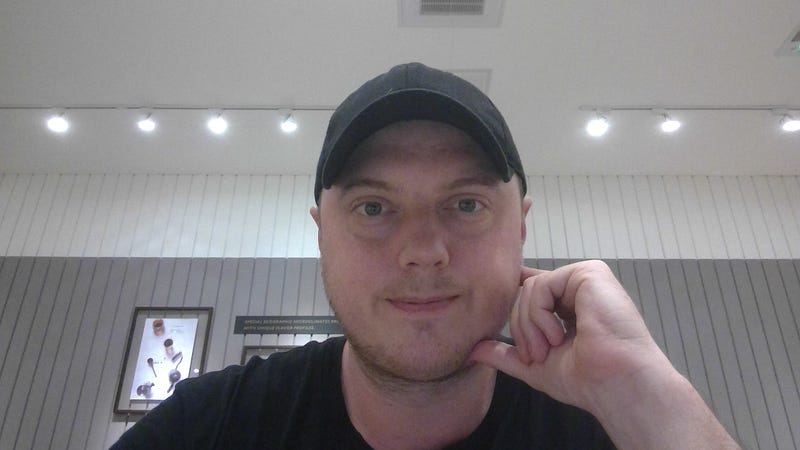
But here’s the first step, I suppose. A simple picture. A type of photo I always despised.
A vulnerable tired 36-year-old blogger wearing a non-branded hat awkwardly cringing at his local coffee shop in Taiwan trying to sneak in a selfie.
Hi,
I’m JJ Pryor and this is my almost-pen-name.
Nice to meet you, folks.
If you enjoyed this, come join my free weekly-ish newsletter. Thanks for reading!