
Is this the Best Nude in Art?
The nude in art: The Faun
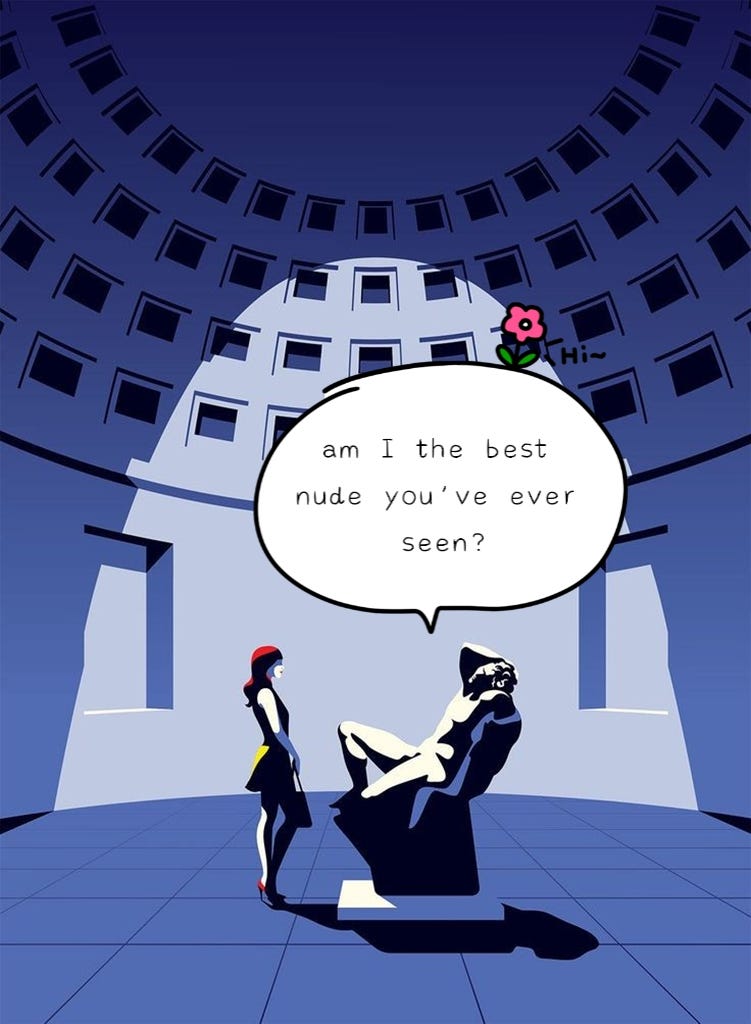
Always ready for the best dick-pic, Satyrs are mythological creatures resembling humans but with animal-like tails and ears. Male humans that is. How can you tell? Well, they are usually naked and…erected.
In Roman mythology, satyrs are called fauns, and given the subject of this piece (Bernardini Faun), we will call them fauns as well. They were thought to live in isolated locations like forests, mountains, and pastures, and were associates of the deity Bacchus (Dionysus). They sought to entice or rape both nymphs and mortals, but typically failed miserably. They’re occasionally shown masturbating, or, as we’ll see, nude and inebriated. And, if you are thinking about it: yes, you are right, the character of Phil (Danny de Vito) in Hercules (Disney) was one.
Not long ago, I wrote about my distaste for one particular nude painting, and how I was intending to write more about nudes, but in a more positive manner. So here I am, writing a piece (this one) for Counter Arts, and one for The Collector. And what better way to start than by writing about one of my favourite subjects, sculptures?
Open Question: Is the Barberini Faun the best nude in art? If yes, why?
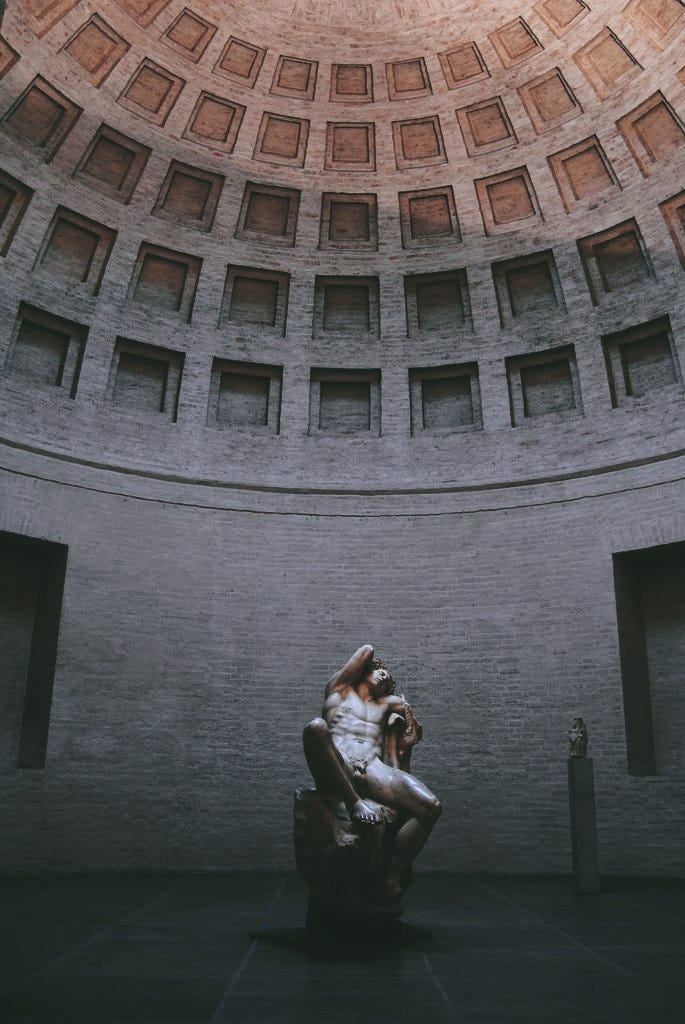
One thing is sure: this is an impressive piece of work. The statue depicts a faun exhausted from, who knows, maybe a drunken night out, maybe an orgy. Or both.
The statue is very sensual. Even more so as it is very human-like. Though, despite looking human, some details remind us of his true nature: pointy ears, and a sneaky little tail.
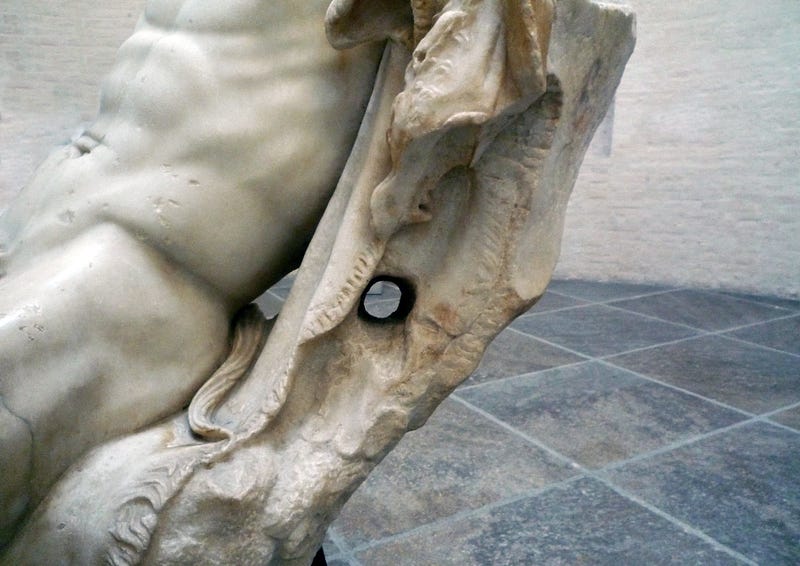
Some historians assume that the tail and other beast-like details are downplayed to amplify the sex factor of the statue. Because as humans, viewers might be drawn more closely to a human figure. The same historians posit that the splayed legs are inviting the viewer to focus on his genitals. I mean, maybe? But for me, the legs’ position adds to the overall effect of relaxation, exhaustion, and overall sex appeal.
We associate nudes with sex, but it’s really about the nature of bodies. Sure, it can be about sex,or sex appeal as likely in the case of the faun. But even here, is more about the nature and naturality of the human or human-like experience. So why cover up statues, and paintings? Of course, is often because of religion, or historical and political phases high on censorship.
But how could the statue have made sense if not naked?
Let’s look at the subject’s expression:
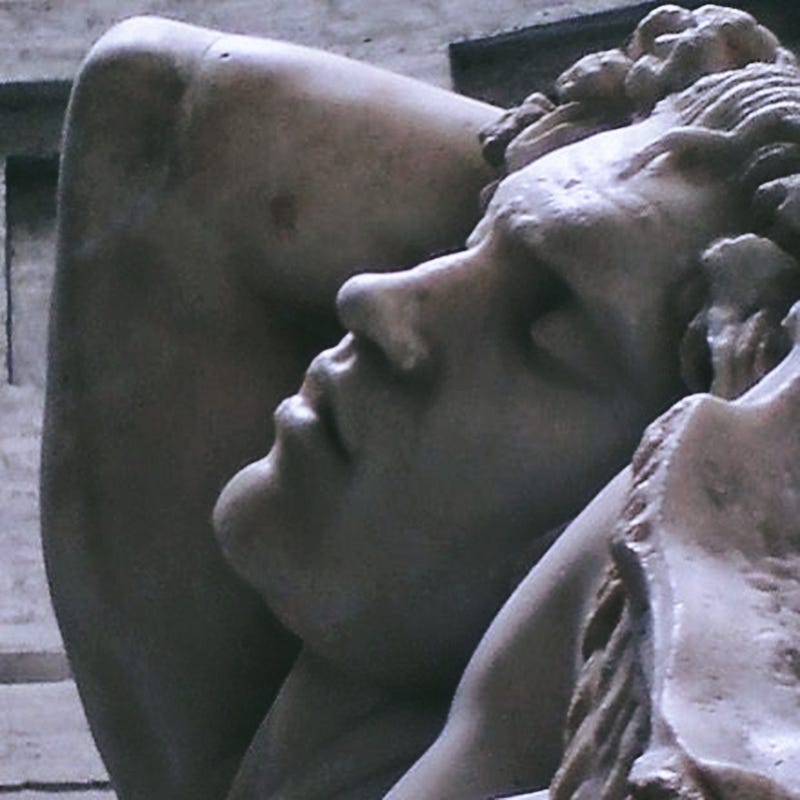
The arm bent and resting behind his ears is another nudge for the viewer to interpret his pose as attractive, confident, exhausted. His closed eyes remind us of the voyeuristic position we are in. Intruders, stalkers creeping up on a strong, yet vulnerable creature.
Vulnerable? Weren’t fauns/satyrs aggressors always with an astronomical boner?
On this, Amanda Herring writes:
It is a radically different depiction of satyrs from earlier archaic and classical images depicting them as ithyphallic hypersexual aggressors, indifferent to gender or even species when pursuing objects of their desire. The question of how the satyr switched roles from sexual aggressor to object of desire can be elucidated by a discussion of sexual roles in Greek society and the changes in those roles between the Classical (ca. 480–323 BCE) and Hellenistic (ca. 323–31 BCE).
In other words, there was a semiotic shift for the faun/satyr character from aggressor to object of desire.
It’s an amazing piece of sculptural work, for sure. I can’t help but be drawn by the stretched, yet exhausted/relaxed position, opening space for the eye to travel continuously across his chest and genitals (I swear I am not a pervert! Plus, I’m gay guys!). His face gives me the chills: not the faun anymore lives as an aggressor, but us, we are the intruders staring at the close-eyes creature.
His hair pulled back to help the chest rise, and the lungs to breathe. His creature-like features almost hidden. This sculpture is alive.
If you are interested in a little more, here are also a couple of fun facts:
- The Barberini Faun was discovered in Rome in the 1620s during Pope Urban VIII’s renovations to the defences of the Castel Sant’Angelo, the old Mausoleum of Hadrian. Cardinal Francesco Barberini, the pope’s nephew, had acquired the statue by 1628. The statue was displayed in Cardinal Barberini’s courtyards, and it was regarded one of the prized pieces. Thus, yes, he also gave the statue his name…
- A student destroyed a copy of the sculpture when he decided to take a selfie sitting on its lap.
Note: I am thinking of writing other “best nude in art”, as while the faun is one of my all-time favourites, there are so many more that deserve the title. Also, diverse across media, culture, and gender. Before that though, you can definitely expect — very soon — a best “nude painting” that I will be submitting with The Collector.
For more art history pieces:
24 stories about Art History and more curated by Jess the Avocado — Medium
For psychology and more:
17 stories about On Humans and Applications curated by Jess the Avocado — Medium
If you’d like to offer me a coffee:


