
Stomping Out Breast Cancer
The lowdown on Mammograms
I kept putting it off; the dreaded but necessary, Mammogram.
I'd write it onto my to-do list, but whenever I did pick up the phone to make the appointment, they were already fully booked for the month, and the schedule was unavailable for the following one.
So back it went on the to-do list. When you know what you're in for — and that it involves a certain level of discomfort — you either bite the bullet or somehow fail to get onto it.
Since March, this has been going on; until last week when the secretary called me, advising of a cancellation. There was now no escaping it.
What are the odds of something being wrong when I had no symptoms and unremarkable mammograms since a negative stereotactic biopsy ten years ago?
I was procrastinating, and I should know better.
The facts
I fully agree with health screening tests, knowing that the earlier problems are caught, the better the outcome.
There is less risk that early stage breast cancer will come back (recur) so it has a more favourable prognosis. Breast cancer diagnosed at a later stage has a greater risk of recurrence, so it has a less favourable prognosis. Source
Statistically, 1:33 women will die of breast cancer each year in Canada.
It is estimated that in 2020:
27,400 women will be diagnosed with breast cancer. This represents 25% of all new cancer cases in women in 2020.
5,100 women will die from breast cancer. This represents 13% of all cancer deaths in women in 2020.
On average, 75 Canadian women will be diagnosed with breast cancer every day.
On average, 14 Canadian women will die from breast cancer every day.
The test
For those of you who have never had a mammogram, I've had at least 8 of the squish tests, and none of them has been pleasant. The last time I had a mammo, I thought my breasts would never bounce back. Of course, they did — they really don't stay flattened! As it is, they're making a concerted effort to head in a different direction with age.
They've served me well, my 'girls.' I breastfed all 3 of my kids even after having a helluva time with my firstborn; that's worthy of another story. Now it's payback time — I want to keep my boobs healthy and attached to me, whether they're sagging or not.
There's no special preparation for a mammogram; it's easy peasy compared to the colonoscopy I had a few weeks earlier. However, you are advised not to apply moisturizing creams or powder on the breasts and deodorant under the arms.
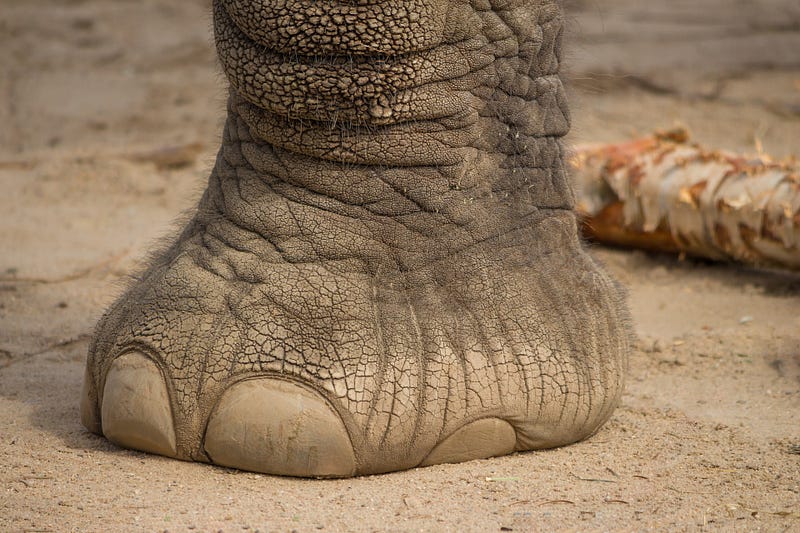
The test was uncomfortable this time too, but tolerable. It's a 10-second feeling that an elephant is stomping his heavy hoof on your boob — 4 times over; they have to do both breasts from 2 different angles. It's a short-term discomfort that I got through by closing my eyes tightly and focussing on keeping still, as the radiologist told me, to ensure I needed only one round of torture.
Is it an effective diagnostic tool?
In short, yes. It is used worldwide in association with self-examination, which is recommended regularly as an excellent way to get to know your breasts intimately. We all have different shapes, sizes, colours and densities. The better you know your breasts, the easier it is to detect anomalies.
Depending on where you live, the test may be offered free every two years. Here in Québec, women between 50–69 years old are suggested to join the governmental screening program. The Centre for Disease Control (CDC) also has free screening available for eligible American women.
If you have a family history of breast cancer, your doctor will likely suggest mammographies much earlier and more frequently.
Of course, if you notice any abnormal signs such as skin changes, nipple discharge and lump formation, then you must seek immediate medical attention. Although breast cancer can be deadly, the odds of survival increase dramatically with early diagnosis and treatment.
Are there any risks associated with Mammography?
Exposure to x-rays is minimal during the procedure. The only risk factors reported are that results could be wrong: either a false positive, which after numerous other tests are proved to be incorrect or a false negative, which would invariably result in a delay in treatment and further growth of the tumour.
Of recent note is the reported changes in the lymph nodes following Covid-19 vaccination. Part of my delay was because I had just had my second Covid jab, and I was advised to wait six weeks before having my Mammography or the test would be inaccurate.
I had a girlfriend who went through weeks of anxiety because of a swollen lymph node on the side where she received her recent Covid injection. She underwent several extra tests to confirm it was only because of the vaccine.
What about men?
Can men get breast cancer? Yes, they can, although it is rare. It is, however, deadlier:
In 2020, 240 men will be diagnosed with breast cancer and 55 will die from breast cancer. Source
The signs and symptoms are the same as they are for women, as are the genetic risks. The CDC recommends maintaining a healthy weight and exercising as crucial factors to preventing breast cancers in men.
To conclude
Although it is an unpleasant experience, a mammogram can save your life.
- Find out and sign up for regular screening if you are over 50 years old
- Speak to your doctor if you are younger and have a family history of breast cancer; screening can start much earlier
- Perform self-examinations regularly
- Wait six weeks for a mammogram if you have just had the Covid-19 vaccination.
- Refrain from using creams and deodorant before the test
I'll take an elephant on my boobs every two years over risking a missed diagnosis. Now I'm just hoping my phone doesn't ring in a week requesting more tests. If it does, at least they're onto it, and my chances of beating an unwelcome invader are significantly increased.


