Is The World Still Flat?
It is for some people.
I got into a heated discussion with a close friend the other day. It is not unusual. At my age, my friends and I have long since honed our value systems. We have strong expectations for the way life should be and people should act. I cannot tell you how many times I have heard one friend or another, say, “That is the way I was taught.”
It is a fair argument. Unfortunately, one we fall back on all too often. You may have been taught something years ago and that line of thinking may still be valid. Or as is often the case, times may have changed, and things are not the way we once thought. As we grow older the truth becomes less apparent.
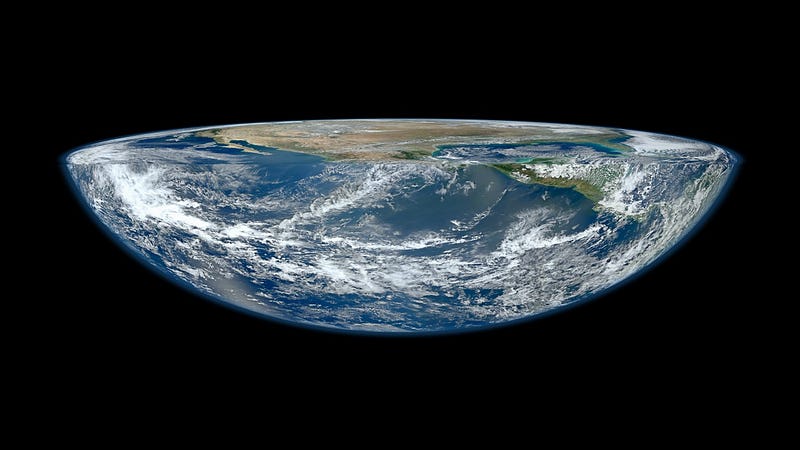
We must never forget that at one time the smartest people in the world believed the earth was flat. Most people believed if you got too close to the edge you would fall off. It took thousands of years for learned people to evolve their thinking from flat, to disc-shaped, to round to elliptical.
And remember, it wasn’t until 1543 when Nicolaus Copernicus published his theory that the earth revolved around the sun. When he did, he was afraid he would persecuted as a heretic. Prior to his theory, they taught everyone the earth was the center of the universe. Everyone believed it because that is what they were taught.
When did you stop learning?
It is not uncommon for narrow-minded people to fall back on their value system when it comes to controversial subjects. After all, we all know, “Poor people are lazy. If they weren’t, they would not be poor?” “Blacks are inferior to whites, except for the few smart ones that have achieved success.” “Homosexual men and women are sick. They can be cured with psychoanalysis.” And my favorite old viewpoint is, “Rich people are inherently good and poor people patently bad.”
For years, these and other affirmations have been taught to children with the belief that if we convince them of these plain truths, they will somehow avoid becoming one of these lessor individuals. It is akin to the old warning, “Keep Making That Face and It’ll Freeze That Way.”
Over time, we learn or should learn that many of the prejudices we are taught are untrue. From time to time we need to update our value system. Aging does not mean we should stop learning. Just as generation after generation learned that the world is not flat and that the sun does not revolve around the earth, we must learn a new way of thinking.
Can we still have opinions of our own? Of course. We all have likes and dislikes. I like red, others like blue. But the reason we choose those likes and dislikes must be based on clear thinking. Simply falling back on the old adage, “That’s the way I was taught.”, only proves how intolerant a person can be.
Stop listening and start learning.
The problem, as I see it, is most of what we know comes from facts we have learned in our formative years. Facts like; 2 + 2 = 4, the earth’s surface is 70% water, fingerprints are unique to the individual. Those facts come in handy often. Our education systems have always done a fair job of teaching us simple facts. The problem is we apply these same learning techniques to more complex issues.
Our brains in many ways are like those flashcards we used as children to prepare for our school lessons. We see something, the answer we were taught flashes in our brain, and our thinking concludes. We don’t consider any other alternatives.
Yet the education of facts, whether formal or informal is not intended to be the end of learning. People should never build their values only on the facts they have been taught. They must learn critical thinking that will challenge the old viewpoints, opening their mind to new ideas. Viewpoints they may not have been taught as a child, but ideas the person has learned on their own.
Every day we must question the things our educational system has taught us. We must look for better explanations for what we believe to be truths. Don’t do it for me, do it for yourself. Never stop learning, it is too important to your own happiness.