
Is the Picture Holiday Card Worthless?
Comedic Jabs on Holiday Card Ideology with Philosopher Slavoj Žižek
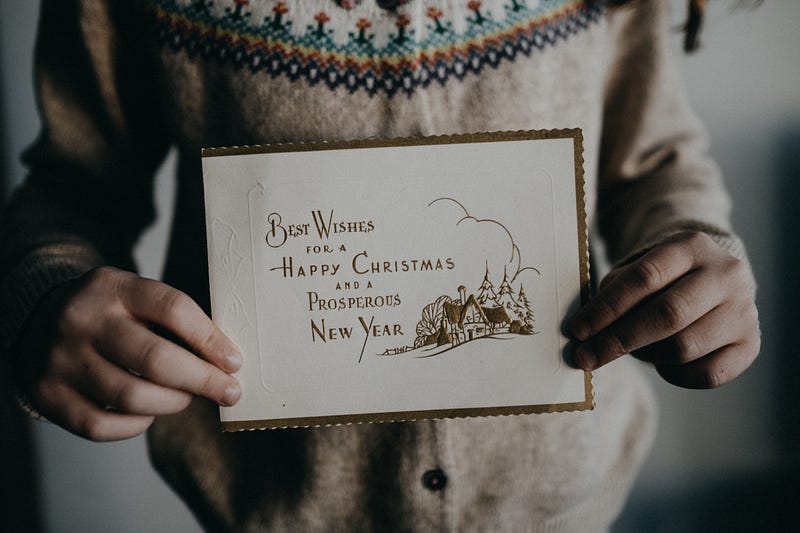
There it is — another Christmas card from a friendly acquaintance.
These people rarely speak to us. Our families never get together. Nevertheless, this card maintains our acquaintance life-support by exchanging glossy photos and mundane phraseology like, “Merry Holidays, Everyone!”
And it’s the seventh card this season.
I’m tired of opening envelopes to find picture-perfect families wearing khakis and standing in front of an old, rustic barn. As a husband and father, I know the great pains you went through to have your family of five and golden retriever pose that way.
I don’t understand why we’re still doing this holiday card practice. The giving of these cards began in the 19th century because people had too little time for genuine correspondence — and it seems to have gotten worse.
I can find only two explanations for sending these items today — and both seem inadequate. The first is to send loved ones or dear friends a photo with a family update. Who doesn’t like this sort of thing? According to the holiday card companies, it’s a gesture of spreading cheer.
But a holiday card is redundant if our family knows you well already. Why send a card with your family’s year-long update if I spoke to you about it last week? If I’ve seen your family at its best and worst, then a perfect photo op is ideological misdirection — we both know that’s not really you.
The second option for sending cards is to keep in touch with various people — friends of yesteryear and acquaintances alike. But again, if we rarely speak, the card becomes more about you (or your business) than ongoing friendship. In no way does your photo impact my correspondence with you on a deeper, more existential level. If anything, the card is legitimatized gossip soon forgotten after the holiday festivities wane.
Okay, so maybe I am bah humbug about the entire ordeal of holiday cards. All kidding aside, I find some value in sending these cards. And if the reader has any positive experience of sending holiday cards, then by all means continue the tradition.
However, I’m simply pondering the picture holiday card’s ontological purpose in the modern setting. After the seventh — now make that eight card — my mind wanders on how to best respond to this phenomenon.
Which got me thinking, Is this holiday card tradition still worth it?
Why send these paper picture things en masse or for what purpose? Should we go along with the tradition because it’s tradition? Isn’t this all a hidden ideological agenda for some consumeristic trend?
Holiday Ideology with Slavoj Žižek
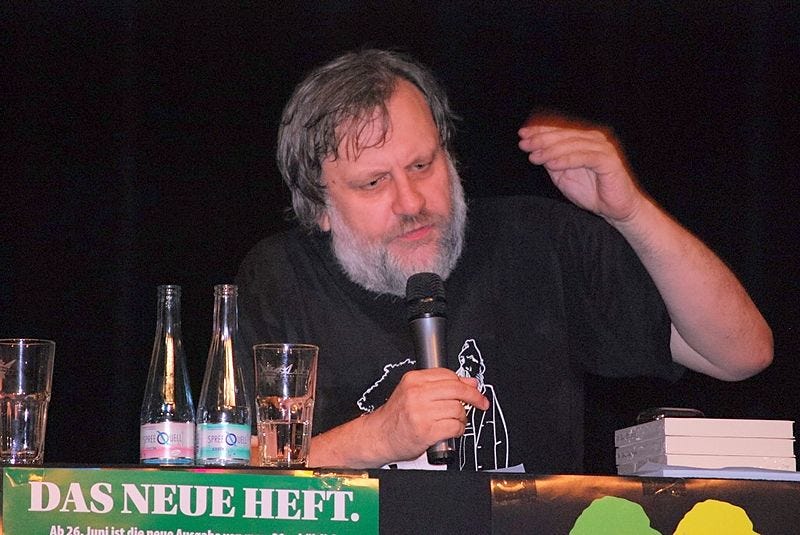

Whenever talk of ideological agendas arises, Philosopher Slavoj Žižek isn’t far behind. This provocative thinker has a knack for uncovering systems that keep things hidden so that questioning their status quo becomes unthinkable — like challenging the holiday card craze.
Žižek’s popularity transcends academic philosophy due to his engagement in popular topics. For Žižek, we are all influenced by these hidden ideological systems even if we believe we aren’t. It’s why things stay the same without societal change.
And that’s the goal of ideology — getting people to believe there are no other alternatives to the commonly held view. Fields of politics, economics, relationships, global affairs, religion, or even pop culture present themselves as unbiased to maintain order (or power) while concealing their inherent prejudices.
Before tackling what I take as the ideology of holiday cards, let’s look at two ideological-uncovering examples from Žižek. The first deals with Western consumerism.
According to Žižek, companies now fool consumers into “feeling good” when buying unnecessary shit by giving a portion of the proceeds to charitable causes (Žižek discusses a famous coffee retailer’s efforts in this video).
Thus, people purchase extra stuff in a euphoric state since they believe they’re helping out a charitable movement. But in this act of purchasing for charity, they forget about the tolls of consumerism itself — of which many companies are complicit.
Notice in the above example nothing changes with consumerism. Companies hide any harmful impact consumerism might have on the planet or the wellbeing of a people. Instead, they redirect the purchaser’s gaze to the act of charity built into the purchase itself. This act is ideology at its finest.
Or, take the second more light-hearted example.
When discussing Santa Claus, Žižek shows how a family’s Christmas reality structures itself on the false belief of Santa’s existence. Parents pretend there’s a Santa Claus for their children, but children likewise pretend there’s a Santa to forgo upsetting their parents. Everyone hides their true beliefs for the benefit of the other. But in doing this, the magical Christmas reality is fabricated. Nothing changes to make it real — and the tradition continues based on a falsity.
So, how might Žižek’s thinking help us look at holiday cards and their ideological misdirection? That’s where we now turn.
Calling Out Holiday Card Ideology
I feel the ideology of the holiday card is that it prohibits what we believe they’re encouraging — namely, building relationships and joy. These cards are often a good sentiment, but I question how much they bring joy to the forefront.
For example, a friend of mine purchased holiday cards to keep in touch with various friends without partaking in the real work of genuine relationship building. He told me, “It’s just something our family does. I know we won’t get any closer to these people— I just want to spread holiday cheer.”
When this occurs, the holiday card becomes a way to keep distance without having to say so directly and awkwardly to the other person. The subconscious message of his card is, “We like you…just not that much to enter into our lives regularly.” It’s friendship from an (emotional-physical) distance.
Or, if we do have an ongoing relationship, then the holiday card can become a staple of approval. Here the proper societal response is to purchase my holiday card for the other party involved. Another friend takes this approach — whoever gives a card gets a card!
I imagine the holiday card business loves this back-and-forth. The thought of not returning a holiday card when one is received breeds anxiety. And so the message of this card is, “You don’t need this holiday stock photo to maintain our friendship, but I must send it so you know I appreciate the card you sent me.”
In both cases, the holiday card is worthless in improving relationships. The practice changes nothing. These paper products misdirect us into thinking they build relationality when they rarely do. I wonder if Žižek would agree — isn’t the practice of holiday card giving hiding something from us to keep it going?
And this is on top of the other adverse effects of holiday card consumption. To say they always bring joy is debated.
The billion-dollar card business certainly has a part in the pollution process. According to Envirotech online, the production and shipment of a single holiday card will release up to 140g of carbon dioxide. This trend isn’t exactly spreading Christmas joy — especially when sending them to one hundred and fifty of your non-closest friends.
Furthermore, there’s the whole dilemma of putting pressure on ourselves in an already stressful holiday season. The joy of the holidays is sucked out of us as we attempt to address dozens of people with a staged picture in between shopping and family time.
This reality then begs the question — is the tradeoff of extra stress associated with a mass exodus of cards by a holiday deadline worth it?
Studies have already shown the high-stress rates of the holiday season. Even if there are (small) benefits to sending or receiving a standard holiday card, I question whether it’s worth the costs if either side becomes burdened with extra stress.
Ask yourself, Do I want my friendly acquaintance to send me a card if they could sit and relax with their family instead? Do I want a best friend’s card if the stress of sending it before Christmas overtakes the chance to grab a holiday coffee with them?
And do I want to spend more holiday money on cards so that those receiving them know I received theirs — like some endless game of holiday card tag? If I’m honest, I’d leave the ideological game altogether and donate the cost of the cards to a charity.
Conclusion: Time to Say Goodbye to Photo Holiday Cards?
I’ve tried to show the worthlessness of the photo holiday card. On some level, I know I’ve failed. Many generous people send cards for different reasons — and often with beautiful, heartwarming intentions. If that’s you then carry on.
But using Žižek’s insights into ideology, I believe we’re sometimes hindering what we want to happen with relationships in the holiday season. We want to feel close to others, but we spend time sending cards instead of gathering together — often with added stress. Then we are tricked into believing this tradition is necessary and beneficial without any alternatives.
To this, I say good riddance to this form of an engineered holiday card. I won’t fall prey to this holiday card ideology again.
Yet I’d be lying if I said my family doesn’t send out something during the holiday season. In place of Christmas cards, we send homemade thank you cards crafted and handwritten by our family. We reflect on the year and those we would like to thank for being in our lives and helping us. Each card is a request to meet up and celebrate the joyful Christmas season.
Not everyone we know gets a card each year. But upon reception, it is a genuine longing to form healthy and engaged relationships in the year to come.
And for those acquaintances that continue to send us the traditional holiday card with no intention of coming together? Maybe I’ll send them one back this year….of Slavoj Žižek saying the following, “Stop sending us these holiday cards. It’s all ideology!”