avatarStringMeteor

Free AI web copilot to create summaries, insights and extended knowledge, download it at here

6375

Abstract

p id="dd56">It’s clear that <b>ChatGPT</b> loses in this situation, while <b>Google</b> is able to succeed without much effort.</p><figure id="64e9"><img src="https://cdn-images-1.readmedium.com/v2/resize:fit:800/1*8_uIW6Hzbl728Q_ueZ4Kzg.png"><figcaption></figcaption></figure><figure id="6ad0"><img src="https://cdn-images-1.readmedium.com/v2/resize:fit:800/1*VFQwqcKRMdYycO3cbntqwQ.png"><figcaption>Google Output</figcaption></figure><h2 id="85a0">4 — Finding news articles or blog posts related to a specific topic.</h2><p id="9f34">Even though <b>ChatGPT</b> was capable of showing us a series of articles regarding the event, when asked to show a particular one, it just failed to do so. On the other hand, <b>Google</b> also had issues this time when I asked it to show a specific article from the ones <b>ChatGPT</b> proposed us. This comes as a confirmation of an implicit weakness in <b>Google</b>’s queries comprehension when composed with natural language compared to the standard query format.</p><figure id="7523"><img src="https://cdn-images-1.readmedium.com/v2/resize:fit:800/1*htFqT7a5-ifOjJMN8J8Apw.png"><figcaption>ChatGPT Output</figcaption></figure><figure id="623e"><img src="https://cdn-images-1.readmedium.com/v2/resize:fit:800/1*THC0PlHWrY2YShWD1Vr3LA.png"><figcaption>ChatGPT Output</figcaption></figure><figure id="d5c1"><img src="https://cdn-images-1.readmedium.com/v2/resize:fit:800/1*YSKXbMnCC6CNd5QoNZeRUQ.png"><figcaption>Google Output</figcaption></figure><figure id="56e0"><img src="https://cdn-images-1.readmedium.com/v2/resize:fit:800/1*pFBW7qyiVX8d3GTqHd6Kcg.png"><figcaption>Google Output</figcaption></figure><figure id="9b4f"><img src="https://cdn-images-1.readmedium.com/v2/resize:fit:800/1*9u2_cxxRwcHkYKEKBuGqXQ.png"><figcaption>Google Output</figcaption></figure><h2 id="0043">5 — Looking up maps and directions to a specific location.</h2><p id="5c27">Although <b>ChatGPT</b> was able to provide us with some general information about public transit and transportation, it was unable to guide us as effectively as <b>Google</b> <b>Maps</b>.</p><figure id="6a96"><img src="https://cdn-images-1.readmedium.com/v2/resize:fit:800/1*aNtHpdxwgb2whMSBPsXHEw.png"><figcaption>ChatGPT Output</figcaption></figure><figure id="ce73"><img src="https://cdn-images-1.readmedium.com/v2/resize:fit:800/1*zfF3Qhg6AU9Cx8SKoqizqA.png"><figcaption>ChatGPT Output</figcaption></figure><figure id="0067"><img src="https://cdn-images-1.readmedium.com/v2/resize:fit:800/1*gURzU_Epi5yhgh_GGdHolw.png"><figcaption>ChatGPT Output</figcaption></figure><figure id="76fc"><img src="https://cdn-images-1.readmedium.com/v2/resize:fit:800/1*GlGQsd7g3Myvt3KAvekJVQ.png"><figcaption>Google Maps Output</figcaption></figure><h2 id="3a6d">6 — Finding contact information for a person or business.</h2><p id="d52a">This task was handled flawlessly by both <b>ChatGPT</b> and <b>Google</b>, as you can see from the screenshots:</p><figure id="2bb8"><img src="https://cdn-images-1.readmedium.com/v2/resize:fit:800/1*1cGnp8kKz0oOTtsQ2oFtlA.png"><figcaption>ChatGPT Output</figcaption></figure><figure id="c72c"><img src="https://cdn-images-1.readmedium.com/v2/resize:fit:800/1*te8MueqyrZvJRcaRYfT2Bg.png"><figcaption>Google Output</figcaption></figure><h2 id="89fd">7 — Checking the weather forecast for a specific location.</h2><p id="ec26">As you might have guessed already, <b>ChatGPT</b> loses this one; however, it handles this situation elegantly, at least explaining carefully why it is unable to do so.</p><figure id="9952"><img src="https://cdn-images-1.readmedium.com/v2/resize:fit:800/1*tizze10Oyw1HN_RMp18yTA.png"><figcaption>ChatGPT Output</figcaption></figure><figure id="dc2f"><img src="https://cdn-images-1.readmedium.com/v2/resize:fit:800/1*WhxT79ETBUBOTENI1Liw0g.png"><figcaption>Google Output</figcaption></figure><h2 id="f4d4">8 — Converting units of measurement or currency.</h2><p id="34e0">What we’ve just saw in the previous query applies also this time.</p><figure id="31d6"><img src="https://cdn-images-1.readmedium.com/v2/resize:fit:800/1*0FCU07VXU1LgEoNeRA0a5w.png"><figcaption>ChatGPT Output</figcaption></figure><figure id="9122"><img src="https://cdn-images-1.readmedium.com/v2/resize:fit:800/1*B6gtHkbAQSVSAcXsLxSqMQ.png"><figcaption>Google output</figcaption></figure><h2 id="bd50">9 — Finding the answers to specific questions or problems.</h2><p id="a7d4">In this category, I’ve included two queries, one related to booking hotels and the other to general technical stuff. The issues came with the first one for <b>ChatGPT</b>. Even though it managed to provide us with a list of hotels, it is clear that this data cannot be trusted, as it is not guaranteed that these entries are still present in hotel booking systems.</p><figure id="4194"><img src="https://cdn-images-1.readmedium.com/v2/resize:fit:800/1*f_7QArNBKoPqmlPnvgD3uw.png"><figcaption>ChatGPT Output</figcaption></figure><figure id="4dc8"><img src="https://cdn-images-1.readmedium.com/v2/resize:fit:800/1*jp55ePauMtSR3d53nsOGAA.png"><figcaption>ChatGPT Output</figcaption></figure><figure id="397a"><img src="https://cdn-images-1.readmedium.com/v2/resize:fit:800/1*SNEsf3GA8suYTYKnLHUhag.png"><figcaption>Google Output</figcaption></figure><figure id="7cce"><img src="https://cdn-images-1.readmedium.com/v2/resize:fit:800/1*hfjUgpzb3IHx1WUcMAV4qg.png"><figcaption>ChatGPT Output</figcaption></figure><figure id="4add"><img src="https://cdn-images-1.readmedium.com/v2/resize:fit:800/1*ca2Lfl44tdeAbgSRwErX4w.png"><figcaption>Google Output</figcaption></figure><h2 id="096a">10 — Researching products before making a purchase.</h2><p id="776c">While <b>Google</b> returned some articles about smartphone rankings, <b>ChatGPT</b> performed pretty well, if it wasn’t for its knowledge cutoff at 2021's events. Despite this, it shows great potential as a shopping advisor and companion, as simply prompting it with a list of preferences can guide us to the best available product.</p><figure id="24f9"><img src="https://cdn-images-1.readmedium.com/v2/resize:fit:800/1*-CyOWoZvsWL-ByWEwMPGfg.png"><figcaption>ChatGPT Output</figcaption></figure><figure id="d9c8"><img src="https://cdn-images-1.readmedium.com/v2/resize:fit:800/1*84sGAJPZ9H-KAOiGYlguHg.png"><figcaption>ChatGPT Output</figcaption></figure><figure id="bc35"><img src="https://cdn-images-1.readmedium.com/v2/resize:f

Options

it:800/1*4-SFycj9SSGTX_NIv6ZydA.png"><figcaption>ChatGPT Output</figcaption></figure><figure id="1f67"><img src="https://cdn-images-1.readmedium.com/v2/resize:fit:800/1*1VgmfH_qK24E0AZtu6FZEA.png"><figcaption>Google Output</figcaption></figure><h2 id="2146">Final verdict:</h2><p id="2a33">The <b>Google</b> search engine manages to provide us with a list of websites that can satisfy our requests, or at least claim to, in basically every query I’ve tried. In some cases, the answer is directly embedded in the <b>Google</b> search engine interface and thus directly provided by <b>Google</b>, ensuring its accuracy. We can say it scores a 10/10 in this unpretentious comparison.</p><p id="231a"><b>ChatGPT</b> managed to answer 4 out of 10 query categories in an acceptable way, while in 3 categories it only managed to provide us with outdated or partial information for one or more queries in that particular testing category. For example, I would consider the hotel query to be outdated because we cannot trust it for our booking needs, or we would need to cross-check the provided information elsewhere in any case.</p><p id="60cf">One thing this light-hearted comparison doesn’t take into consideration is the seeking time, or in other words, the time it takes to find the requested information. In fact, if we take this parameter into consideration, <b>Google</b> may have a setback, since, excluding when answers are directly embedded in the result screen, one has to choose which article to open first after a careful screening of the proposed list, while <b>ChatGPT</b> can provide us with an answer instantly (except for exceptional traffic on the website and scaling issues).”</p><h1 id="2356">Closing thoughts</h1><p id="f94b">Both <b>ChatGPT</b> and <b>Google</b> serve as valuable resources for everyday tasks like problem-solving and various other applications that were once the sole domain of <b>Google</b>. Each has its own strengths and weaknesses, though.</p><p id="7f68">While <b>Google</b> still holds the advantage of providing real-time and up-to-date information through its powerful search capabilities and continually improving ranking algorithm, <b>ChatGPT</b> shines in its ability to comprehend and respond to more complex user inquiries. <i>This is particularly beneficial for non-experts who often struggle to articulate effective search terms using traditional engines</i>.</p><p id="5600">In fact, many people steer clear of <b>Google</b>’s advanced search features due to their lack of user-friendliness, leaving these tools to be utilized mostly by a small group of highly proficient users. Thus, <b>ChatGPT</b> can be especially helpful for those in need of more specialized or technical information or who face difficulties using traditional search methods.</p><p id="4016">In my personal experience, I have found <b>ChatGPT</b> very easy to use and very effective in certain types of information retrieval related to <b>software development</b>, but mileage may vary depending on one’s own work pipeline. At the same time, I think <b>Google</b> maintains its lead in the majority of general daily tasks that I find myself executing.</p><p id="47fb">It will also be interesting to see what people from different backgrounds, beyond just computer engineers (who have been the main group testing and playing with <b>ChatGPT</b> so far), come up with as uses for <b>ChatGPT</b>. In fact everyone has specific use cases for a search engine depending on their own job. Please share your view if you feel you work pipeline has been improved or can be enhanced adopting <b>ChatGPT</b> in place of <b>Google</b> or in general by introducing it.</p><p id="44b6">As a final note, I would like to highlight how this comparison holds only demonstrative value and, moreover, does not compare <b>ChatGPT</b> to <b>Google</b> in those areas where <b>ChatGPT</b> would win hands down. If you want to know more about that, check out some other articles related to <b>ChatGPT</b>’s capabilities as a large language model.</p><p id="23a1">If you liked 👏 this article you may enjoy reading through some of my other articles. Oh, and don’t forget to follow me! 🫵</p><h1 id="01e4">Further reading</h1><p id="733d"><i>Below, you can find a list of related articles:</i></p><div id="d19f" class="link-block"> <a href="https://readmedium.com/chatgpts-integration-into-microsoft-bing-a-game-changer-for-search-1636c67e0c08"> <div> <div> <h2>ChatGPT’s Integration into Microsoft Bing: A Game-Changer for Search?</h2> <div><h3>Bing is rumored to get a major upgrade with ChatGPT integration: here’s what it means for users.</h3></div> <div><p>medium.com</p></div> </div> <div> <div style="background-image: url(https://miro.readmedium.com/v2/resize:fit:320/1*lFGExrndNUL3XEPTlTDG0g.jpeg)"></div> </div> </div> </a> </div><div id="bede" class="link-block"> <a href="https://readmedium.com/chatgpt-the-ai-assistant-that-can-run-and-debug-your-code-8bf8476496f2"> <div> <div> <h2>ChatGPT: The AI Assistant That Can Run and Debug Your Code</h2> <div><h3>Will AI revolutionize development by debugging our code?</h3></div> <div><p>medium.com</p></div> </div> <div> <div style="background-image: url(https://miro.readmedium.com/v2/resize:fit:320/1*4UqspSid1aAypuekyl5DlA.png)"></div> </div> </div> </a> </div><div id="5dcf" class="link-block"> <a href="https://readmedium.com/how-an-ai-powered-chat-bot-can-help-you-rewrite-history-f4de3e48a634"> <div> <div> <h2>How an AI-Powered Chat Bot Can Help You Rewrite History</h2> <div><h3>Exploring alternate histories with an AI-assisted journalist powered by the GPT-3 natural language model</h3></div> <div><p>medium.com</p></div> </div> <div> <div style="background-image: url(https://miro.readmedium.com/v2/resize:fit:320/1*k03T_wrz48qEuehvpDwCRg.jpeg)"></div> </div> </div> </a> </div></article></body>

ChatGPT

Is the Future of Search Here? Comparing Google and ChatGPT

The rise of large language model AI assistants: will they replace Search Engines?

Google Search is one of the most widely used search engines in the world and is known for easily allowing users to search for information on the Internet. Nowadays, it is used by millions of people every day to find information on a wide variety of topics. It has begun a part of our daily life, as more and more people take to the search engine to find information and seek help on a wide range of topics, including the most personal matters, such as health-related ones.

A new star has risen in the last few weeks that has taken the web by storm, impressing many users with its ability to deliver mostly accurate (or seemingly) answers to the most disparate users’ requests as an AI-assisted chatbot, and acting in conversation almost as if we were talking to a human. I’m talking about ChatGPT, the latest iteration of the large language model trained by OpenAI, already known for its respected GPT-3 NL model and frequently making headlines for its demonstrated capabilities in various language tasks such as text summarization and generation.

Image generated with DALL-E; Image created with AI; © the author is responsible for the provenance and copyright.

As of now, ChatGPT is in free research beta, in which anyone can register for free to get a hands-on experience with the chatbot. Under these circumstances, requests have poured in from around the world for the chatbot.

Users have been sharing screenshots of their conversations with the bot, ranging from the most fun, such as poetry writing, to the most alarming (for some) in which the AI chatbot was able to write (not always) functional code with very few requirements, raising the question of whether the future of development and, by extension, creative tasks in general is destined to be replaced by AI entities.

This has risen many concerns in the community due to the potentially high social impacts such a technology could have in the future.

It’s certain that conversations like this will occupy a large part of the public discussions in the coming years, eventually reaching lawmakers who will be pressed to regulate the field as soon as the implications, whether good or bad, become clearer.

But for now, it is best to stick to technical and objective analysis of the tool capabilities, and one of the most obvious use cases we could imagin of today is whether it could be a complement or even an utter substitute for Google Search, at least in some tasks.

As we’ll see soon in the rest of this article, in fact, one of the shortcomings of a language model like this is that it is capable of delivering answers based only on the particular set of information it was trained on, in this case ending in 2021. As such, it won’t be able to provide us with up-to-date and real-time information such as news or directions on maps (which are subject to changes), and it certainly won’t be aware of Russia’s full-scale war in Ukraine, at least not yet.

With these premises in mind, let’s now turn to a direct comparison of the two competitors so that readers who haven’t had the time to play with the ChatBot can see its capabilities for themselves, and assess whether they might find some use for the AI-assisted bot as a complement to the battle-tested Google Search engine or even consider downright replacing it, at least in some tasks.

10 common things people use Google Search for: how does ChatGPT measure up?

Now that you’ve grasped the general picture of the trending news around ChatGPT, let’s move on to a more light-hearted face-off between the two contenders.

As part of it, we’ll be pitting ChatGPT against Google in a series of 10 common questions people are used to query Google for. These queries will serve as our test bed, as we see which tool can provide the most accurate and helpful responses, and will be in no means representative of all user niches but rather of the average user.

From simple trivia questions to more specific buying advice or news related questions, we’ll see how these two heavyweights stack up against each other.

Who will come out on top? Let’s find out!”

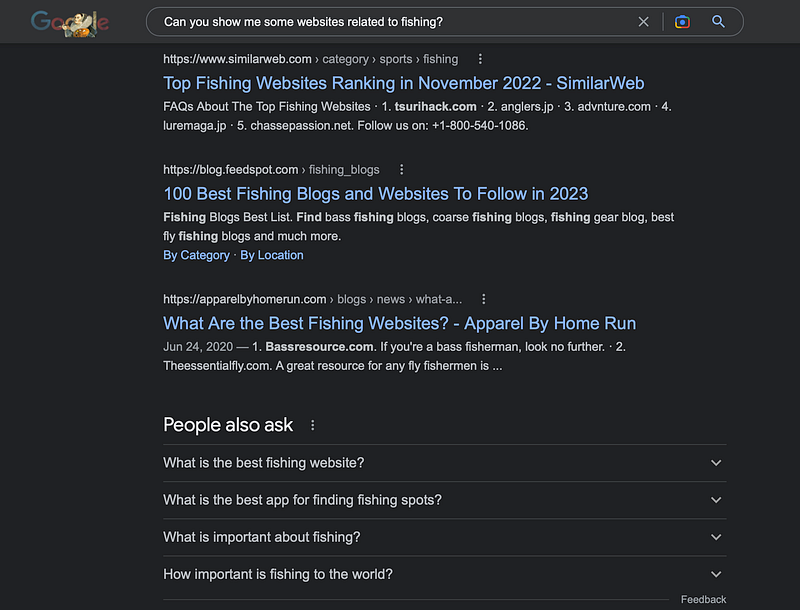
1 — Finding websites related to a specific topic or keyword.

In this first query, both answers are acceptable as far as coherence to the user request is concerned. I’ll leave it up to the reader, who is passionate about fishing, to evaluate whether ChatGPT proposed websites are actually trending websites for the fishing hobby.🎣
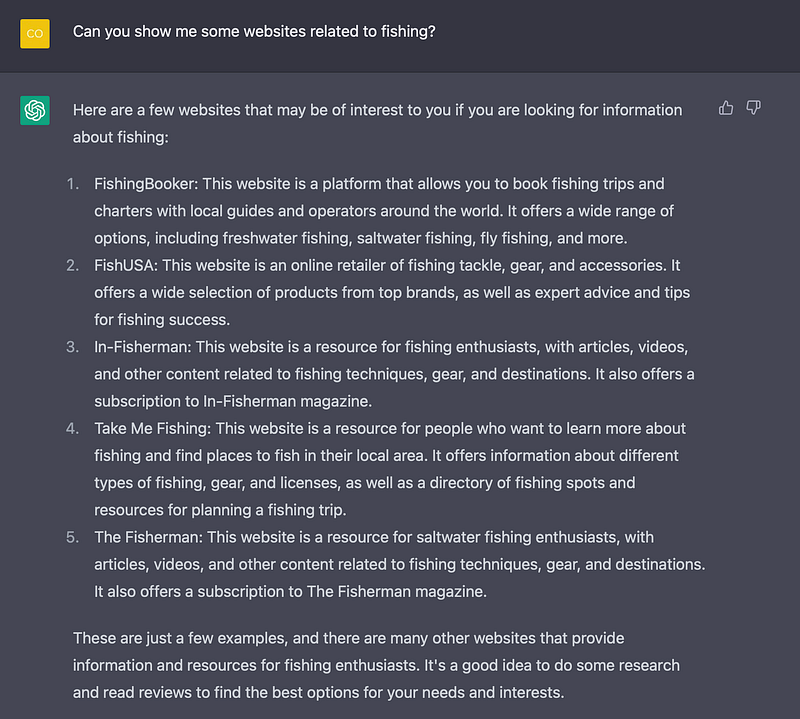
ChatGPT Output
Google Output

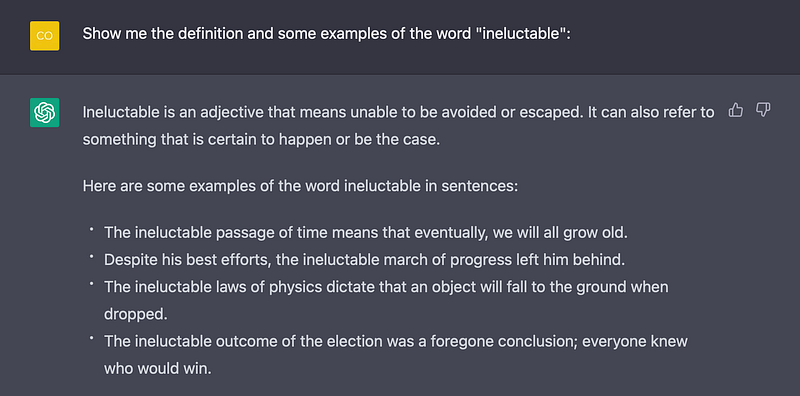
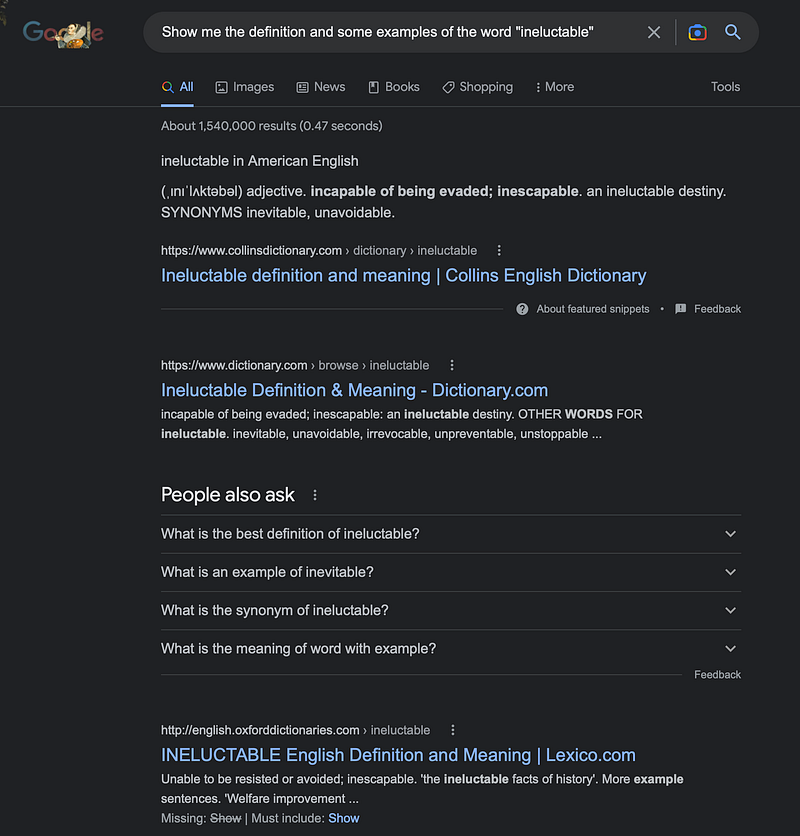
2 — Looking up definitions of words or phrases.

Here, ChatGPT shows us a brief definition together with some nice examples of usage of the requested word. Google, on the other hand, reveals its inferiority in terms of language comprehension, since the phrasing of the query wasn’t recognised as a grammar definition query, which usually directly shows a Google answer embedded in the results interface. Nonetheless, it managed, as usual, to point us to some established online dictionaries.
ChatGPT Output
Google Output

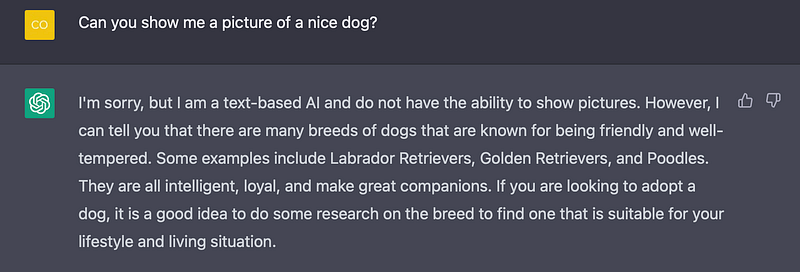
3 — Searching for images or videos.

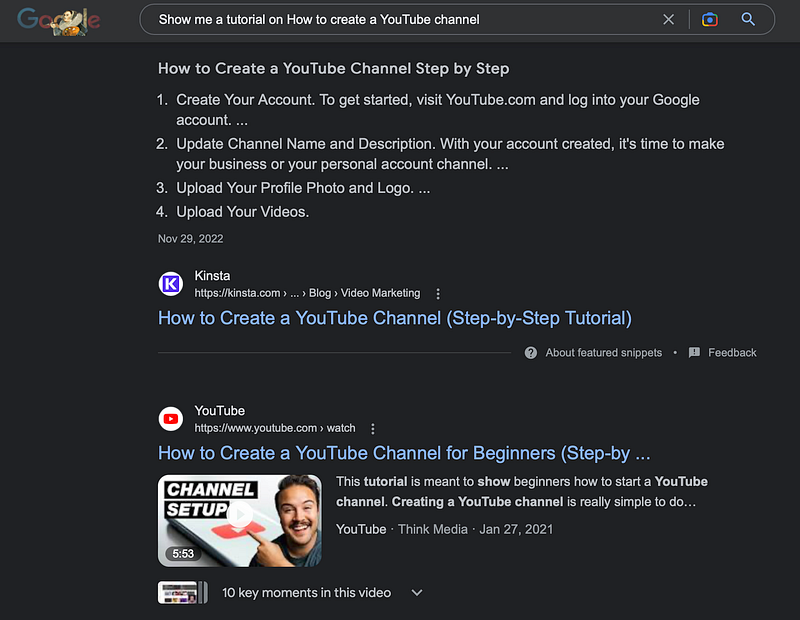
It’s clear that ChatGPT loses in this situation, while Google is able to succeed without much effort.
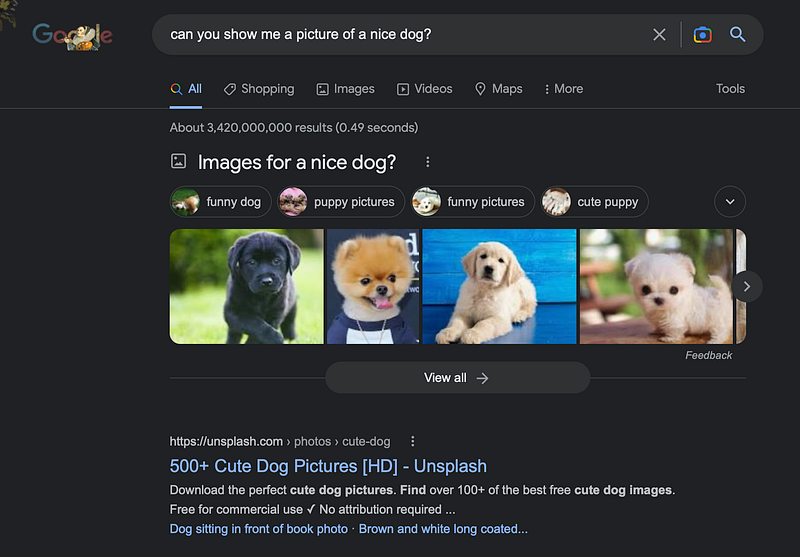
Google Output

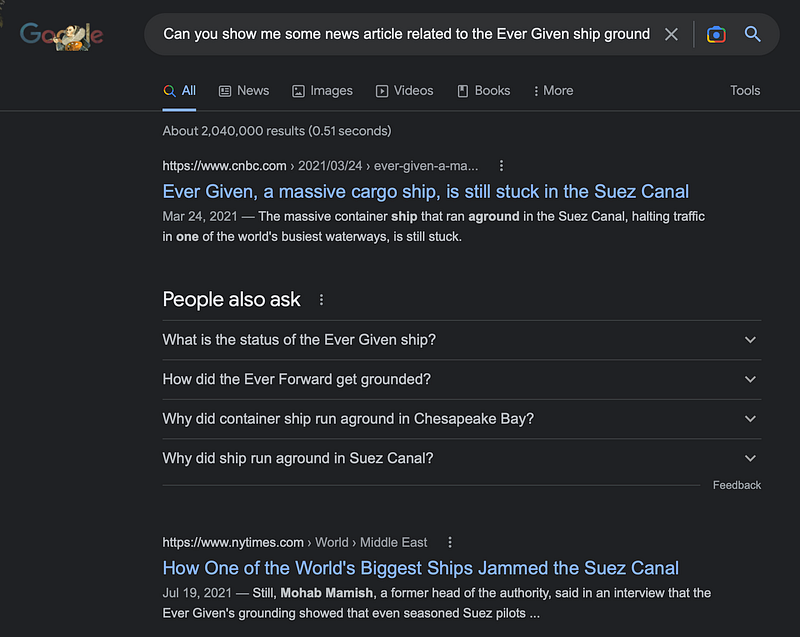
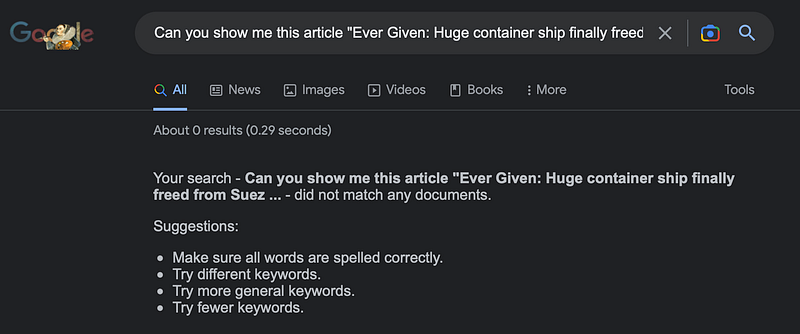
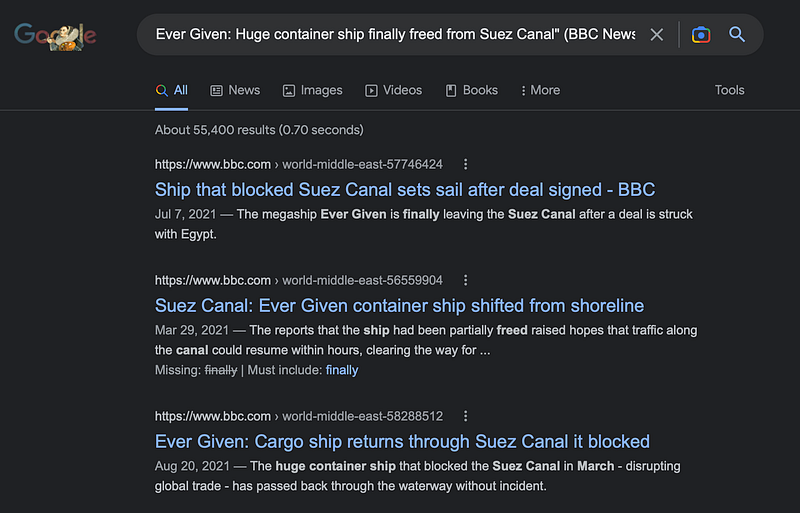
4 — Finding news articles or blog posts related to a specific topic.

Even though ChatGPT was capable of showing us a series of articles regarding the event, when asked to show a particular one, it just failed to do so. On the other hand, Google also had issues this time when I asked it to show a specific article from the ones ChatGPT proposed us. This comes as a confirmation of an implicit weakness in Google’s queries comprehension when composed with natural language compared to the standard query format.
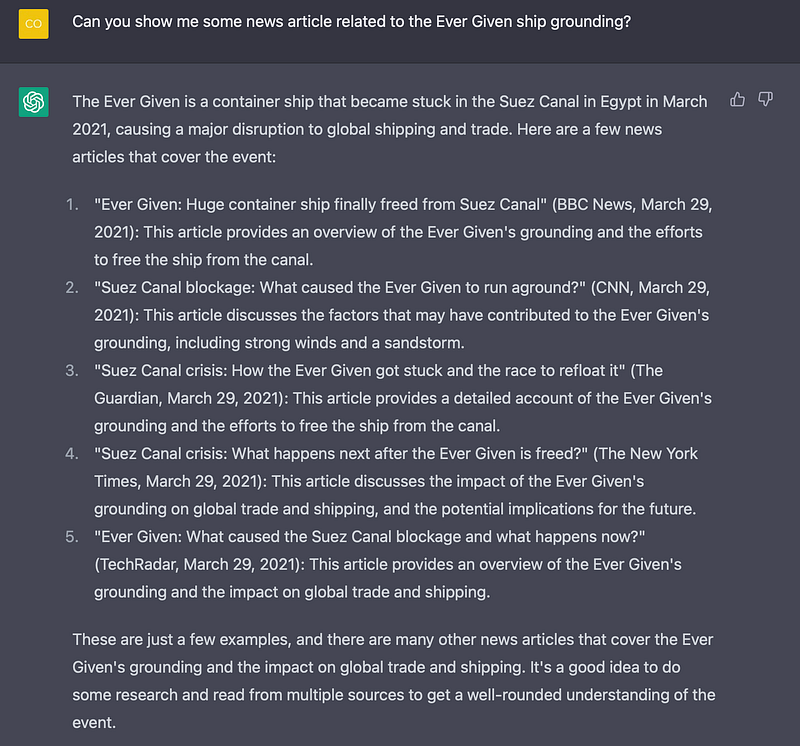
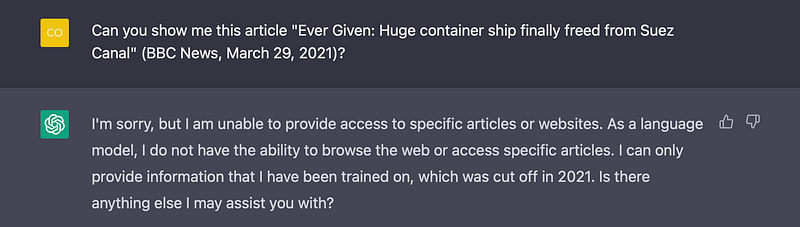
ChatGPT Output
ChatGPT Output
Google Output
Google Output
Google Output

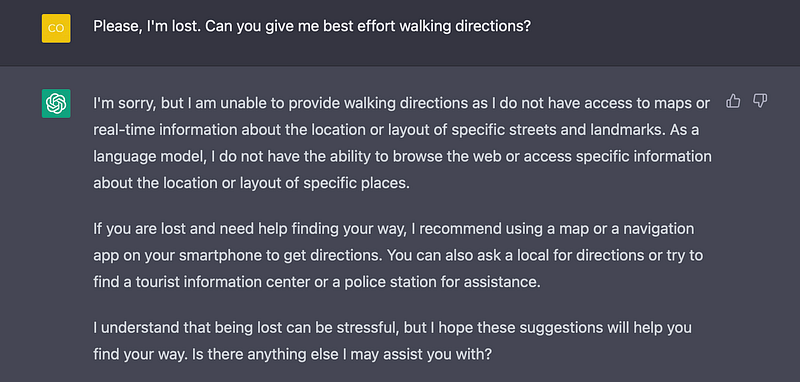
5 — Looking up maps and directions to a specific location.

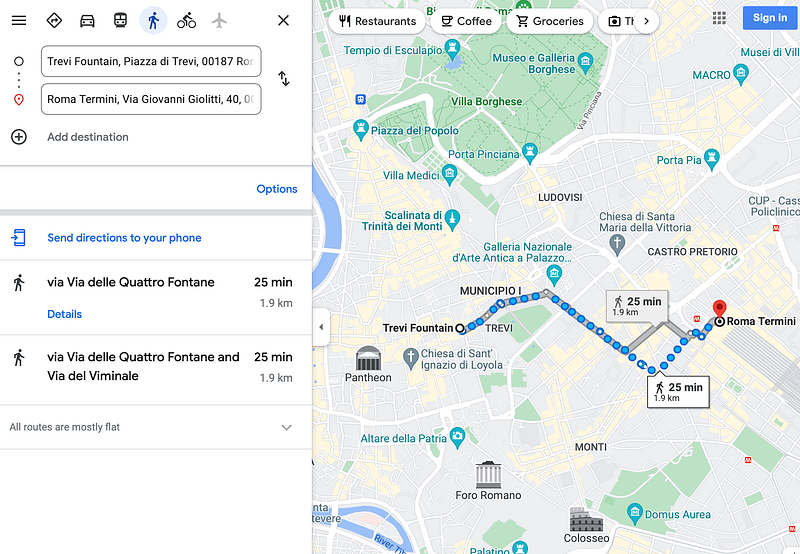
Although ChatGPT was able to provide us with some general information about public transit and transportation, it was unable to guide us as effectively as Google Maps.
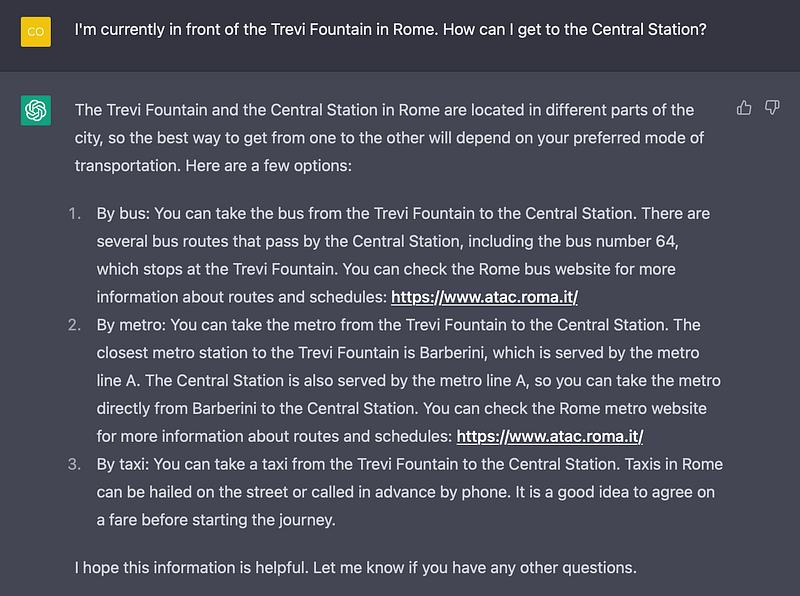
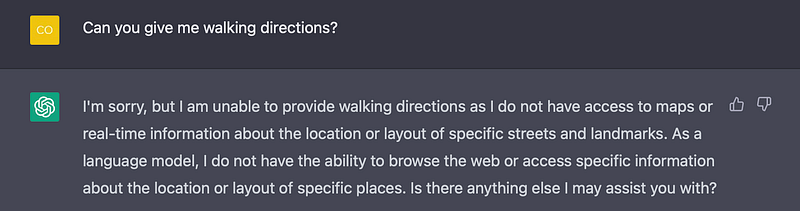
ChatGPT Output
ChatGPT Output
ChatGPT Output
Google Maps Output

6 — Finding contact information for a person or business.

This task was handled flawlessly by both ChatGPT and Google, as you can see from the screenshots:

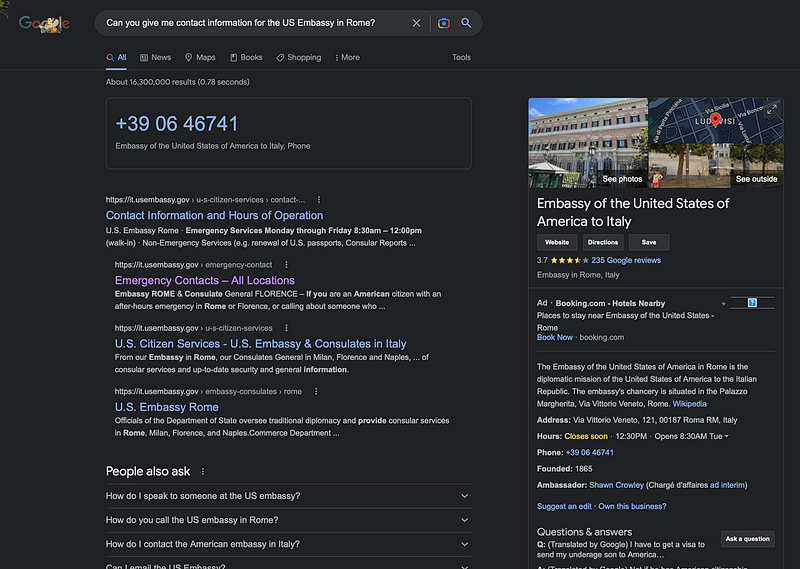
ChatGPT Output
Google Output

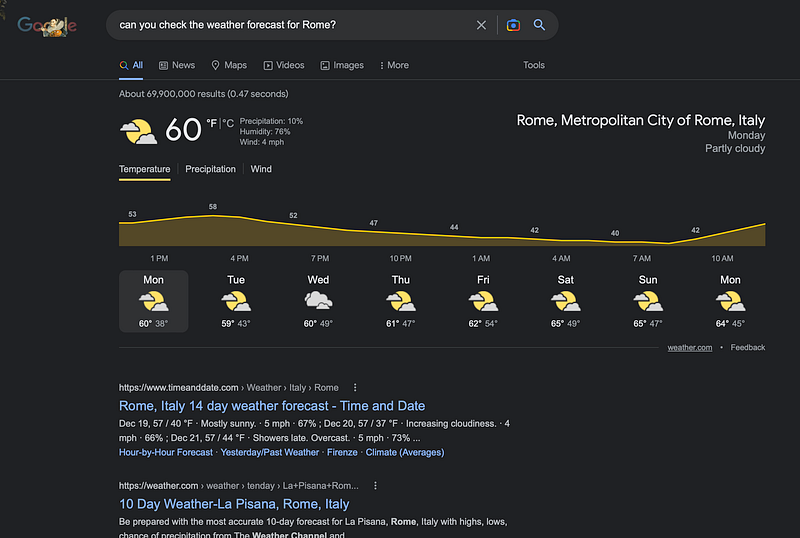
7 — Checking the weather forecast for a specific location.

As you might have guessed already, ChatGPT loses this one; however, it handles this situation elegantly, at least explaining carefully why it is unable to do so.
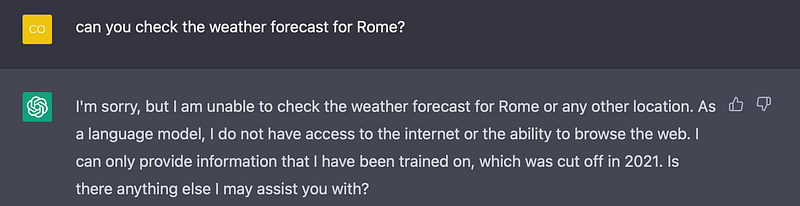
ChatGPT Output
Google Output

8 — Converting units of measurement or currency.

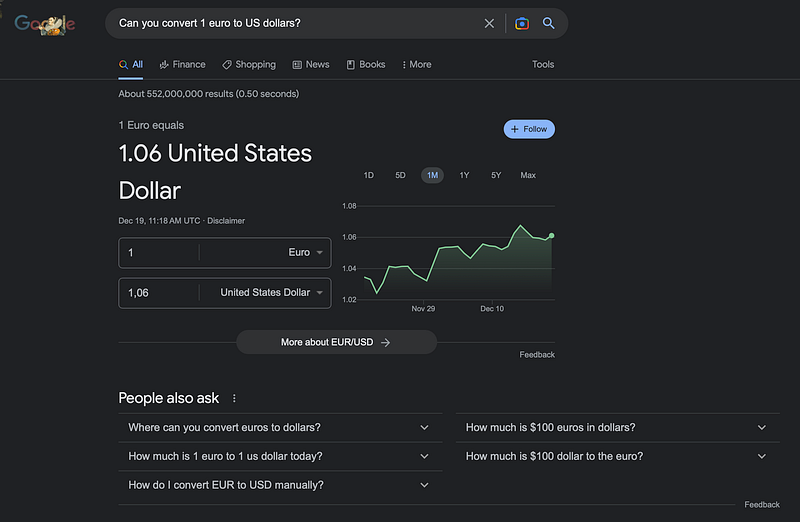
What we’ve just saw in the previous query applies also this time.
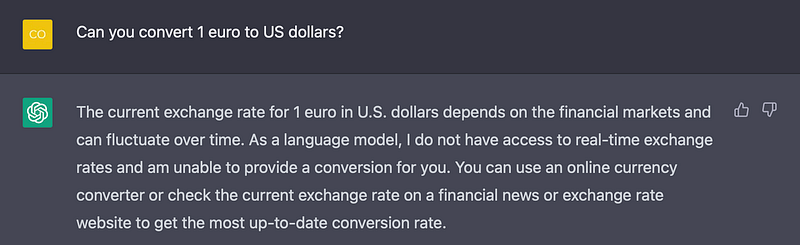
ChatGPT Output
Google output

9 — Finding the answers to specific questions or problems.

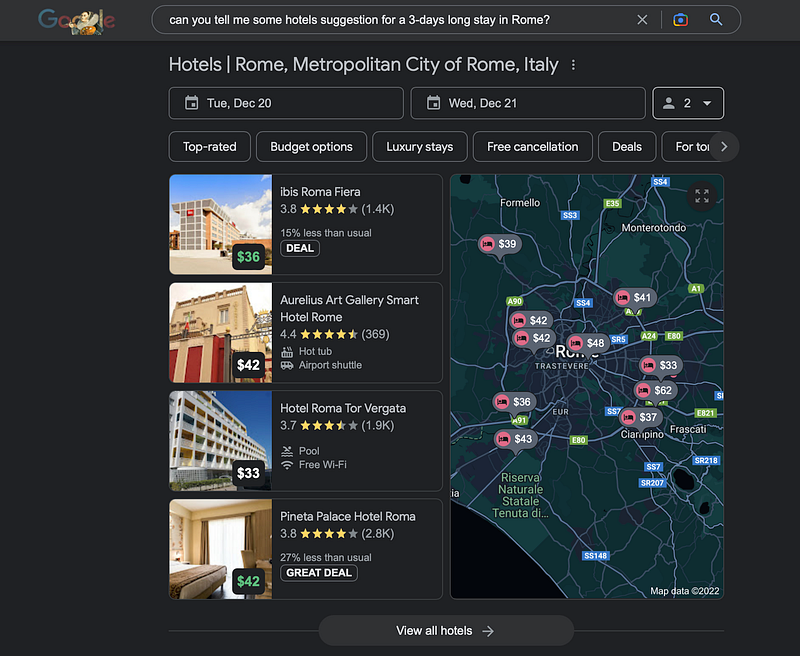
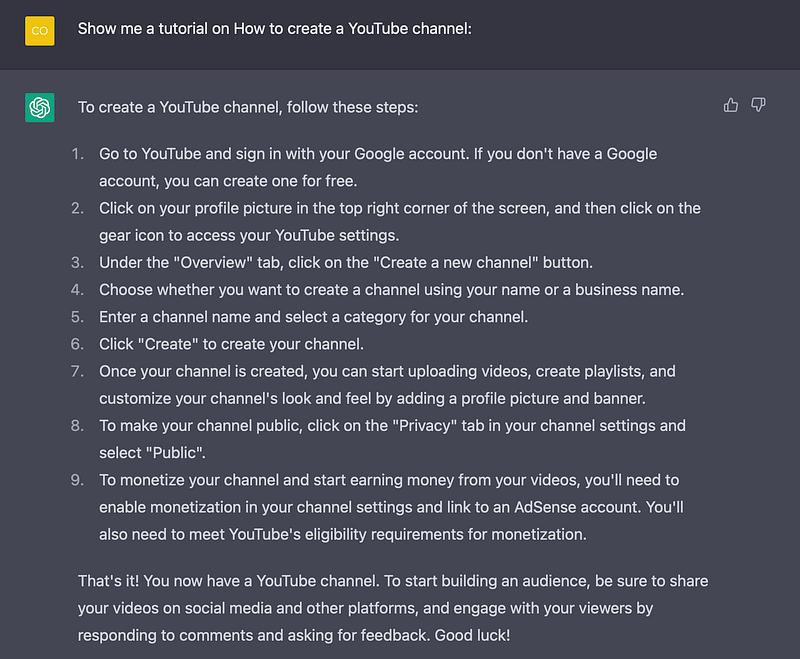
In this category, I’ve included two queries, one related to booking hotels and the other to general technical stuff. The issues came with the first one for ChatGPT. Even though it managed to provide us with a list of hotels, it is clear that this data cannot be trusted, as it is not guaranteed that these entries are still present in hotel booking systems.
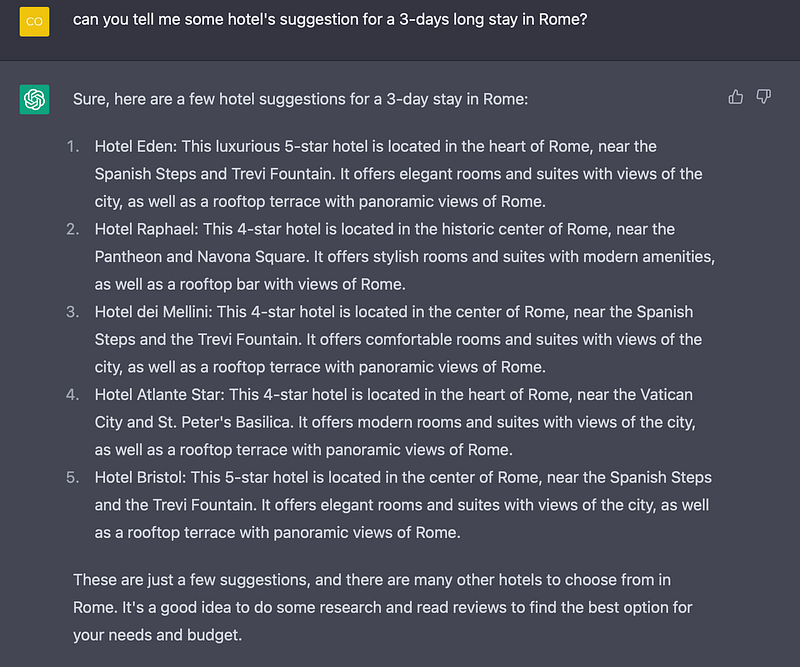
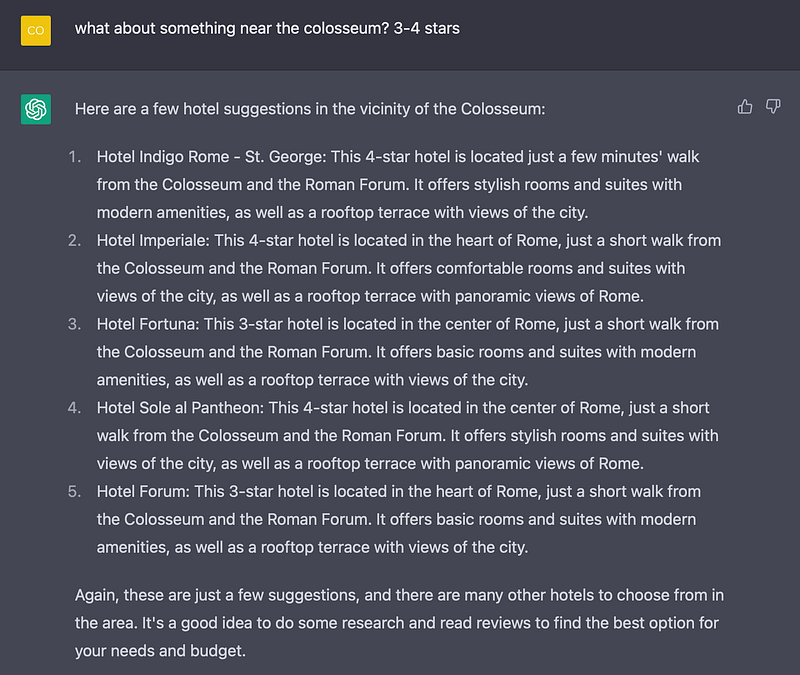
ChatGPT Output
ChatGPT Output
Google Output
ChatGPT Output
Google Output

10 — Researching products before making a purchase.

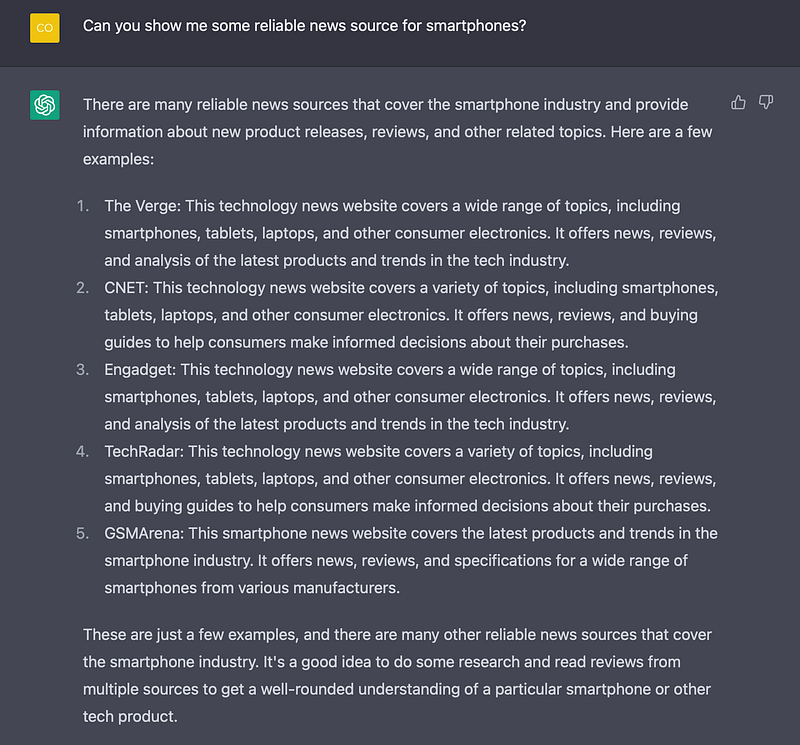
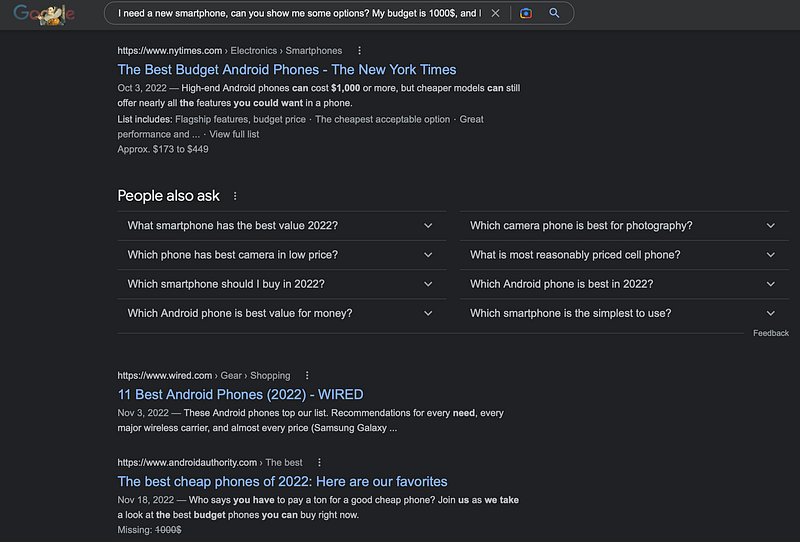
While Google returned some articles about smartphone rankings, ChatGPT performed pretty well, if it wasn’t for its knowledge cutoff at 2021's events. Despite this, it shows great potential as a shopping advisor and companion, as simply prompting it with a list of preferences can guide us to the best available product.
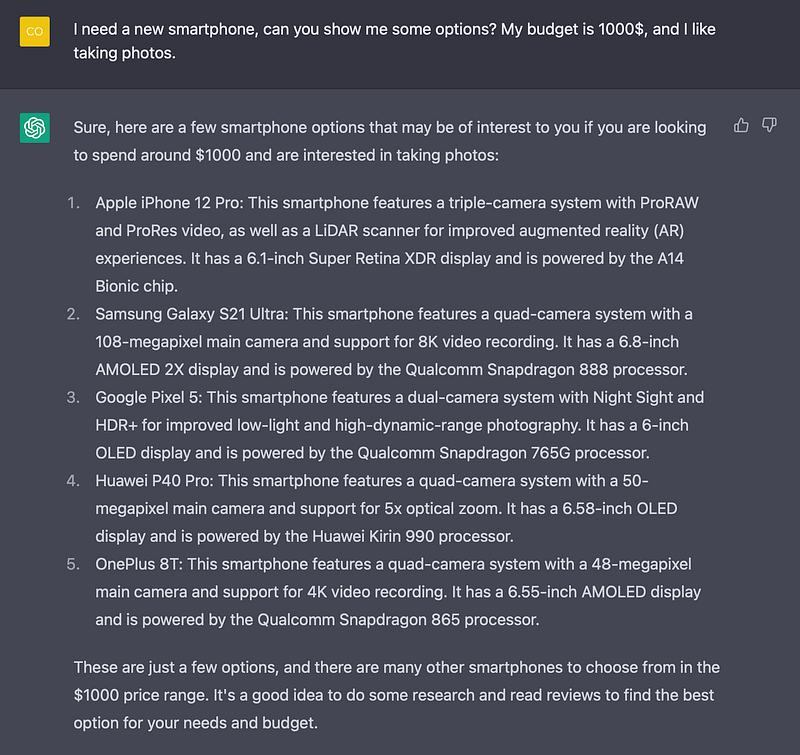
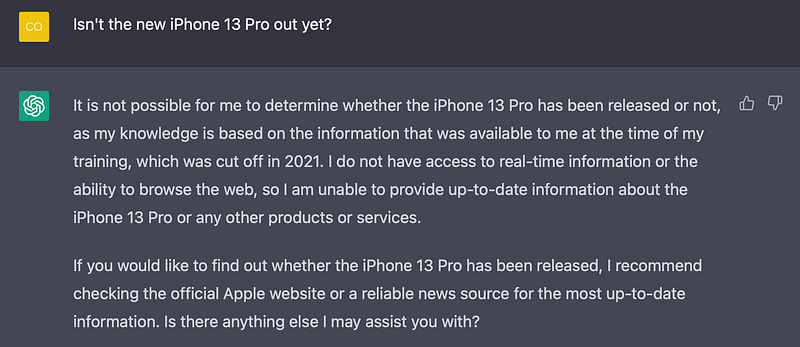
ChatGPT Output
ChatGPT Output
ChatGPT Output
Google Output

Final verdict:

The Google search engine manages to provide us with a list of websites that can satisfy our requests, or at least claim to, in basically every query I’ve tried. In some cases, the answer is directly embedded in the Google search engine interface and thus directly provided by Google, ensuring its accuracy. We can say it scores a 10/10 in this unpretentious comparison.

ChatGPT managed to answer 4 out of 10 query categories in an acceptable way, while in 3 categories it only managed to provide us with outdated or partial information for one or more queries in that particular testing category. For example, I would consider the hotel query to be outdated because we cannot trust it for our booking needs, or we would need to cross-check the provided information elsewhere in any case.

One thing this light-hearted comparison doesn’t take into consideration is the seeking time, or in other words, the time it takes to find the requested information. In fact, if we take this parameter into consideration, Google may have a setback, since, excluding when answers are directly embedded in the result screen, one has to choose which article to open first after a careful screening of the proposed list, while ChatGPT can provide us with an answer instantly (except for exceptional traffic on the website and scaling issues).”

Closing thoughts

Both ChatGPT and Google serve as valuable resources for everyday tasks like problem-solving and various other applications that were once the sole domain of Google. Each has its own strengths and weaknesses, though.

While Google still holds the advantage of providing real-time and up-to-date information through its powerful search capabilities and continually improving ranking algorithm, ChatGPT shines in its ability to comprehend and respond to more complex user inquiries. This is particularly beneficial for non-experts who often struggle to articulate effective search terms using traditional engines.

In fact, many people steer clear of Google’s advanced search features due to their lack of user-friendliness, leaving these tools to be utilized mostly by a small group of highly proficient users. Thus, ChatGPT can be especially helpful for those in need of more specialized or technical information or who face difficulties using traditional search methods.

In my personal experience, I have found ChatGPT very easy to use and very effective in certain types of information retrieval related to software development, but mileage may vary depending on one’s own work pipeline. At the same time, I think Google maintains its lead in the majority of general daily tasks that I find myself executing.

It will also be interesting to see what people from different backgrounds, beyond just computer engineers (who have been the main group testing and playing with ChatGPT so far), come up with as uses for ChatGPT. In fact everyone has specific use cases for a search engine depending on their own job. Please share your view if you feel you work pipeline has been improved or can be enhanced adopting ChatGPT in place of Google or in general by introducing it.

As a final note, I would like to highlight how this comparison holds only demonstrative value and, moreover, does not compare ChatGPT to Google in those areas where ChatGPT would win hands down. If you want to know more about that, check out some other articles related to ChatGPT’s capabilities as a large language model.

If you liked 👏 this article you may enjoy reading through some of my other articles. Oh, and don’t forget to follow me! 🫵

Further reading

Below, you can find a list of related articles:

ChatGPT
Artificial Intelligence
Google
OpenAI
Machine Learning
Recommended from ReadMedium