
Is The Combahee River Collective’s Fight For Black and Brown Women’s Rights Needed Today?
The revival of advocating for black, brown, and minority women’s rights.
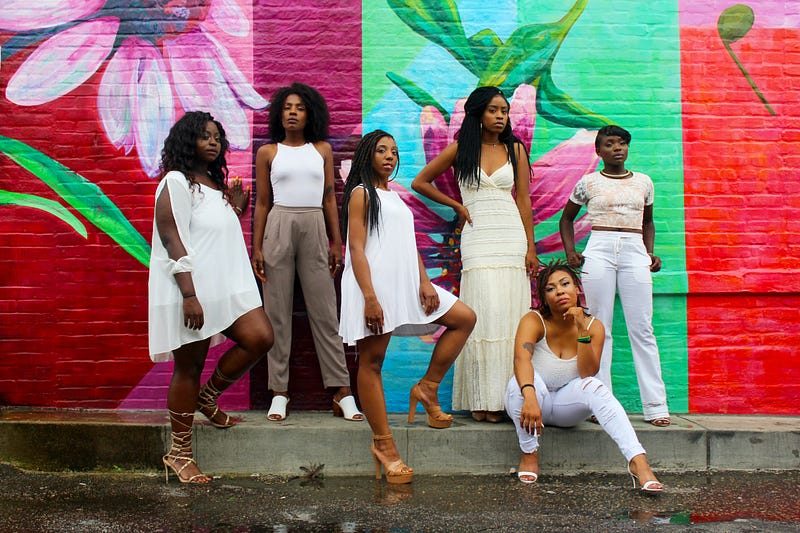
“Womanist is to feminist, as purple is to lavender,” Alice Walker (1983). Let’s take a deeper look at this claim to see how, where, and why it could serve us today.
If we look at the history and progression of mainstream feminism, it’s clear who it was and still is (to a degree) designed to serve: white women. That’s why we had feminists rise from the black, brown, minority, and marginalised communities to set their own agendas in response.
“Intersectionality,” a concept developed by Kimberle Crenshaw in 1989, points out that some women are oppressed by more than gender. Compared to traditional mainstream (white) feminism from previous waves, today’s intersectional feminism includes the experiences of a wider demographic of women.
In this fourth wave of feminism, intersectionality is “a thing.” Mainstream feminism is now incorporating the concept of intersectionality into it’s advocacy. This means for the community of black, brown, and minority women, there is a focus on our needs also (finally).
Is this merely lip-service from mainstream feminism? Time will tell.
Are You A ‘Womanist?’
Alice Walker defined the lens that black, brown, and minority women experience oppression and “feminist issues” through as being a “womanist” fight for equality, and named that fight “womanism” in 1983.
On the very first page of In Search of Our Mother’s Gardens (1983), a wonderful book of essays and prose from the sixties to the eighties, Walker states that a womanist is:
‘A black feminist, or feminist of colour’.
“Womanist” has been a term used since the eighties to separate the approach of minority women from traditional white feminism when advocating for women’s rights. “Womanism” or being a “womanist” is inclusive of the black, brown, and minority woman’s specific experiences of oppression based on the colour of her skin, as well as her class, and cultural oppression.
Classist discrimination is something else traditional feminism disregarded. This led to feminism at one point in time disregarding even lower classed white women when advocating for women’s rights.
That said, lower classed white women still did and do today benefit from the traditional white feminist movement — after all they were/are white. But back in the time when our foremothers were trying to pave a way for them and us to be included, in the eyes of society and the “upper classed” white females, the lower classed white women were still “women,” while we were not. This kind of discrimination ties back to the plantation. I gave just one of the many examples of a black female being legally defined as less than a woman in the essay How We Take Back Control Of Black Women’s Femininity (2023).
‘Womanism’ or being a ‘womanist’ is inclusive of the black, brown, and minority woman’s specific experiences of oppression based on the colour of her skin, as well as class.
Given all this, when you look at the timeline and read over what was happening when black feminists started to gather around the table, it’s clear our foremothers really had no choice but to stop knocking at the door of traditional feminism and asking, “what about us?”
The term “womanist” and “womanism” has been interpreted in many different ways, but if we stick to its roots, Alice Walker made it clear this is a term, framework, and type of politics created by one of us, for us — any woman who identifies as black, brown, or a minority.
Let’s Be Clear About Something
Alice Walker made it very clear that being a “womanist” is not about being a “separatist.” It appears she wasn’t talking about separation from other races of women only; she was also talking about both men and women. She said in the book mentioned above that a womanist is:
“Committed to the survival and wholeness of entire people, male and female. Not a separatist, except periodically for health’”
It is no secret that when a woman identifies as a woman who is for women’s rights, sometimes she gains a reputation of being a ‘man hater.’ I have been accused of being one. I would take a bet at some point you have been accused of this if you are for women’s rights and ready to advocate for it. For me, this is far from the truth. I love men of every race, nationality, ethnicity, hue, and shade when they don’t have toxic masculine energy about them.
The womanist approach to fighting for equality as a black, brown, or minority woman, being proud of being a woman, and most importantly loving other women as Alice Walker clarified, does not mean we need to hate the humans with the dangly parts between their legs, burn our bras, and become anti-male. Anti toxic-male… yes!… against the men generally, no. Just check their behaviour when they step out of line.
The Womanist and Feminist Link
If it’s true what Walker said in the eighties that “womanist is to feminist as purple is to lavender,” it could be argued that traditional white, female, feminism is a “shade” of black, brown, and minority women’s politics and women’s issues, but not the true hue or tone of it. This is not to separate mainstream feminism and say it does not serve us; we are women after all. It just does not serve us fully, via no fault of our own. The gatekeepers of the movement have made this decision historically. This could always change under the intersectionality movement and interest that is happening now.
In the different waves of the women’s rights movements, this has always been an issue — until now. This fourth wave of advocating for women’s rights is a chance for the white feminists to take note, and a chance for black, brown, and minority women to speak up. As many women as possible from the black, brown, and minority community need to come out of the woodwork, and as we do this, look over our shoulder and grab the baton handed to us from our foremothers who were black, brown, and minority feminists — womanists fighting for our inclusion in women’s rights. The blueprint placed together from previous years is as essential now as it was in the seventies and eighties. Enter stage left — The Combahee River Collective.
The Combahee River Collective’s Black Feminist Response to White Feminism
Three women from Boston, Massachusetts, USA: Demetra Frazer, Barbra Smith, and Beverly Smith — came together around 1974 to form a black women’s feminist group. The term “womanist” came later when Alice Walker’s career as a writer and advocate kicked off in 1983. When the definition of womanism is examined, it’s clear to see it is based on the CRC’s approach. They were active between 1974–1980. How We Got Free: Black Feminism and The Combahee River Collective (2017) is a collection of interviews and short essays with the three women who formed the organisation. The book also includes their manifesto and approach to advocating for black and brown women’s rights in a time when they were overlooked. It’s important to note while these are revolutionary black women from the United States of America, black and brown women all over the globe regardless of location can and did decades ago benefit from their advocacy, points, and vision.
The name ‘Combahee River Collective’ was chosen in honour of the Combahee Ferry Raid in which the legendary Harriet Tubman (1822–1913) helped 700 slaves escape.
The CRC’s and Black Feminists Fight For Black and Brown Women’s Inclusion in Mainstream Feminism
If mainstream feminism (historically) concerned itself mainly with the needs of women based on gender alone, not race or class, there needed to be advocacy for race and class inclusion. And while some people may say, “Oh, but there were poor lower classed white women who were fighting and experienced classist discrimination,” that’s not relevant. We know this.
This is not new information. What we need to be asking is how did/does this relate to black and brown women? And were we worse off when measured against lower classed white women? In short, yes we were.
How so?
It’s been evidenced that when mainstream feminism started a movement for some women in society (and still today), when it comes to classist discrimination, white women, even these lower classed white women, were picked over black and brown women for work and pay, regardless of them being from a ‘lower’ class. White women were also more likely to have been paid more for doing the same role as a black and brown women. Some black and brown women were not even paid from the black and brown community for work.
bell hook’s Ain’t I a Woman (1982) has a whole section devoted to this issue. We can also refer to A New Day For The Colored Woman Worker (1919) a study on black women at work in New York City for details of the black and brown women’s working environment. In the foreword, it states:
“Tradition and race prejudice have played a large part in their exclusion. The tardy development of the south, and failure of colored women to demand opportunities have added further barriers. Clearly, 200 years of slavery in fifty years of industrial boycott, in both the north and south following the Civil War have done nothing or little to encourage or develop industrial aptitudes. For this reasons the coloured women have not entered the ranks of the industrial army in the past.”
This shows that black and brown women had and have currently issues of race, class, and gender on their hands.
Frances Beale, who was an active advocate for black women, defined this unique position for black and brown women who experience race and gender discrimination as “double jeopardy” in her work Double Jeopardy: To Be Black and Female (1969).
Therefore black and brown women had issues of race, class, and gender on their hands.
The CRC’s manifesto to fight for inclusion against the white feminists’ decision to overlook them asserted that black, brown, and minority women:
“Have always had an extremely negative relationship to the American political system (a system of white male rule) which has always been determined by our membership in two oppressed racial and sexual castes”.
The CRC’s full manifesto is free online: (The Combahee River Collective Statement (1974)). It is an insightful document to read, alongside the book How We Got Free: Black Feminism and The Combahee River Collective (2017).
How can the CRC’s Manifesto Serve Black, Brown, and Minority Women via Intersectionality Now?
The CRC’s vision still serves the racially marginalised community of women today. Their manifesto states its scope in the beginning:
‘We will discuss four major topics in the paper that follows: (1) the genesis of contemporary Black feminism; (2) what we believe, i.e., the specific province of our politics; (3) the problems in organizing Black feminists, including a brief herstory of our collective; and (4) Black feminist issues and practice.”
The CRC’s “what we believe” section outlines issues for this community of women such as:
- Working on stereotypes. This is still a thing for us now. Different stereotypes were and still are applied to black women. ‘Mammy’, ‘matriarch’, ‘sapphire’ ,‘whore’, and ‘un-ladylike’ are a few the CRC mention. Stereotypes were applied to Asian-Chinese and Indian women also. White Tears, Brown Scars: How White Feminism Betrays Women of Colour (2020) by Ruby Hamad, a woman of colour from our community, is an excellent read on the issues for Black, brown, Arabic, Asian-Indian, and Asian-Chinese women in this area. For Black women today we have ‘the angry black woman’ stereotype and our femininity is constantly under attack. This I have addressed in How We Take Control of Black Women’s Femininity.
- Addressing classist views and oppression, the CRC stated that for black and brown women:
“We believe that sexual politics under patriarchy is as pervasive in black women’s lives as are the politics of class and race. We also often find it difficult to separate race from class from sex oppression because in our lives they are most often experienced simultaneously. We know that there is such a thing as racial-sexual oppression which is neither solely racial nor solely sexual, e.g., the history of rape of black women by white men as a weapon of political repression.”
- The CRC highlighted how race is key in women’s movements, rights, dealing with oppression, and when looking at feminist issues holistically, not just through the eyes of white women.
The CRC’s vision still serves black and brown women today…their “what we believe” section outlines issues for this community of women.

The obstacles The CRC Faced
Let’s face it, for these three radical women and their crew their ‘big energy,’ as Beyonce would put it, would have not only been a surprise, but also a threat to the mainstream movement of feminism right out the gate. This could have led to the increased exclusion of black and brown women. This was not their only challenge. That said, we can learn from their obstacles, and see how we can navigate them decades later. What the CRC found hard to navigate was:
“During our years together as a Black feminist collective we have experienced success and defeat, joy and pain, victory and failure. We have found that it is very difficult to organize around Black feminist issues, difficult even to announce in certain contexts that we are Black feminists. We have tried to think about the reasons for our difficulties, particularly since the white women’s movement continues to be strong and to grow in many directions. In this section we will discuss some of the general reasons for the organizing problems we face and also talk specifically about the stages in organizing our own collective. The major source of difficulty in our political work is that we are not just trying to fight oppression on one front or even two, but instead to address a whole range of oppressions. We do not have racial, sexual, heterosexual, or class privilege to rely upon, nor do we have even the minimal access to resources and power that groups who possess any one of these types of privilege have. The psychological toll of being a Black woman and the difficulties this presents in reaching political consciousness and doing political work can never be underestimated. There is a very low value placed upon Black women’s psyches in this society, which is both racist and sexist.”
In “A Black Feminist’s Search for Sisterhood,” Michele Wallace stated:
“We exist as women who are Black who are feminists, each stranded for the moment, working independently because there is not yet an environment in this society remotely congenial to our struggle — because, being on the bottom, we would have to do what no one else has done: we would have to fight the world”.
Right, fight the world. Note made to self.
Not only that, if we read through this section of the CRC’s manifesto, they felt at the time that one of the biggest threats was the community itself. Black feminist experiences were also in battle with the sexist treatment of men from their own community, and some women did not wish to get involved due to this, it could be assumed.
Placing this in context, the CRC were active during a time when the focus was mainly on empowerment and liberation of black men. Black men (with the help of black women of course) were trying to lead the way to liberation of black people, via the liberation of black men first (or only) depending on your viewpoint. Racism was focused on through the men in our community's experience. Don’t forget that sexism was not something they would have experienced.
A response to this key obstacle could be as simple as a change in mind set for women today. There have been decades of focusing on racism through the male’s experience. This is not to say it is not important, but as women we need to see how we are impacted also. Now it’s our time — simple as that!
How Can We Move Forward?
Intersectionality is now being focused on. Black, brown, and minority women: if we are to make an impact and better our life experiences, don’t get left behind. The focus of intersectionality on ‘isms’ includes racism; it is focused on us as a group of women who experience this. Remember we experience a “double jeopardy” being female and black or brown as Frances Beale stated in 1969. We also experience classism; we can’t overlook this.
This fourth wave of feminism is what is being fed to us, and if ‘womanist is to feminist, as purple is to lavender’, let’s get involved.
Take the time to understand how and why we have been excluded from white feminist agendas in the past; understand the blueprint of what black and brown women who struggled against this have left. Our foremothers — some living and deceased all the way back to 1892 in A Voice From the South: By A Black Woman Of The South (1892) by Anna Julia Cooper — spoke clearly about our exclusion. Look over the CRC’s manifesto. Reflect, write, and start “organising” as they encouraged black and brown women to do.
Let’s take what’s relevant to us today then run with it, adding to the agenda things that come up for us as a group of women, as we continue to ensure we are included via intersectionality in the fight for women’s rights.
But what do you think?
Is it time to look back at what the CRC and what our foremother’s started, so we can move forward?
Thanks for your readership, I hope my writing gave you something to think about. If I’ve caught you in a good mood or you’re feeling kind, you can buy me a coffee here: https://www.buymeacoffee.com/MeAndMyMuse
Why not follow me for more of my thought-provoking muse.
For more of the good stuff, follow Fourth Wave. Have you got a story, essay, or poem that focuses on women or other disempowered groups? Submit to the Wave!


