
Is the Best Place to Write Tucked Between the Sheets?
It’s not lazy to write in bed. It’s following in the tradition of some of literature’s greatest writers.
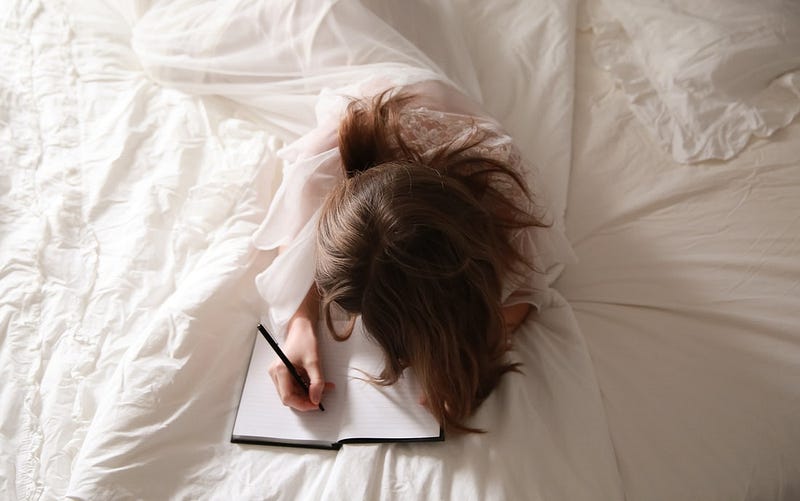
Sure, you can get a big, beautiful desk and outfit it with all the best accessories from Office Depot and The Sharper Image, but what if the best writing environment for you is right in your own bed?
Throughout the ages, there have been writers who’ve found their most creative energies awakened when they just stayed in bed to write. Voltaire, René Descartes, Marcel Proust, Mark Twain, Edith Sitwell. There are quite a few. Vladimir Nabokov wrote in bed in his younger days, filling index cards his wife would eventually type up. Truman Capote described himself as “a completely horizontal author,” writing in his bed or on a couch.
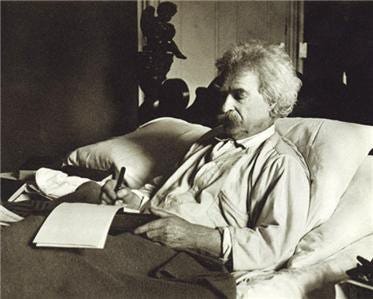
When I first started researching this, I assumed that writers who did their work in bed were all members of a class or domestic situation that enabled and facilitated their supine work. It didn’t seem like a coincidence that most of the bed-writers were male. I imagined they all had wives, mothers, or servants who brought them hot coffee or tea and endeavored to keep the household quiet while they wrote. And while that’s true of some of them, others were just ordinary mortals (including some women) who managed to craft their lives to support their writing habit in just the way they wanted to work.
For some, writing in bed is all about creating an environment that is relaxed and inspiring:
“Whenever I prepare to write, I have a carefully crafted ritual of comfort that eases me into creating. I work from my bed with a fresh pot of tea on my bedside table and a beautiful tape of piano nocturnes playing softly in the background. Next to me is a new spiral notebook and cup full of my favorite pens, along with a revered pile of dog-eared books. You see, I am not alone but in the company of my circle of saints — beloved women writers — each of whom has an authentic voice and a special message for me.” — Sarah Ban Breathnach in “Simple Abundance”
For others, like Patricia Highsmith, it’s simply a matter of making the process of writing bearable:
“Her favourite technique to ease herself into the right frame of mind for work was to sit on her bed surrounded by cigarettes, ashtray, matches, a mug of coffee, a doughnut and an accompanying saucer of sugar. She had to avoid any sense of discipline and make the act of writing as pleasurable as possible.” — Andrew Wilson in “Beautiful Shadow: A Life of Patricia Highsmith”
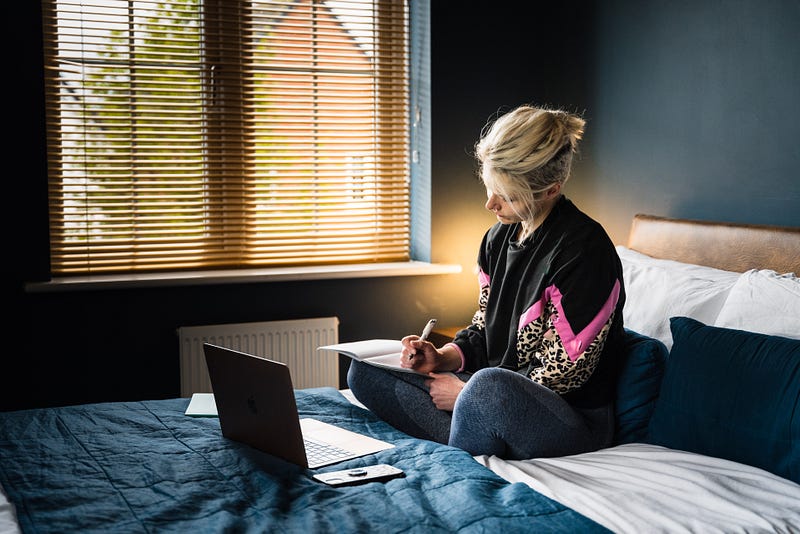
Can writing in bed work for you? Maybe, but it might require some accommodations and some accessorization, whether it’s technology for dictation or a pen that can write upside down.
Or as author Katherine Cowley wrote in a blog post, sometimes it’s just a matter of finding the right pillow.
This story contains affiliate links.
For more information and inspiration on building your creative writing environment, follow Writing in Place.
Become a member of Medium.com and you’ll get full access to every story on Medium while your membership fee directly supports Claire Splan and thousands of other writers creating fresh stories you’ll want to read.


