
Is Surveillance Worth it to Fight Coronavirus?
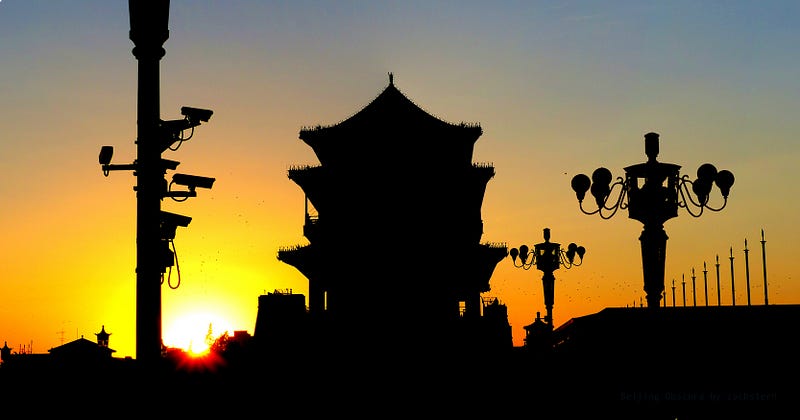
This post originally appeared in my bi-weekly newsletter, The State of Surveillance. You can sign up for that here.
Coronavirus. It’s that nagging, just below the surface pull on everyone’s mind, and with good reason. With confirmed cases of the Coronavirus sprawling over 70 countries (as of the time I’m writing this on March 4) and over 90,000 confirmed cases worldwide, much of the world is just now waking up to some of the tough uncomfortable decisions faced by lawmakers when posed with containing a pandemic. While uncertainty around the virus and its global effects abound, news this week from the World Health Organization suggests there’s reason to believe containment is indeed possible — at a cost.
Citing recent figures emerging out of China showing a decrease in the number of new confirmed cases, WHO Director-General Tedros Adhanom Ghebreyesus said, “We are in unchartered territory,” but added, “containment of COVID-19 is feasible and must remain the top priority for all countries.”
China, which still has the lion’s share of cases globally, was held as the model to emulate for containing the pathogen. It’s an undeniable fact that the Chinese government, after notable controversy, mobilized at a mind-boggling pace to quartine cities, screen millions of people for the disease, and use surveillance technologies to enforce lockdown.
This, by all accounts, seems to have been effective at slowing the virus’ spread. But at what cost?
Before diving into the pros and cons of China’s recent virus-fighting surveillance fighting techniques, it’s worth taking a second to see what’s at stake.
According to the WHO, the Coronavirus has a mortality rate of just around 3.4%. That’s significantly higher than the seasonal flu and slightly higher than the 1918 Spanish Flu (around 2.5%). As has been stated numerous times elsewhere, unlike recent headline-making pathogens like the Ebola and the Zika virus, Coronavirus symptoms can be extremely mild, or in some cases, nearly nonexistent. This means those infected are less likely to seek medical attention and will continue spreading the virus. So while the Coronavirus fatality rate may be low, the potential for it to infect vast swaths of the population are high. That’s why, within weeks of the first confirmed cases, Coronavirus deaths outnumbered the totals from both Ebola and Zika.
In a recent article in The Atlantic, Harvard epidemiology professor Marc Lipsitch predicted somewhere between 40 and 70 percent of the world’s population could be infected with the virus within the next year. With a mortality rate of 3.4%, that’s a potential death toll, on the low end, of around 99,000,000, a figure that would dwarf the 1918 Spanish Flu.
Of course, all of this is riddled with uncertainty. Uncertainty over just how far the virus will spread, uncertainty over the deployment of and effectiveness of vaccines, and uncertainty over the reaction from the public and governments. Even Lipsitch, when quoted in the Atlantic article above, immediately qualified his statement by saying the majority of cases likely won’t be severe and that, “It’s likely that many will have mild disease, or may be asymptomatic,”
Regardless, with shocking figures like the one listed above, caveated though they may be, are all the incentive movements around the globe need to act quickly and use otherwise “radical tactics to prevent a history-making disease. That’s where the question of surveillance comes in.
Before diving into the pros and cons of China’s recent virus-fighting surveillance fighting techniques, it’s worth taking a second to see what’s at stake.
According to the WHO, the Coronavirus has a mortality rate of just around 3.4%. That’s significantly higher than the seasonal flu and slightly higher than the 1918 Spanish Flu (around 2.5%). As has been stated numerous times elsewhere, unlike recent headline-making pathogens like the Ebola and the Zika virus, Coronavirus symptoms can be extremely mild, or in some cases, nearly nonexistent. This means those infected are less likely to seek medical attention and will continue spreading the virus. So while the Coronavirus fatality rate may be low, the potential for it to infect vast swaths of the population are high. That’s why, within weeks of the first confirmed cases, Coronavirus deaths outnumbered the totals from both Ebola and Zika.
In a recent article in The Atlantic, Harvard epidemiology professor Marc Lipsitch predicted somewhere between 40 and 70 percent of the world’s population could be infected with the virus within the next year. With a mortality rate of 3.4%, that’s a potential death toll, on the low end, of around 99,000,000, a figure that would dwarf the 1918 Spanish Flu.
Of course, all of this is riddled with uncertainty. Uncertainty over just how far the virus will spread, uncertainty over the deployment of and effectiveness of vaccines, and uncertainty over the reaction from the public and governments. Even Lipsitch, when quoted in the Atlantic article above, immediately qualified his statement by saying the majority of cases likely won’t be severe and that, “It’s likely that many will have mild disease, or may be asymptomatic,”
Regardless, with shocking figures like the one listed above, caveated though they may be, are all the incentive movements around the globe need to act quickly and use otherwise “radical tactics to prevent a history-making disease. That’s where the question of surveillance comes in.
While much reporting in recent weeks has focused on the Chinese government’s ineptness at spotting the outbreak early on and subsequent coverups to diminish the outbreak’s severity, once the cat was out of the bag, the Communist party made an abrupt about-face.
Essentially overnight, the Chinese government shut down the city of Wuhan, isolating nearly 11 million people and creating an artificial ghost town. That unprecedented siloing was made possible by the state’s expansive surveillance apparatus, decades in the making.
Since the outbreak occurred, the Chinese government has deployed drones equipped with facial recognition software to detect people walking without a facemask on, infrared scanners have been stationed at train stations and airports to measure body heat to snuff out people with a fever, and roaming robots are reminding potentially at-risk residents to stay indoors. Even with this juggernaut of surveillance technologies available, China reportedly went a step further and taking a step out of North Korea’s playbook. According to The New York Times, officials asked pressured Wuhan residents to rat out friends and neighbors suspected of being sick.
Now, as the state claims to have started to stem new cases and citizens are being instructed to return to work, new surveillance tools are appearing. According to recent reporting in the New York Times, those returning to work are subject to constant monitoring by a new required mobile tracking software. Workers sign up for the app and are assigned a color code of green, yellow or red. That color corresponds with a person’s health and is used to decide whether or not individuals can leave quarantine, access subways, or walk out into public spaces
While such an app, under normal circumstances, might run against the grain of a privacy advocate one can understand its rationality in a context of an impending pandemic. But when does that context cease to justify its ends?
According to the same New York Times article, the reporter’s analyzed the software’s code determined that it could share information with police. This is from the Times’ report.
The Times’s analysis found that as soon as a user grants the software access to personal data, a piece of the program labeled “reportInfoAndLocationToPolice” sends the person’s location, city name and an identifying code number to a server. The software does not make clear to users its connection to the police. But according to China’s state-run Xinhua news agency and an official police social media account, law enforcement authorities were a crucial partner in the system’s development.
That’s just the start. The Chinese government also just passed a new law that effectively bars people from posting any negative content about the government online. The new law, officially called The Provision on the Governance of Online Information Content Ecosystem officially took effect this Sunday. While the change has reportedly been in the works since December, the timing of its implementation is peculiar at the least. According to a Business Insider report quoting a government document, the state says it is enacting the law to “create a positive online ecosystem,” and “preserve national security and the public interest.”
Here’s Business Insider’s Bill Bostock:
“The law splits online content into three groups: “encouraged,” “negative,” and “illegal,” according to an unofficial translation by Jeremy Daum, who runs the China Law Translate project.
Though the new law contains conditions borrowed from existing national security laws, it also contains new conditions that Daum described as “distressingly vague and easily abused.”
Online censorship, to some degree, is nothing new in China, but the new law appears to mark a further commitment by the government to dissuade dissent. More immediately, the timing of the law has, ironically, worried some who fear it could stymie the spread of accurate information about the Coronavirus pandemic.
Despite failing to initially contain the virus within its borders, these extreme tactics issued by the Chinese government were viewed affectionately by some, including the World Health Organization, which previously praised the Chinese government for its fast-acting containment efforts.
But China’s government operates explicitly in a top-down totalitarian system unmired by prolonged debates and public inquiry produced in more representative democracies. That direct, unilateral decision making power leads to “effective” outcomes, at the expense of measured discussions over how new tools may be used in the future to harm vulnerable groups.
This is all to say that in times of great distress, it is more important than ever to consider what we are willing to sacrifice in the name of security. In the United States, in months following the harrowing September 11 terrorist attacks, a similar calculation was made. Acting out of fear, Americans relinquished their rights and stood by as the government enacted the country’s most invasive surveillance policies (including the Patriot Act) all in the name of “safety” and “fighting terrorism.”
The Chinese “communist” government is an easy, prescient example to point to when pondering the possibility of opportunistic expanses of surveillance power, but I would argue that the vast majority of government’s, when given the opportunity, will opt for more surveillance, more power, and more authority rather than less. While this might be welcomed in the context of preventing a Spanish Flu level pandemic, the sacrifices made in the short term will outlive any disease and could shape the society that emerges on the other side.
If you liked this post, please consider subscribing to my bi-weekly newsletter, The State of Surveillance.


