
Is Street Photography Ethical and Legal?
Or is it neither?
Iam writing this article both as a photographer and as an observer.
From what I’ve realized for the past two years taking photos of people (and not only), is that the art of photography has always been under scrutiny. Especially a particular aspect of it — street photography, which has spurred an avalanche of diverse comments regarding its ethical and legal dimensions, and whether they sometimes overlap in this case, or not.
What is Street Photography?
By definition, street photography aims to showcase everyday life in public, mostly urban spaces. This type of capturing images is usually referred to as candid, i.e. pictures taken without the knowledge of the subject — which, in my opinion, makes this type of art so powerful.
The Current Problem?
The desire of people like me to show peoples’ emotions on the street, as seen through the lens, can often raise both ethical and legal concerns. Although this form of photography aims to display urban life in its most genuine and raw state, it could still start numerous debates on its morality.
I acknowledge, however, that there is a big difference between being ethical and being legal, as something could be legal, yet not ethical, and vise versa.
Probably the hardest thing for me, while shooting photos on the street, is to decide whether a photograph taken of a person in a public space is in breach of her/his personal space.
It’s tricky when it comes to that, as most of the time, you don’t know when this all turns into invasion of privacy. Another issue is whether the image you upload would cause any trauma or harm to the subject.
Since the enactment of the General Data Protection Regulation (GDPR), people like me have been anxious about how this would affect our photographs. In PetaPixel, Hendrik Wieduwilt argued that these new regulations:
“Turn street photography into a legal nightmare.”
However, in Germany, the Constitutional Court has ruled that this type of photography is protected by the constitution, as it is considered an art. Whereas, in France, if you do not have the permission of a person to take her/his photograph, you, essentially, are breaking the law.
“To shoot or not to shoot”
This concept is regarding the question of whether a photographer should take the photo of a person who is currently in no position to deny the photographer’s access to the event or situation. More specifically, it concerns wounded, in shock, or grief-stricken people, who, at the moment of taking the photographs, have lost control over their circles of intimacy.
From what I’ve read on ethics, people have a couple of areas over which they have control — the right to a personal free space from intrusion and the right to preserve one’s state of grief or joy.
I think that this ultimately sometimes leads to the following — somebody’s misfortune is the photographer’s fortune. Meaning that, in general, photos of people grieving are far more powerful and emotional than people who are happy. That’s my point of view and that’s probably why I usually prefer to capture images that are more moody than joyful.
In the article How Photography Exploits the Vulnerable, Ryan Jones argues:
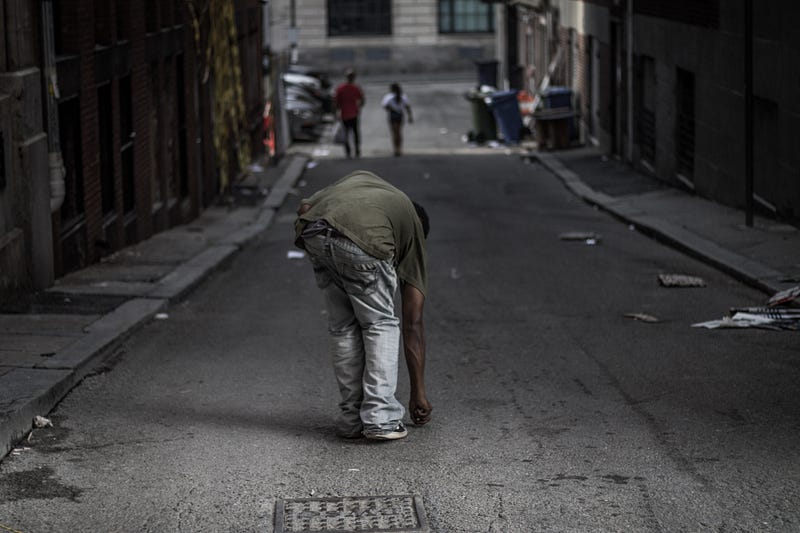
“There are too many gratuitous photos of people jamming needles into their bodies and bloated corpses carried out of filthy homes”
That said, the people who are behind the camera often fail to maintain the humanity of the people in the photographs, especially when it comes to drug addicts.
“Those who are photographed are never allowed to live outside of the pain they’re in, because those photos turn a single behavior into an identity that exists in perpetuity.”
Aesthetics and Ethics
This concept is about how rational humans act when it comes to differing the aesthetics and ethics of a photograph.
The aesthetics aspect is, in general, hard to deal with in photography, whereas the ethics one is far more straightforward and more easily dealt with.
It’s a problem when people are arguing over whether an image is grotesque enough not to be shown to the public.
Every person’s perception of aesthetics is different. The ethics debate, however, does not merely rely on individual taste, but rather, on already established moral principles that are generally less individualistic than taste (as in aesthetics).
Often, we as photographers, do our best to capture the purest and most genuine human emotions and moments. In pursuit of what, the outcome may be images that are highly uncomfortable to watch. That’s why I think that a particular image can be a masterpiece for one person, and an extremely grotesque depiction of reality for others.
So, where does the thin line lie?
At the end of the day, it is the photographer’s choice whether she/he should upload a photograph. If it is published, then it becomes a responsibility.
You should always take into consideration the good, the bad, the beautiful, and ugly, so that upon uploading the photo, it becomes your truth, which will ultimately transcend onto your work.
According to the wonderful photographer Erick Kim,
“As humans we must all create art, or else we will fall into depression or exhaustion/nihilism in life”
Street photography is all about catching this one magical moment of somebody’s life, no matter how sad or joyful it is. That’s the true depiction of life. This is how life is.
Nevertheless, street photography can also often be quite dishonest, intrusive, and even exploiting.
With the emergence of more and more players in the business of photography, people that practice it should be aware of its ethical and moral standards, and should also acknowledge that there are boundaries that should not be crossed.


