
Politics & Socialism
Is Socialism an Altered Story for the World?
Although most Americans continue to resist socialism, it has an upsurge in public support.
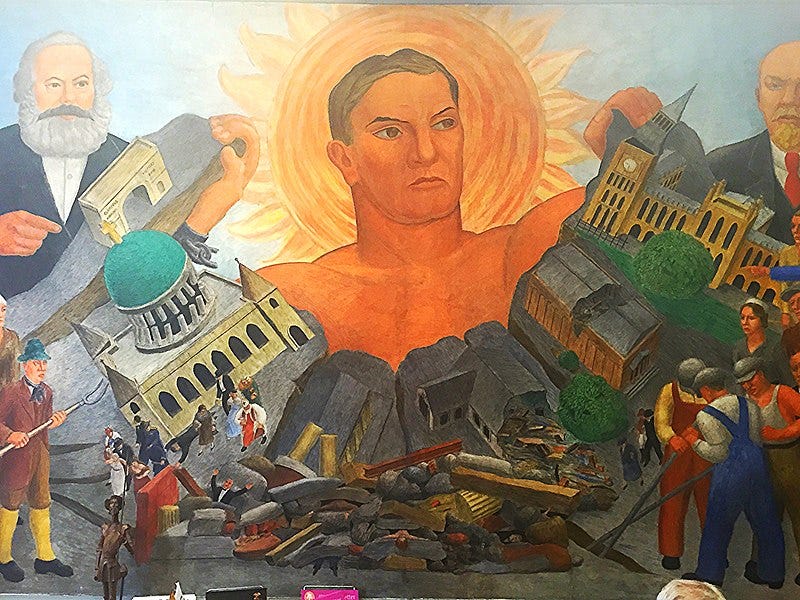

A genuine interest inspired the socialist experiments of the 20th Century in improving life for the masses. Still, the results instead delivered untold suffering in economic deprivation and political tyranny. Yet, socialism still enthralls some leading intellectuals and politicians of the West, seduced by its siren song of a world devoid of conflict.
Why are we still having this debate?
The idea of class conflict lies at the heart of socialism
One of the conventional lines of reasoning for a free-market economy is that it provides businesses with an incentive to offer goods and services that people want. Yet, some economists and political philosophers argue that the capitalist model is fundamentally flawed. Such a system, they maintain, creates clear winners and losers.
During the splendor days of the industrial era, growth was rapid, its fruits were shared mainly through income and wage classes, and upward mobility was extensive. Capitalism was popular. However, in recent decades, growth has been sporadic and slow, wages have stagnated for the working-class and countless middle-class families, mobility has slowed, and the disparity has rocketed. Yet, the concept of capitalism is still looked at with positive overtones. For example, the economist in the tradition of the Chicago School, the late Gary Becker, wrote:
The economic and financial crisis of 2008–2009 challenged the assertion that the economy had ushered a new era of stability and restraint. Experts who had sung the virtues of self-regulation were forced to renounce. The sluggish recovery from the Great Recession left many Americans questioning whether they would ever recover the income and wealth they had lost. In addition, soaring inequality and an intensifying critique of how contemporary capitalism works have brought socialism back into the mainstream — confident that a system of government can make more informed choices about the well-being of a people than the people themselves. With John Maynard Keynes, they suppose that “the state is wise and the market is stupid.”
According to Professor Yuval Noah Harari in 21 Lessons for the 21st Century, populism triumphed because the “liberal story” lost its credibility in the 2008 financial crisis after failing to deliver “obvious answers” to the global threats posed by the nuclear threat, global warming technological invention. For the liberal elites to reclaim power, Harari argues, they must create “an updated story for the world.”
Rejection of socialism
Much has been written about the negative implication of socialism — nowhere is the failure of socialism clearer than in the radical transformation of the Israeli kibbutz.
I don’t have the language to untangle all the historical nuances that make one small fraction of my life significantly important. The experience I am referring to is the short period I spent living in a kibbutz. I was about eight years old, and I became the child of the collective raised by ‘caregivers’ as part of an effort to demolish the nuclear family. Immediately after my family settled in Kibbutz Afikim, located in the Jordan Valley three kilometers from the Sea of Galilee, I was deposited in a children’s communal house apart from my parents, who were allowed only brief visits each day. This experience was the apex, a time I’d remember for the rest of my life, regardless of how my life turned out.
The kibbutz system sought to limit private intimacies to prevent distracting members’ energy from the collaborative project. Economically, collectively raising children made sense during the tough early days, but it was a tectonic shift for a child who was used to having family around. Once there, my mother never cooked me a meal, washed my clothes, or sang me a lullaby.
One for all and all for the state
Devoted kibbutzniks toiled the land without pay, shared communal dormitories and meals, and raised their kids in the idea of selfless labor: one for all and all for the state. The strict communal life aimed to breed an army of citizens and taught them to sacrifice everything for the kibbutz and country. To some extent, it did. The kibbutzim produced a disproportionate number of Israel’s political, military, and intellectual leaders.
Ultimately, the visionary movement began to crack. The young Marxists believed that their ideas would sweep Israel and the West. The pioneers thought that their group would be able to sustain a highly moral life, resisting outside influences and the internal ills that have bedeviled human societies since the dawn of time: greed, envy, and selfishness. Ultimately, the kibbutzim had to open up to solve the ideological erosion. They accepted new members who were less committed ideologically and less bound by shared history.
Eventually, searching and restless, my parents chafed against the kibbutz system. They wanted their independence back. They missed their privacy, and they yearned for the world. We were ostracized, and eventually, we left.
Economic miracle?
As to the nation, until the late 1970s, socialism in Israel was a success, and the downfall seems remarkable given Israel’s short-lived existence. Mapai Party, with its socialist beliefs, was steadfastly in charge of the country and its resources. It created a system in which the party regulated the state. The state dominated practically the whole shebang — land, transportation, commerce and industry, jobs, housing, labor unions, education, and health.
Following World War II, Israel, India, and the United Kingdom adopted socialism as an economic model. At first, socialism appeared to work, and Israel’s economy grew for the first two decades, leading many to name Israel an “economic miracle.” Likewise, from its founding in 1947 into the 1970s, India placed the country among the more prosperous developing nations. And the growth in Great Britain to 1965 allowed Britain to become one of the world’s more affluent countries.
Today, Israel has become a center for entrepreneurship, innovation, and capitalist spirit from a quasi-socialist society with a centrally controlled economy. The government planners could not keep pace with overseas competition and the growing population. After decades of declining economic growth and escalating unemployment, all three countries ditched socialism and opted for capitalism and the free market. The Israeli government embarked on a long-term program to sell off state-owned companies, deregulate markets, and lower state expenditure.
In the words of Margaret Thatcher, “the problem with socialism is that you eventually run out of other people’s money.”
One remainder and what survived the fall of socialism is the health system, whose socialist foundation was strengthened in 1994 by the National Health Law. While Israel is a free economy, the director-general of the Israeli Ministry of Health clarified that the central philosophy is socialist and even communist when it comes to healthcare. So every Israeli has health insurance and can get treatment and subsidized medication for free or for minimal expense.
In addition, regarding higher education. There are both state universities and private universities and colleges. Although private institutions are more expensive, tuition is about $3,000 a year and is heavily subsidized.
What does socialism suggest to Americans?
Critics call socialism anti-American, and they maintain that it undermines free business and leads to disaster, often using the unrealistically extreme example of Venezuela. President Trump went as far as portraying socialists as radical, lazy, America-hating communists.
Socialism can mean different things. Some see it as an approach that promises fairness and citizen rights, and others focus on heavy-handed government management of free markets, equating socialism with Stalin’s Soviet Union. Or, more recently, Venezuela, where the late Hugo Chávez and the current leader, Nicolás Maduro, ran a prospering economy into the ground under socialism’s banner.
Yet, some supporters of socialism point to a kind of socialism dubbed the “Nordic model,” seen in countries such as Denmark, which provide high-quality social services such as health care and education while fostering a strong economy. But the Nordic model has its challenges. The combination of free-market capitalism and social benefits that have given rise to a society with a host of top-quality services is burdened with an aging population and an influx of immigrants. These new arrivals often come from nations that do not have a shared history of making decisions on behalf of the common good. While the native’s high degree of workforce participation is part of their collective decision to support their society’s amenities, immigrants do not always share this vision.
The new face of socialism
Democratic socialism is difficult to define because of its variety of understandings among supporters. For instance, for Bernie Sanders, democratic socialist policies include increasing voting access and medical care, advancing workplace democracy, raising taxes on the wealthy, and boosting environmental and economic justice through the Green New Deal.
Not all those who consider socialism identify themselves as socialists or democratic socialists. To many, the word evokes phrases like “the social contract.” But however they define themselves, the bulk of millennials associate socialism with New Deal-style systems like universal health care and entry to free higher education. And while they frown upon capitalism, they aren’t hostile to free markets.
Democratic socialism is a kind of socialism that stresses that the goal is to meet the needs of all the people, not just a wealthy few. Present-day reformers — who call themselves Democratic Socialists — are not the socialists of generations past, but they share the same drive: the glaring disparities of American life. More and more people presume that the wealthy have manipulated the system and want to unrig it.
Until 1985, Israel was a socialist financial system with inconsistencies. Israel would not have endured into maturity if it didn’t abandon its idealism for applicable policies. Its evolution to capitalism was a success by most measures, but it also came with side effects that haven’t been solved yet — wider social gaps, more poverty, and more concerns about social justice.
The Bottom Line
Anyone who looks at the history of capitalism and knows something about life in centuries past that were either not capitalist or were barely so cannot but be impressed by the immense progress that has taken place in large parts of the world. The contemporary critique of growing inequality because of capitalism is becoming ever more urgent. Yet, despite its unequal distribution, capitalism impacted the broad masses of people who did not belong to the elites and well-situated upper strata, whose living conditions and everyday life, gains in life span, health opportunities for choice, and freedom.
It’s also important to note that the Israeli state would not have been created or survived in its early years without the unity created by a socialist economy and the government’s involvement in economic and social life. It is wise to acknowledge that even roundly disavowed and largely failed principles like communism may have some good ideas applicable to capitalist nations.
Thank you for reading and sticking with me to the end.
If you haven’t signed up for Medium yet, and want to read all my articles, use my affiliate link! There’s no additional cost to you, and I’ll receive a small commission — thanks for your support!