
Is Sleep Tourism Your Key to Better Rest?
Will your next vacation be a snooze?
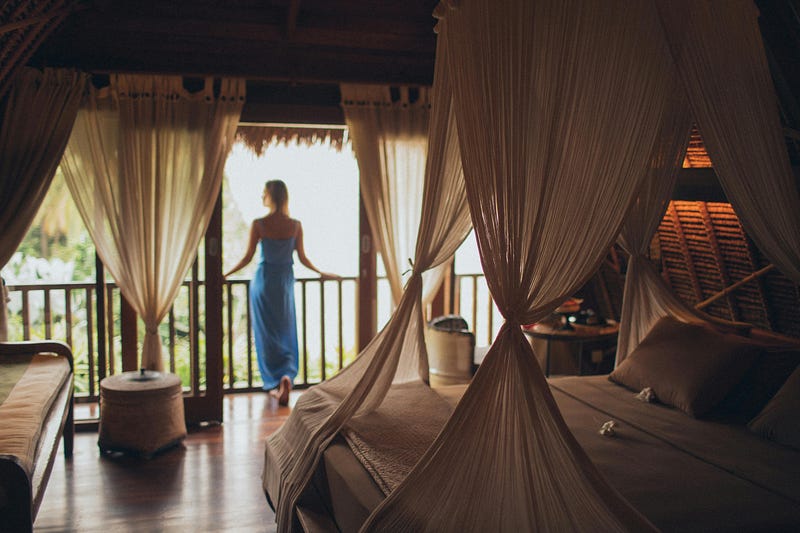
What if the secret to better health didn’t come from a trip to the gym but instead lies between your bed sheets? Would you leave the comfort of your own home to make it happen?
Let’s face it: few things feel better than waking up in a hotel bed, with soft sheets softly surrounding you, feeling like you’re floating on cloud nine.
It’s the perfect escape from the stress of your chaotic daily routine. And it’s this desire to get more sleep that’s changing the way we vacation.
While people used to favour cityscapes, adventure treks, and beach vibes for their getaway of choice, the shift is slowly changing to a more mental health orientated holiday.
That’s where sleep tourism comes in.
But what exactly is sleep tourism, why are people obsessing over it, and is it worth parting with your hard-earned cash to partake?
The obviousness of sleep tourism
Sleep tourism may be a new term, but the concept certainly isn’t.
It‘s all about taking a holiday dedicated to catching up on much-needed sleep. Hotels and resorts create sleep-optimised rooms for you. They also offer programs that centre your entire vacation on sleep-enhancing activities like yoga, massages, personalised sleep assessments, and more.
And yes, I can hear you screaming, “Well… isn’t the whole point of a vacation to recharge your batteries?” I hear you. When I first heard the term I felt the exact same way. And yet, when you think about it, it’s not so crazy.
Yes, hotels are supposed to be sleep havens where your zzz’s are king. But hotels have put the whole sleep experience on the back burner the last few decades, instead focusing on other amenities to draw people in.
Instead of promising you a quiet room for the best night’s sleep, they offer free breakfast buffets or in-house entertainment.
Instead of prioritising the best mattresses for ultimate comfort, they market their closeness to local attractions and airport transfers.
And don’t get me wrong, these are all important parts of a hotel experience. But come on, a hotel is there to sleep not just to lay your head, tossing and turning.
I have many horror stories of being woken up by noisy neighbours (even cleaners in the hallway), uncomfortable mattresses, and rooms filled with so much dust I broke out in hives (all at 4* hotels, by the way!). And I know you probably have more than your fair share of hotel horror stories, too.
Even sports stars aren’t immune to the lack of quality amenities that help you sleep better. F1 stars George Russell, Lando Norris, and Daniel Ricciardo have all been on record saying they travel with their own pillows because hotel ones often don’t do the trick.
If sports stars can’t even get a good night’s sleep, what chance do the rest of us have?!
Finally, hotels are listening to the change in consumer interests.
They no longer consider their hotel rooms as a pitstop between fun adventures. They realise that the bedroom should be an adventure. Specifically, a peaceful oasis where you can fully relax and recharge, recovering from the stresses of everyday life in an environment that lets you get the best sleep.
This shift to sleep tourism is all about making good sleep the mission again.
But they’ve also realised that good sleep isn’t all 100% Egyptian cotton sheets and $5000 beds. It’s much more than that. As sleep doctor Michael J. Breus told Forbes, “Most people who don’t sleep well at home (for whatever reason) are not necessarily going to know what to do to get good sleep on a vacation or travel from home. So getting some basic guidance from a hotel or resort-based program will be quite helpful.”
And so, this new wave of sleep tourism is about more than just providing the space for a restful night — it’s about giving you the tools to take back home with you.
Does science support the need for sleep tourism?
With a bed at home and limited disposable income, why are people going crazy for this latest tourist trend?
Well, here are the cold, hard facts.
In the U.K., like most of the world, we have a sleep problem. We just aren’t getting enough, with Mental Health UK finding that 20% of people getting less than seven hours a day. And what little sleep we do get is rarely of good quality. And it’s affecting how we live our lives.
According to YouGov, 1 in 8 people, they feel tired all the time, walking around in a zombie state just trying to make it to the end of the day. And as if that wasn’t bad enough, a further 1 in 5 people feel extremely tired most days. That means roughly one-third of Britons struggle with fatigue daily.
And, according to the Nuffield Healthier Nation Index Report 2023, 48% of workers felt that their poor sleep was negatively affecting their mental health, while 49% admitted that their sleep had gotten worse over the past 12 months.
And honestly, who can blame them? Stress levels are insane. The world feels like it’s crumbling. Money is getting tighter for most. And we’re all still adjusting to this new normal post-COVID living which is both very similar and wildly different to the way things used to be.
So yeah, it’s no wonder our sleep is severely disturbed.
The difference is that it’s slowly becoming more mainstream to embrace slow living and look after ourselves. And that means getting a good night’s sleep is now a top priority.
But how do we make it happen?
To get better sleep, you need to change your habits
Changing your habits is incredibly difficult within the same environment where they were formed.
There’s a strong link between environment and habit. It’s why you always crave popcorn at the cinema. It’s why smokers itch for a cigarette when they go to a bar. It’s why people who work from their kitchen table get stressed the moment they see it. Environment unlocks memory. And if that environment is linked to a habit or behaviour, it’s a lot harder to change… though thankfully, it’s not impossible.
But the other difficulty is keeping yourself accountable to uphold your changed behaviour. By which I mean — a habit is automatic, but new behaviour isn’t. You have to make a concentrated effort to stop yourself from doing what you’re used to and start doing something else instead.
For example, you might be used to scrolling social media before bed. So as soon as your head hits the pillow, your arm reaches for your phone. You don’t even think about it… you just do it. But if you were at a sleep resort hotel built to avoid phone use in the evening, you’re more likely to skip the midnight scrolling. Whether it’s the use of phone sacks, or the hotel placing outlets on the other side of the room so it’s impossible to charge your phone near your bed, you’re much more likely to think twice and follow the more “sleep-healthy” behaviour.
These small yet powerful changes hotels make can make a big impact on your sleep. They:
- Provide noise-free rooms
- Comfortable beds
- Remove the ease of phone use in bed by placing outlets on the other side of the room
- Provide white noise and guided meditation
- Provide sleep hygiene accessories such as sleep masks, phone sacks, and earplugs.
So, between changing your environment and providing accountability, sleep tourism aims to give you a fighting chance to get on top of your poor sleeping habits once and for all.
What do the hotels get out of it?
Naturally, like any business, hotels benefit from this trend towards sleep tourism.
So it’s only right to talk about what the hotels get from you having a better night’s sleep so you can make a more informed decision on whether sleep tourism is the right move for you.
See, these hotels and resorts are teaching you the skills to get great sleep, not just during your stay, but when you get home, too. And depending on the package you go for, it gets pricey.
When I researched some of the most popular sleep resorts around the world, prices started from around $350 and quickly went up to four figures a night.
So, already, there is a high premium on getting that scientifically-backed great night’s sleep. But if it’s a one-off stay, it’s a pretty poor model, right?
Maybe not…
Their hope is you’ll learn to associate their hotel with the feeling of pure relaxation and bliss, thinking of them first when it comes time to book your next holiday. Research shows that when you have a better sleep experience at a hotel, you’re more likely to have a better overall holiday and feel energized to explore and have fun- whether you’ve gone specifically to get a good night’s sleep or not.
But, these prices are not pocket-friendly and are a true investment option for your health. This begs the question…
Is sleep tourism really worth the price?
Going to a sleep specialist hotel/resort is expensive. And unless you’ve got plenty of cash to spare, it’s not a decision to be taken lightly. So, how can you decide if it’s worth the hefty price tag?
Well, given the fact we’re trying to evaluate paying for something that is ultimately free (sleeping), it’s pretty hard to evaluate. Still, I tried to crunch the numbers here to come up with some kind of answer.
The average night at a sleep resort is $600- 800 a night. This includes a great bed and sleep hygiene, as well as access to relaxation activities like massages, yoga, etc. If you want medical assessments and in-house sleep therapists, the price immediately doubles or even triples.
But you need to sleep well every night to benefit from the health improvements, not just the nights you stay at the hotel.
So would it be better to invest that money into a better sleep set-up at home? Well, I crunched the numbers for that, too.
A high-quality, premium hotel-style bed will set you back about $1000 — $1500. Black-out blinds, breathable sleep linen. ear plugs, humidifiers and any other equipment you personally need for the optimal sleep experience (lavender spray, anyone?) will set you back another few hundred. Let’s highball it here and say $500 (after all, we’re chasing the hotel feels, right?). For meditation, you can download Headspace. For yoga and other guided meditations, there are great, free options on YouTube. And for massages, you can get one for $50–100 for a session.
Overall, a high-end complete sleep-friendly home routine uphaul would cost you about $2000 — $3000 upfront, with a monthly upkeep of $250.
What I’m trying to say is, for the price of a three night stay at a sleep hotel or resort, you can buy a pretty impressive sleep set-up of your own.
But here’s the thing.
Sleep tourism isn’t about the amenities. It’s about getting the perfect night’s sleep. So, depending on what’s stopping you from sleeping right now, the investment might still be worth it.
Ultimately, it comes down to affordability and personal sleep needs.
Do you need a change in environment with accountability built in to help you make meaningful lifestyle changes while you’re away? Or would you be better off investing in your bedroom to ensure everything is ready to give you a good night’s sleep every single night? That’s a choice only you can make.
Sleep tourism is a great step towards making holidays the stress-free haven they are supposed to be. Hopefully, hotels will continue to prioritise sleep hygiene to provide everyone with a great night’s sleep whether they are going for a “sleep-cation,” a cityscape, or a mountainous adventure.
Would you rather invest $3000 for a longterm change in your everyday sleep routine, or for a potentially transformational experience with guidance and shorter-term, direct benefits?
One thing is for sure. Sleep tourism reminds us that all hotels need to prioritise a great night’s sleep. We want comfortable beds, relaxing vibes, and quiet environments so we can fully recharge and feel our best.


