
3 Ways Plastic Harms You and Your Children
From global warming to endangered sea life to toxic chemicals in the soil, plastic is dangerous and needs to be used wisely
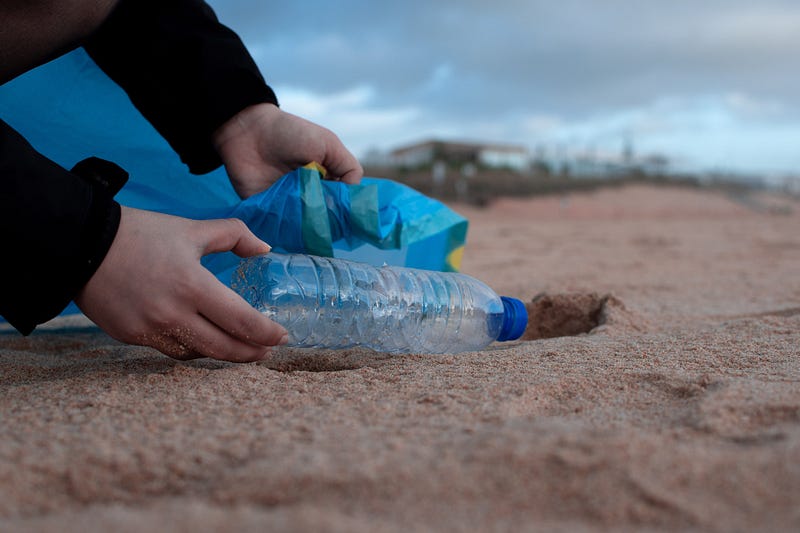
Devastating weather events like the almost unstoppable wildfires in California, Greece, and Turkey are waking us up to the reality of climate change. It’s easy to feel overwhelmed, despondent, or powerless when we witness these drastic occurrences.
Don’t lose hope.
It’s still possible to reduce the temperature increase if we take the right measures. One step you can take would be to reduce or eliminate your use of single-use plastics. Because, along with its other dangers, plastic contributes to global warming.
Plastic has its positives. For example:
- Plastic plays an important and sometimes life-saving role in medicine. From tubing to prosthetic devices, plastic has made medical care far easier and less painful too.
- Plastic has made possible the production of lighter weight planes and vehicles, which saves fuel and lowers carbon dioxide emissions.
There are many more examples of the benefits of plastic. The plastic industry would be happy to fill you in.
But the unnecessary use of plastic brings harmful consequences:
- Plastic contributes to global warming. Look around at the increase in heat waves, wildfires, droughts, and floods brought about by the warming climate and you can see the dangers yourself.
- Millions of sea animals are killed each year by plastic, primarily due to entanglement or starvation. Plastic micro fibers are also found in municipal drinking water and the air we breathe.
- Plastic trash on the land leaches toxic chemicals into our soil and waterways, which can be harmful to plants, animals, and humans.
But It doesn’t have to be this way. Let’s look at each of these factors in detail because knowledge is power.
1. Plastic Contributes to Global Warming
Plastic contributes to global warming by significantly adding to greenhouse gases. According to a 2019 report entitled “Plastic and Climate: The Hidden Costs of a Plastic Planet,”
“If plastic production and use grow as currently planned, by 2030, these emissions could reach 1.34 gigatons per year — equivalent to the emissions released by more than 295 new 500-megawatt coal-fired power plants. By 2050, the cumulation of these greenhouse gas emissions from plastic could reach over 56 gigatons — 10–13 percent of the entire remaining carbon budget.”
And…
“By 2100, exceedingly conservative assumptions would result in cumulative carbon emissions of nearly 260 giga-tons, or well over half of the carbon budget.”
You may not know this, but plastic emissions are not a one-time thing. A single piece of plastic emits greenhouse gases more than once.
According to the report:
“Nearly every piece of plastic begins as a fossil fuel, and greenhouse gases are emitted at each of each stage of the plastic lifecycle: 1) fossil fuel extraction and transport, 2) plastic refining and manufacture, 3) managing plastic waste, and 4) its ongoing impact in our oceans, waterways, and landscape.”
The petrochemical and plastic industries are planning a massive expansion in production.
If we don’t say “no” to the overuse of plastic as consumers, especially single-use disposable plastic, the plastic industry will produce more and more. Most corporations care about the bottom-line more than your health or the safety of the world.
Climate change is not a distant threat that we can deal with later. As we all can see, it’s happening and harming right now.
In his article, You’re Making This Island Disappear, journalist John D. Sutter explores the plight of the Marshall Islands. Can you imagine waking up at night to find yourself floating and your home filling with water?
Experts predict the number of “climate refuges” — people who flee from their country due to climate change — will swell to around 250 million worldwide by mid-century. Most of these will be from poor, low-lying countries, but cities like Miami and New York will be subject to flooding too.
2. Plastic In the Ocean
According to National Geographic, eight million metric tons of plastic trash are dumped into the ocean every year. To get a visual sense of this amount, they offer this description:
“That’s the equivalent of setting five garbage bags full of trash on every foot of coastline around the world.”
Plastic trash literally surrounds us. It’s found in the most isolated places on Earth. For example, 38 million pieces of plastic trash have made their way to remote Henderson Island.
“On Henderson Island, an uninhabited atoll in the Pitcairn Group isolated halfway between Chile and New Zealand, scientists found plastic items from Russia, the United States, Europe, South America, Japan, and China. They were carried to the South Pacific by the South Pacific gyre, a circular ocean current.”
When broken down by the elements in and around the ocean, plastic trash turns into micro plastic, tiny pieces which have been found everywhere in the world. Plastic microfibers have been identified in municipal drinking waters and in the air we breathe.
Millions — not thousands, millions — of animals are killed each year by plastic, primarily due to entanglement or starvation. A marine animal’s belly can be so full of plastic it fails to eat and consequently dies of starvation. Plastic may cause disruption to the reproductive systems of fish as well as cell and liver damage.
3. Plastic on the Land
According to UN Environment, plastic concentration on land has been estimated to be 4 to 23 times more than the oceans, depending on the place.
We hear a lot about plastic contamination in the ocean, but rarely read about its danger on land.
Plastic trash, including plastic in landfills, can leach toxic chemicals into the soil and water, which can be harmful to plants, animals, and humans. Emerging evidence points to the fact that plastic accumulates in human bodies as well as in the bodies of animals.
UN Environment says:
“Generally speaking, when plastic particles break down, they gain new physical and chemical properties, increasing the risk that they will have a toxic effect on organisms. And the larger the number of potentially affected species and ecological functions, the more likely it is that toxic effects will occur.
Chemical effects are especially problematic at the decomposition stage. Additives such as phthalates and Bisphenol A (widely known as BPA) leach out of plastic particles. These additives are known for their hormonal effects and can disrupt the hormone system of vertebrates and invertebrates alike. In addition, nano-sized particles may cause inflammation, traverse cellular barriers, and even cross highly selective membranes such as the blood-brain barrier or the placenta. Within the cell, they can trigger changes in gene expression and biochemical reactions, among other things.”
They go on to explain that micro plastics also gets into our water systems when we wash our clothes.
“One of the main sources is our clothing. Minuscule fibres of acrylic, nylon, spandex, and polyester are shed each time we wash our clothes and are carried off to wastewater treatment plants or discharged to the open environment.”
I found this mind-boggling.
Those are just three of the ways plastic harms people, animals, and plants.
Final Thoughts
If you feel overwhelmed after reading about the dangers of plastic, take a moment to sit still and breathe. Then commit to doing what you can. Taking positive action is one way to relieve anxiety and find ease in the face of impending disaster.
Start by saying “no” to single-use plastic. Single-use plastics make up 40–50% of plastic production each year. They litter the world and contribute significantly to environmental pollution.
As a first step, give up bottled water. Plastic bottles constitute one of the top ten pieces of plastic trash found in the ocean. Millions also end up in landfills or littered along the roadside. Use a reusable stainless steel water bottle instead.
Don’t lose hope!
As individuals, we can’t control the outcome, but we can take positive steps, educate others, and encourage them to take positive steps too. You can make a difference. Even if you save the life of one animal by reducing your plastic use, that’s powerful, isn’t it?
For more inspiration, sign up for my bi-monthly Wild Arisings newsletter.
Originally published on alwayswellwithin.com