
Is Overtraining Ruining Your Gains?
Exploring the significance of pushing your body TOO hard in the gym without adequate rest.

Gym-bro folk law will tell you that “There is no such thing as overtraining, only under-eating.”
If you complain about being sore, they’ll go on to tell you that you’re probably just not cut out for this lifestyle…
If you want to look anything like us, you must train even harder!
And sorry to say it, but there is an element of truth to this if you’re struggling to build the physique you desire.
But does overtraining exist?
What is overtraining?
Overtraining is an imbalance in exercise stress load, non-training stress load, and rest. It often manifests itself as decreased athletic performance.
A popular scientific definition of overtraining comes from the European College of Sport Science and the American College of Sports Medicine:
“Overtraining syndrome is a decline in performance lasting months or longer, with or without secondary symptoms including hormonal, psychological, immune, or sleep dysregulation, and more (a related concept, overreaching, has the same definition as Overtraining Syndrome just delineated by a shorter time course and a potential rebound in performance.”
Overtraining exists by pushing our body to its physical and mental limits.
To build muscle and or strength, we must train at a high intensity to progressively overload. In short, progressive overload is using resistance training to stimulate enough stress on our muscles to force an adaption from the body. Muscle fibres/cells grow back bigger and stronger.
A decrease in performance could be due to long-term overtraining due to fatigue and inadequate recovery.
Other overtraining symptoms can include injury, lack of energy, disrupted sleep, mood changes, compromised immune function, loss of appetite, and decreased libido.
So, overtraining isn’t a myth?
If you ask the average old-school bodybuilder, they’ll tell you overtraining is a myth and it’s an excuse to have time off the gym.
Which could have some element of truth!
“There really is no such thing as overtraining. Instead, there are five factors that separate those who thrive from those who struggle with the extra work asked of their body: Under-recovering, Work Capacity, Mindset, Underlying imbalances and Stress” — Breakingmuscle.com
True textbook overtraining syndrome is not the same as what the bodybuilding community refers to as overtraining. It is far more likely to happen to professional athletes pushing their physical limits by training for several hours daily than a casual gym-goer or even bodybuilder.
According to Iron Man Magazine:
“99 percent of people reading this will never even come close to experiencing the true definition of overtraining.
In fact, sports scientists are overwhelmingly coming to the conclusion that individuals will never reach a true overtraining state.”
But, the discussion of whether textbook overtraining syndrome exists in the typical trainee is largely semantics.
And I’m not here to argue about that. Overtraining is going too hard too often, with excessively long workouts that we cannot consistently recover from without adequate rest.
I experienced overtraining to some extent myself.
There have been extended periods (years) where I have only had one day off a week. And, my performance suffered — some lifts even regressed, although theoretically, I should have been getting stronger. But, my body couldn’t handle the consistent extreme volumes and intensity.
The only significant breaks I had were due to injury — and it shouldn’t be that way.

All serious strength athletes, bodybuilders, CrossFitters and other trainees routinely pushing their bodies to the limits in the gym without adequate rest will experience symptoms of “overtraining”. The accumulation of physical stress will eventually take its toll.
A link between overtraining and undereating?
A 2021 review of overtraining literature demonstrated significantly similar symptom overlaps between overtraining and insufficient nutrition/energy intake (Relative Energy Deficiency).
21 studies were analysed in which researchers attempted to induce overreaching or Overtraining Syndrome while controlling and measuring the energy intake of participants.
18 of the 21 overtraining studies (86%) found a connection between overtraining and nutritional factors of either low energy availability or low carbohydrate availability.
Thus, symptoms that simulate overtraining may be due to insufficient energy intake in many cases.
“Overtraining Syndrome diagnoses require isolating the cause to excessive training and excluding other causes, including low energy, macronutrient, or micronutrient intakes. If this isolation doesn’t occur, RED-S can be mistaken for Overtraining Syndrome.” — Helms, 2022
What is undereating?
Chronic low energy availability can lead to what’s called Relative Energy Deficiency in Sport (RED-S), with nearly identical symptoms to overtraining.
RED-S is a mismatch between our dietary energy intake and the energy used for exercise. This under-eating is defined as low energy availability by the International Olympic Committee:
“A mismatch between an athlete’s energy intake (diet) and the energy expended in exercise, leaving inadequate energy to support the functions required by the body to maintain optimal health and performance.”
Discussion: Am I Overtraining?
If you have stumbled upon this article via a web search, then chances are that you may be experiencing symptoms of overtraining yourself.
To be diagnosed with textbook overtraining syndrome, we must first rule out other contributing factors such as the aforementioned insufficient energy or nutrient intake.
“The answer to the question “am I overtraining?” is almost always no.” — Eric Helms, 2018
Recent research (e.g. this systematic review and meta-analysis) indicates a positive (but diminishing) dose-response relationship between hypertrophy (building muscle), strength, and volume. And, many people who take their training seriously have that attitude more is more.
So, we often want to train as much as possible.
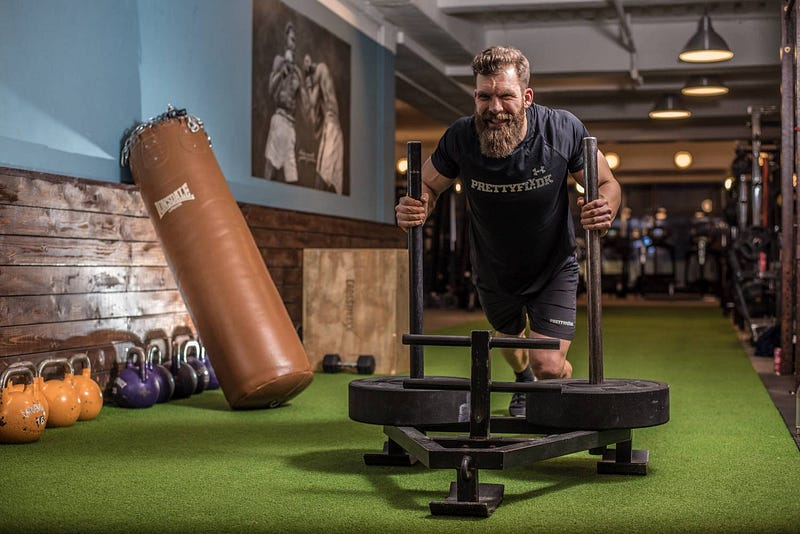
Yet, most of us don’t train hard enough in the gym to reach a point of overtraining, so it doesn’t really matter. But, for those who train at high intensities with high volumes, the wear and tear will eventually catch up with you.
“To truly do the kind of training that would result in full blown overtraining requires you to be a in a conflicted psychological state. You’ve convinced yourself, despite some inner disagreement, that what you are doing is okay, and that despite the pain, niggling injuries, inconsistent or degrading performances in the gym, disturbed sleep, and loss of motivation to train… “— Eric Helms, 2018
People who most are at risk of overtraining are professional athletes, spending hours draining daily at high intensities. Especially endurance athletes.
“The overtraining syndrome affects mainly endurance athletes. It is a condition of chronic fatigue, underperformance, and an increased vulnerability to infection leading to recurrent infections.” — Budgett, 1998
Overtraining syndrome occurring in the average gym-bro (or bro-ette) is incredibly rare — but, you don’t want to be ending up with a major injury due to completely ignoring the warning signs of potential overtraining.
Trust me, I’ve been there…
If you’re experiencing a regression in strength and/or muscle mass, experiencing general soreness, struggling with sleep, feeling depressed, lacking the motivation to train, getting sick more often and having decreased sex drive; these are signs you may be pushing it too hard with your training.
“…Rates of injury occurrence of 0.24 to 7.5 injuries per 1000 hours of training have been reported across a spectrum of lifting sports including bodybuilding, strongman, highland games, powerlifting and weightlifting… The simple existence of an injury rate per 1000 hours of training shows that if you accumulate a lot of hours of training in a short period of time, you increase your likelihood of getting injured.” — Eric Helms, 2018
Conclusion: Overtraining
In this article, we’ve explored the concept of overtraining.
Overtraining is fatigue and associated side effects from pushing the body to its limits consistently to the point where our bodies can no longer effectively recover.

The vast majority of people who regularly train at the gym are at extremely low risk of overtraining. True ‘overtraining syndrome’ is probably reserved for high-end athletes training for several hours daily.
However, there is an overlap with many of the ‘overtraining’ symptoms experienced by people consistently training with high volumes and intensities such as bodybuilders, strength athletes, or Cross Fitters.
Although it may not be considered textbook overtraining syndrome by gym nerds, consistently pushing our body to its limits without adequate rest and or nutrition will inevitably cause fatigue, leading to reduced athletic performance and increased injury risk.
Overtraining does exist.
Thank you for reading.
If you enjoyed the content, you may be interested in this article about whether we should train to failure at the gym.
If you enjoyed the content, please consider subscribing to be notified when I share new content.