

Feature
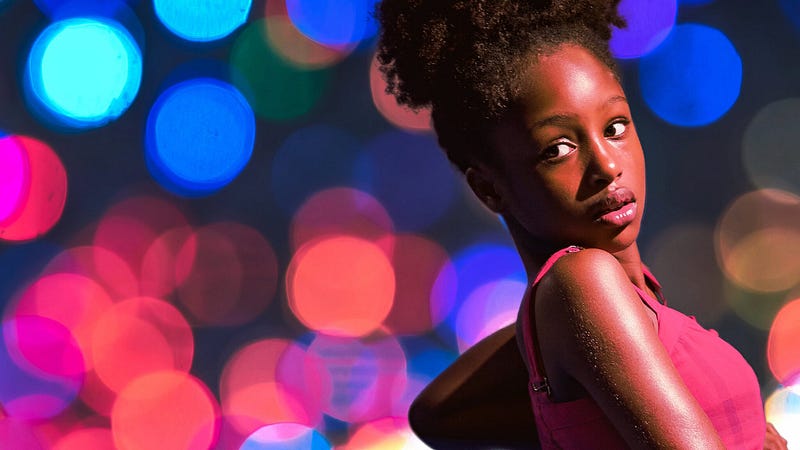
Is Netflix’s ‘Cuties’ Exploitation?
Look beyond the backlash and the truth becomes clear.
If you’ve been active on Twitter recently, you might have seen #CancelNetflix trending. It isn’t unusual to see a trending topic that claims a company or celebrity is “cancelled” or “over”, but it’s often the case that the K-pop stans have once again flooded a hashtag with annoying fancams.
As it turns out, this was no trivial matter. Netflix is facing a huge surge in membership cancellations following its platforming of the controversial film Cuties (2020).
Originally known as Mignonnes, Cuties is a critically acclaimed French film that enjoyed success at the Sundance Film Festival, winning the directing prize in the ‘World Cinema Dramatic Competition’. It’s the directorial debut of French-Senegalese director Maïmouna Doucouré, who took inspiration from her own experience as a child refugee. Following its festival run, it was picked up by Netflix and began streaming there on 9 September 2020.
Cuties follows 11-year-old Senegalese immigrant Amy (Fathia Youssouf Abdillahi) as she moves to Paris with her mother and brothers. Between her distant parents and the oppressive religious teachings imposed upon her, she feels isolated and confined at home. So, in a secret rebellion, Amy joins a lively dance group of her peers known as the “Cuties”.
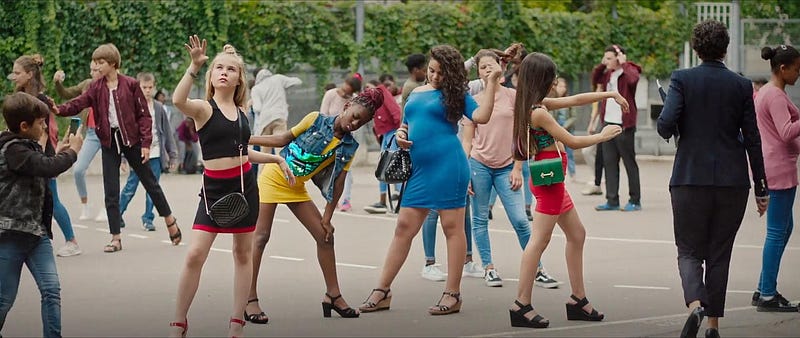
On the verge of puberty, the girls desire to be seen as mature and begin to emulate hyper-sexualised aspects of popular culture to prove themselves. This leads to them creating suggestive and inappropriate routines to perform at an upcoming local dance contest. As the event approaches, Amy finds herself torn between her conservative upbringing and the desire to impress her new friends.
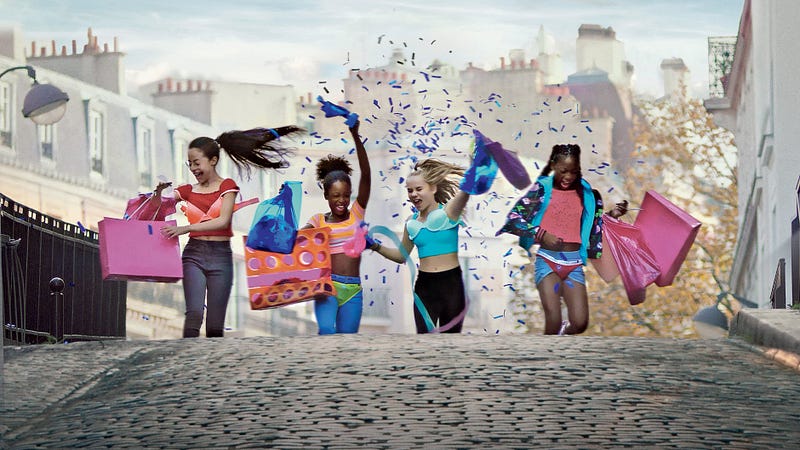
Although flawed in its presentation, Cuties is far more nuanced than the boycott would have you believe. It tackles themes of girlhood, cultural repression, and the hyper-sexualisation of women in modern pop culture, amongst other things. It’s a subject close to the director’s heart and the intentions behind it are clear to me, as well as many others who actually watched the film. So how did the response to Cuties become so overwhelmingly toxic and intense?
Netflix’s marketing set the tone for what became an ugly backlash. Chosen for the movie’s poster was a group shot of the young girls pouting for the camera, as well as a still of their dance performance from the climax. Both covers were suggestive and trivialising of the subject matter, presenting Cuties as a soft-core version of Dance Moms (2011–2019). The original description didn’t help either, describing the main character Amy as a girl “fascinated with a twerking dance crew”. It was this poor promotional material that stoked the fires of an angry Twitter mob.
Conservative commentators and politicians, including US Republican Senator Ted Cruz, decried the film and demanded its investigation. Even before the movie’s release, Change.org had pages of petitions against the film and a Turkish media group banned Cuties in its home country over concerns of child exploitation. This was just the beginning. Once the film was released on Netflix in early September, the boycott escalated into a dangerous harassment campaign.
False accusations of Netflix’s CEO Reed Hastings being arrested for child pornography are circulating on social media, and the director herself has received death threats. Some detractors are going as far to proclaim anyone in support of the film as a “child abuser”.
The boycott recalls the reactionary actions of Mary Whitehouse and her Clean-Up TV campaign, which threw vitriol in the direction of any media or art they deemed obscene. This included a private and unsuccessful prosecution against my relative, theatre director Michael Bogdanov, for his play The Romans in Britain. Whitehouse claimed the play featured actual penetrative sex between two men onstage, despite never seeing the play for herself. Considering my background, one can understand why I approached this boycott with scepticism.
Upon watching Cuties, two things were clear to me:
- The criticism unfairly takes the film’s shocking scenes out of context.
- A lot of people behind the backlash haven’t actually watched Cuties.
Neither is surprising to me, considering today’s atmosphere where one is encouraged to either “stan” or “cancel” something. Too many are taught to react in extremes towards media rather than examine it closer. However, Cuties defies simplification: it’s a complex, uncomfortable, sometimes moving film with a strong social commentary on what it means to be a young girl today.
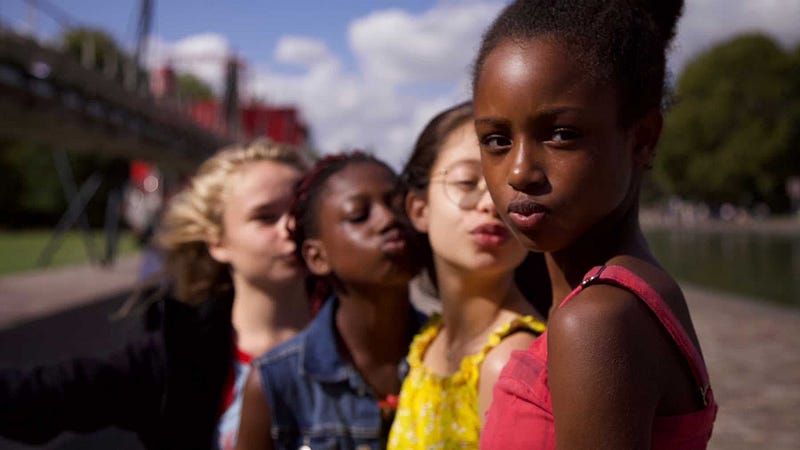
As the film shows, Amy mistakes provocation for liberation in her attempts to become her own person. She realises the restrictions of the roles she is expected to fill and naturally, she wants to rebel. However, it’s clear that Amy and the girls don’t fully understand the implications behind their adult dance moves.
When they twerk or put their fingers in their mouths, it’s apparent they’re just mimicking behaviour they’ve seen on social media or in music videos. The videos they watch present a version of womanhood that’s highly sexual and always designed to be attractive, no matter what. What’s worse is how this warped objectification of women is marketed as something empowering and aspirational. Unfortunately, in their naivety, the girls buy into it.
It’s significant to mention that encouragement to mature early doesn’t only come from pop culture. There’s conflict in the messages Amy’s traditional family impart. When Amy gets her period, she’s told by one of her elders that she’ll be expected to marry in the next couple of years. Amy’s mother reinforces this message by telling her daughter she’s “a woman now”. Even in an African culture that promotes modesty, girls are forced to grow up too soon.
For the “Cuties”, the dance moves they learn aren’t about sex but the desire to be noticed and taken seriously by grown-ups. After all, their parents aren’t present for much of the film: Angelica (Médina El Aidi), the dance group’s leader, cries when telling Amy her parents are always away at work. It’s painful to see the girls act the way they do because we know that their in-your-face behaviour is a childish way to get attention. They light up at notifications of Instagram likes because, in a social media-driven world, they already know that approval through these sites means everything. However, what the girls miss is the nefarious response behind these likes and reactions to their dance routines.
One particularly disturbing moment in Cuties illustrates the troubling undercurrent to their actions. In this scene, the girls play around at a laser tag centre and are caught upon leaving by a security guard. They use their limited knowledge of sexuality to taunt him, accusing the guard of wanting to molest them. When his colleague also intervenes, they convince him to let them leave by saying they’re dancers and subsequently twerk as a demonstration of their skills. The second security guard’s reaction is not of disgust but interest: he can’t take his eyes off the girls, even as his unimpressed colleague tells them to stop.
What’s so frightening about this man’s gaze is that any number of pre-teen girls have experienced it. Although the girls seem oblivious, the director’s choice to focus on his reaction is the right one. Doucouré knows that this lingering look will resonate with women. Even as someone who no longer identifies as female, you realise early those kinds of stares are dangerous. You don’t know why it triggers a gut warning, but you know enough to realise it’s a red flag.
In another scene, Aimee attempts to undress in front of her cousin after getting into trouble for stealing his phone. At 11, she already recognises that sex can be a currency. The pause between this act and her cousin stopping her is unbelievably tense because the audience fears the worse in his response. Thankfully, the worst doesn’t happen, but the scene demonstrates the real fear behind the backlash. We know that if children begin to experiment with sexuality, there will always be sick people trying to take advantage of that delicate phase of their life. We’re terrified of this reality because it happens all too often. Really, this is what fuels the campaign against Cuties: a misguided but fierce attempt to protect children from the horrors of real life.
This isn’t to say that some of the criticism is unfounded. The presentation is clumsy at times, with one too many close-ups on the girls’ provocative dance moves. On this front, I agree with the detractors: it makes sense for one or two scenes but it becomes excessive. In pushing the envelope, the film tends to labour its point too much and test the boundaries of the viewer. However, Cuties can’t be accused of shying away from the ugly truth of the behaviours that young girls are learning to emulate. As Doucouré herself notes, the child actors themselves had “seen this kind of dance… Any child with a telephone can find these images on social media these days”.
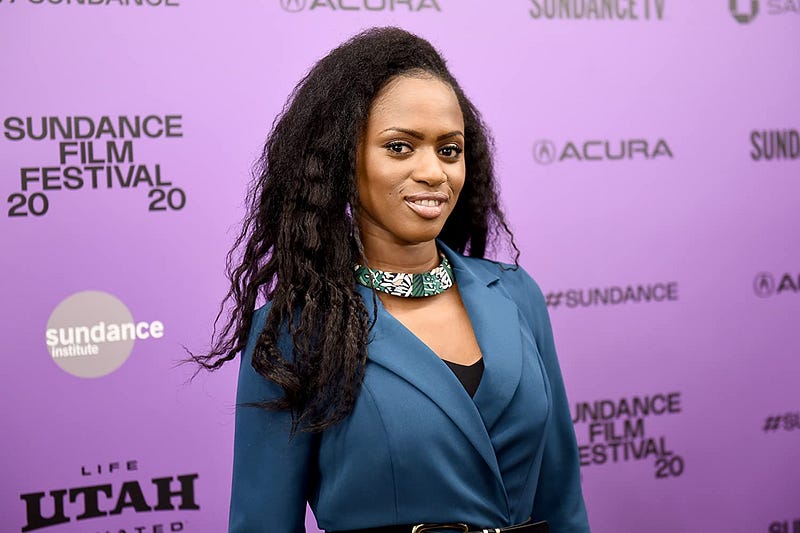
Regardless, it’s important to note that Doucouré and the production team took the safeguarding of children seriously on set. Parents of the child actors understood and agreed with the message, while the director took time to explain and discuss scenes with the young girls. Doucouré noted how important it was to “create a climate of trust between the children and myself”. Before shooting, Doucouré spent 18 months researching the subject matter, interviewing hundreds of pre-teen girls in the process. All interviews with the director indicate she deeply cares about fighting the exploitation of children through her work.
Another overriding problem behind this boycott is the western world’s cultural inability to recognise children’s transition into sexual beings. That may provoke a guttural response in you, perhaps even anger you, but it’s still a fact of life. Does this mean children should be exposed to sexual acts? Of course not! Does this absolve adults who try to engage children in sexual acts? Again, absolutely not! But the more we refuse to discuss the often frightening changes of puberty in a healthy and safe way, the more children will seek out answers for themselves. This film, if anything, demonstrates that clearly.
It’s also strange to see so many people collectively forget their own pre-teen years where the majority of us experimented with looks and behaviours that were beyond our years. There’s a strong detachment in British society between our adolescence and our adult selves, something which only encourages misunderstandings between generations. It makes us afraid to tackle the hard discussions with our children and consequently, they end up in the dark when they most need guidance.
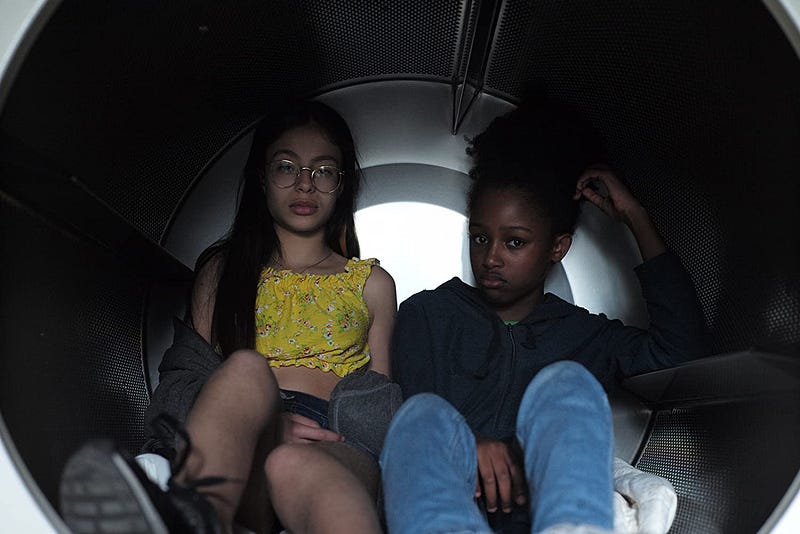
In the end, Amy realises the dance group and what it represents isn’t right for her. She runs home to hug her mother, change out of her costume, and goes outside to play with a skipping rope. It’s a celebration of agency and early wisdom: she chooses to savour being a child for a little longer, much to our relief. Once again, you can tell a number of people protesting Cuties fail to realise that the film agrees with their core message — that children should retain their innocence for as long as possible.
Art shouldn’t always be comfortable. It should be able to exist without such toxic debates trying to smother it. Cuties is hard to swallow. It isn’t for everyone but it’s undeserving of the backlash, especially considering the prevalence of its message. Although it’s not surprising, it’s disappointing to see so many lend their voices to a boycott when they clearly haven’t watched it. In the age of Fake News, it’s more important than ever to investigate for ourselves before setting our opinion in stone.
Give the film a chance before condemning it, and you may learn a valuable lesson.


