
Is “Mommy Brain” Real? Science Says Yes
It’s okay though — research shows that you’ve actually evolved.
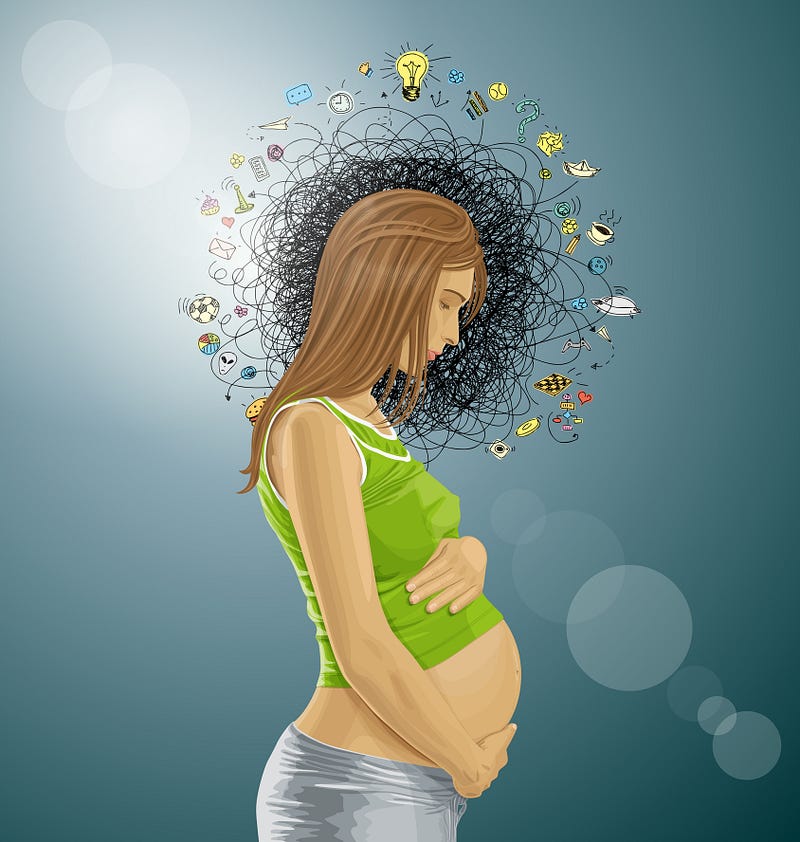
I vaguely remember the days when I didn’t rely on my calendar app to remind me to take care of everyday things, like changing the bed sheets or picking up my kid from school on time.
Vaguely…
That second point might make you scoff, and I get that, but if you’ve never experienced “mommy brain,” you’ll never understand how hard it is to keep that evasive time stamp from floating out of your teeny mom-brain. “3:25 p.m.” seems so simple and routine, but my overtaxed thinking device can’t remember it — not with all the other things I have to remember every day, such as keeping a growing, active toddler safe and sound. I’ve never actually forgotten to get my child from school, but time slips away in my brain fog so easily that I’m afraid I just might one day, so I rely heavily on my alarm app.
Because honestly, that’s a terrifying thought, and the sass I would get from that girl for forgetting her would be epic.
I’ve been this way since my first pregnancy eight years ago, and my “mommy brain” only got worse when I had my second child a few years later (he’s now almost two.) Despite what some people might say about “mommy brain” or “baby brain,” it’s not a myth, and it’s not an old wives’ tale — it’s legit. “Mommy brain” is just one of many very real afflictions that moms deal with when they have babies.
As if we didn’t have enough on our plates.
“Mommy” what?
I almost forgot to explain this — what a shocker.
“Mommy brain” is a bizarre phenomenon that occurs in pregnant women and relatively new moms. It presents itself in a few ways, but in general, moms describe a “brain fog” that causes forgetfulness and some emotional, uh… instability (read: mega mood swings.)
Forgetting — or rather, repeatedly losing — your phone or keys in illogical places, such as the freezer or recycling bin, becomes a regular occurrence when under the effects of “mommy brain.” For instance, I regularly accidentally stole diapers because I forgot to check the bottom of my shopping cart at check-out. I also showed up to work wearing two different shoes — with two different heel heights. I have no idea how that one slipped through the ol’ cerebral cortex, or whatever part of the brain is in charge of fashion.
Forgetfulness is only one piece of the “mommy brain” equation, though. Lack of concentration (no surprise there, since it’s taken me a solid week to focus on this article enough to actually finish and post it) and those aforementioned mood swings can be pretty embarrassing at times.
While we don’t actually get dumber while pregnant, research shows that the way we think changes when we have babies — right down to that gooey gray brain matter.
(Wait, is it even gooey? I have no idea. We’ll go with gooey for now.)
Motherhood changes your brain
It’s time for some Science! Yay!
It’s no secret that a woman’s body goes through significant changes during pregnancy and postpartum. From hormonal changes to bigger feet, the miracle of childbirth is pretty taxing on a mother’s body. Neuroscientists have discovered that a mother’s brain is also physically altered, and these alterations can remain for two or more years after their baby is born.
One study showed that the gray matter in a new mother’s brain was reduced significantly enough that it was a measurable difference. The gray matter in the brain is largely responsible for a bunch of your day-to-day movement and cognition and includes the operations of your decision-making abilities, memory and emotions.
Seems kinda important.
Another study shows that this loss of gray matter also affects our social cognition, which is why we forget common words and phrases when trying to explain to the perplexed plumber in what way the “adult potty” is broken, and why we can’t keep a non-baby-related idea in our heads for more than a hot minute. Those brain-blips are also what make us feel so idiotic when we try to communicate with other adults.
The cool part though, is that this change in the brain is something of an evolution in mothers, enabling them to be better at their new, super important full-time job.
A study on the effects of pregnancy and motherhood on the brain indicated that while some areas of women’s brains do shrink during and after pregnancy, other areas expand. This is possibly a result of “synaptic pruning,” which is when the brain removes connections that are no longer needed. While this is not a phenomenon that happens solely in pregnancy and motherhood, it’s an interesting development in this instance, and it means that the brain is making room to make a new mom better prepared to raise an infant.
Synaptic pruning makes even more sense when you consider which areas of the brain are being affected. According to Catherine Monk, Ph.D., a professor of medical psychology at Columbia University, the images in the study show that the reductions in the gray matter occurred largely in the hippocampus, which is the part of the brain that manages your memory.
The changes in this area of the brain allows it to essentially discard what it deems “useless” information, like the name of “that guy who married Monica on Friends” or the right word for “the goop we put in our hair to wash it” and make room for the parts of the brain that will help you raise your baby.
That same study also shows that those newly-evolved nurturing and baby-rearing parts of the brain also light up when a mother looks at her baby, so there’s a good chance that your newly-acquired dimness might actually improve your ability to bond with your baby.
So while you might find it frustrating that you drove away with your coffee on the roof of your car for the 12th time this year, consider what your incredible brain is doing to make you the best mommy you can be.
Hurry up and wait
It can be depressing, at times, when our brains just don’t function the way they used to. It seems unfair, too, considering all the other changes the body goes through during and after pregnancy. We already kissed our crop-tops goodbye and had to buy a closetful of maternity clothes and mom-jeans — does our Trivial Pursuit winning streak have to suffer too?
In time, your cognitive abilities will slowly shift back to their former glory, timed perfectly with the growth and maturation of your baby. The instincts of a mother are nothing short of incredible, but as time goes on, babies become more independent and your superpowers are needed less.
For now though, and especially when your baby is tiny, delicate and needy, hold on tight. Your brain is using all its power on raising that little peanut, so do your brain and your baby proud and just do it. Lean on your little village, ask for help, and accept it when it’s offered, too, because the struggle is real, and when your brain isn’t functioning at the top of its game, you’ll need all the help you can get.
As for accidentally stealing diapers repeatedly or forgetting all the things, don’t sweat it. There are apps for literally everything — you’ll be fine.
Discover more by joining Medium, where you can read the work of thousands of writers who are much more talented than I am. But if you like me (or my mom sent you) subscribe!


