
Is Marriage an Enemy of True Gender Equality?
Its long patriarchal past is difficult to ignore
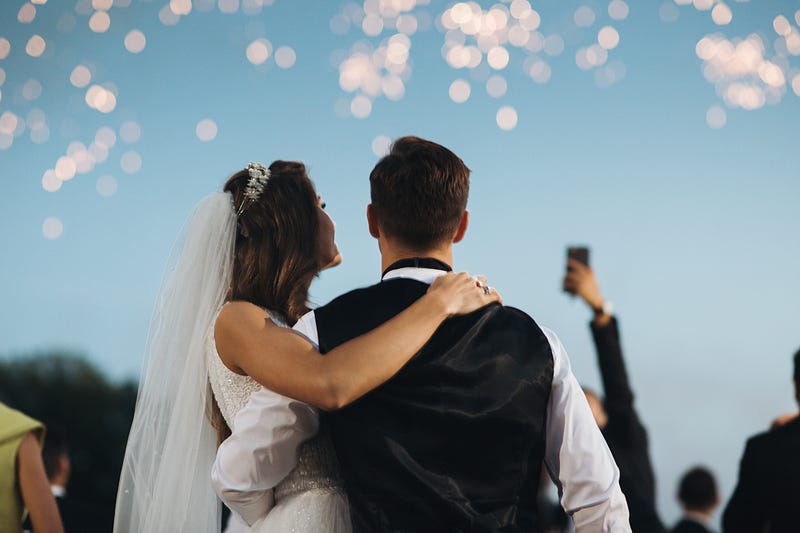
Last week I went to a wedding in the South of Italy.
And while I’d be crazy not to enjoy drinking large amounts of wine on a picturesque Roman hill, I kept thinking to myself, ‘Wow, this could never be me.’
Even though many girls grow up dreaming about this allegedly most important day of one’s life, that wasn’t the case for me.
When I was younger, practically all married women I knew were working a full-time job, taking care of the kids, cooking, cleaning, and doing everything else around the house. Their husbands worked too, but their contribution to household and childcare duties was minimal.
Marriage just didn’t seem like a fair deal to me.
And as I got older, that feeling never really left me. If anything, learning more about marriage’s long, patriarchal history confirmed my initial impression.
But is that still the case in 2021? And to what extent does the institution of marriage contribute to gender inequality?
Marriage has a questionable patriarchal past
According to historian Margaret Hunt, throughout most of history, marriage was ‘the main means of transferring property, occupational status, personal contacts, money, tools, livestock, and women across generations, and kin groups.’
Although marriage traditions differed from culture to culture, for the most part, it wasn’t simply an expression of love between two people. It was a legal and social institution engineered within a context of heterosexuality to benefit men and control women. And that’s because it stemmed from a patriarchal belief system — reinforced by religious institutions — in which women were property. Just like cattle, chicken, and sheep. How lovely!
Funnily enough, some people still perpetuate the patriarchal myth that women of the past weren’t oppressed at all, and they were, in fact, ‘protected’ and ‘provided’ for by their husbands.
But this can be easily disputed.
In most cases, women were passed over from their father’s control to their husbands. Even if they came from wealthy families, they could not own property in their own name. They could not earn money on their own. They had no separate legal existence. They had no way out. And when their husband died, they couldn’t even be the guardian of their underage children.
A married woman was entirely dependent on her husband, like an underage child or a slave. So no, men hoarding and controlling all of the resources while keeping women pregnant hardly counts as ‘providing’ and ‘protecting.’
If anything, it was slavery in disguise or a form of ‘legal prostitution’ as pointed out by English writer Mary Wollstonecraft in 1790.
Today, and in most countries around the globe, women are luckily no longer in the same position we were a mere hundred years ago. We can now decide who and if we want to marry. And marriage rights have expanded significantly over the years, with some countries granting same-sex couples the right to marry as well.
However, none of that erases the fact that marriage remains an institution with a convoluted past, and it continues to represent a power imbalance for women.
Even breadwinning wives don’t get equality at home
In many ways, traditional, heterosexual marriage was — and to some extent still is — a transaction. It solidifies gender roles and determines a strict division of labor within the home. Women are expected to take care of childcare and home, and men earn the bread and butter for the household. You know the drill.
But many modern marriages, especially in Western countries, are not exactly traditional. According to a recent study, in most married-couple families in the US, both partners work. A similar pattern can be observed in the EU countries as well.
You’d think that since both men and women work, and often full-time, the role they play at home must have changed from the ‘good, old times.’ Well, it doesn’t seem like it.
Studies show that despite supposed gains in marriage equality, women still do the bulk of the housework and childcare even when both partners are employed. According to a recent UK study, less than 7% of couples share housework equally. And this situation only got worse with the Covid-19 crisis.
Not surprisingly, research indicates that men tend to benefit from marriage through an increase in their health, wealth, and happiness.
While women take care of most of the unpaid care work at home, men have more time to maintain a social life, cultivate their passions and personal projects. When they get married, they also tend to continue their careers as if they are still single. In fact, they’re often able to better focus on their work once married, as their domestic duties fall on their wife. They are even viewed as more responsible by their employers and are more likely to be promoted.
Meanwhile, married women are often no better off than unmarried ones. Their careers tend to be valued as less than their husbands, which translates into this broader prioritization of a husband’s time and labor. Women who get married are also likely to be viewed with distrust by their employers as it is assumed they will soon start having babies, go on maternity leave, and prioritize children overwork.
‘Feminism is breaking marriages’
We might have moved on from treating women on the same level as livestock, but gender inequalities in marriages clearly still exist.
As could be expected, divorce rates have been skyrocketing for several years now. Almost 50% of all marriages in the US end in divorce or separation. And it is women who usually want out of the marriage, with nearly 70% of divorces initiated by wives. This situation is similar in other Western countries, too.
And while divorce rates are increasing, marriage rates are falling. Millennials and Gen Z’ers, like myself, are increasingly turned off by the idea of marriage and prefer cohabitation instead. In the UK, nearly one in four Brits think marriage is an ‘outdated institution.’ And understandably so, since it has contributed to maintaining traditional gender roles and preventing women from achieving social equality for far too long.
But, of course, according to Ben Shapiro and others from the category of seemingly ‘smart’ individuals for stupid people, it’s feminism that’s destroying marriages. Why? Well, it dares to suggest that women should perhaps have agency and choice. Yes, I know — that’s insane.
In one of his speeches, Shapiro even goes as far as to imply that ‘marriage was the best thing ever for men and women’ since ‘it civilizes them.’
As an unmarried woman myself, I can confirm I indeed feel very uncivilized. So if you ever see me running naked through the streets with a bottle of vodka, just ignore it. For you, it might be an unusual sight; for me — an unmarried, feral woman — it’s just a regular Wednesday.
On a more serious note, feminism doesn’t break marriages — it’s the patriarchy since it refuses to accept the independence of women. But asking for a fair share of responsibilities and duties in a marriage shouldn’t make society and men uncomfortable or angry.
Sadly, it still does.
Although we have this crazy thing called ‘rights’ now, not everyone got the memo that women are no longer relegated to kitchen quarters where their career aspirations are washed out with the dishes.
And so, for the most part, marriage in its traditional sense doesn’t make sense anymore. Our world has changed, and so should the nature of our relationships. Most couples and families simply can’t survive on a single income (and we have late-stage capitalism to thank for that, but that’s a story for another time). And if both partners are breadwinners — their contribution to everything at home should be equal.
That’s not even feminism — that’s common fucking sense.
Will marriage die out one day?
The idea of marriage always made me feel uneasy. For the most part, because married couples I knew as a child — including my parents — were far from equal partnerships. But it was also because of the misogynistic religious expectations I was taught in school and at church. The whole Christian mindset of being ‘a submissive wife who breeds a lot and unquestionably’ always made me cringe.
Still, I do consider myself lucky. I was born in Poland — which isn’t exactly the champion of women’s rights — but there are worse places on this Earth to end up in.
In some conservative and often deeply religious countries, men still have full authority over their wives — in law and practice. If a married woman doesn’t bleed on her wedding night, her husband can resort to extreme violence, including honor killing. Married women are not allowed to leave home without the consent of the husband. They can’t leave abusive marriages. They can’t refuse sex, and marital rape is legal. They can’t access or use contraception. There is also an extreme stigma cast on women who remain unmarried at a certain age in some cultures, often leading to suicide.
And the list goes on.
The institution of marriage is still clearly complicit in the mistreatment and subjugation of women across the world. Although Western countries are becoming more progressive and equal, not all is sunshine and roses here either. And yes — that’s important to talk about, too.
So with all that being said, can marriage be considered an enemy to true gender equality? In its traditional sense and with rigid gender roles, yes. But culture and traditions evolve constantly. And I believe so can marriage.
But the main problem today is that we tell women and girls to be independent and empowered while simultaneously encouraging men and boys to cling to an outdated patriarchal world that is fading away. Neither of the groups is fully prepared for the social implications that follow those attitudes, especially when it comes to heterosexual relationships and marriage.
Still, there is no one-size-fits-all relationship path. People can do marriage their own way — without having to play by other people’s rules. Or don’t get married at all. To each their own.
And since unions between two people or more have existed since the dawn of times, it’s unlikely that marriage will completely die out one day. Even though it might be hard to dissociate it from its past, it will probably change and evolve over time rather than stop existing altogether.
Historian Stephanie Coontz sums this up well in her book ‘Marriage, a History.’:
Like it or not, today we are all pioneers, picking our way through uncharted and unstable territory. The old rules are no longer reliable guides to work out modern gender roles and build a secure foundation for marriage. Wherever it is that people want to end up in their family relations today, even if they are totally committed to creating a so-called traditional marriage, they have to get there by a different route from the past.
If you like my work and want to support it, buy me a cup of coffee! For more of my content, check out my other social media platforms.


