
Is Losing Friends Really Such a Bad Thing?
Balancing quantity and quality…but also quandaries and qualms
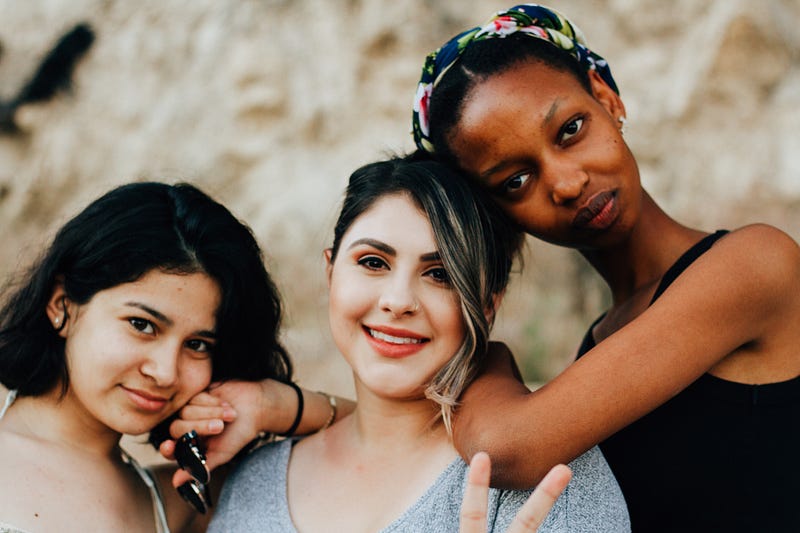
Even before the pandemic befell our society, I’d been mulling the role of friendship in my life. As a person with autism, my ability to have useful interactions with others, in person, has always been an obstacle. I’d managed to forge some friendships with real-time peers throughout my college and young adult years. But many of my most meaningful friendships are ones I’ve developed online.
“Online friends?!?!” — you ask? Oh, they’re not real. They’re superficial. “Those people” don’t actually care about you, Eichy! Just consider how quickly they might “ghost” you, from behind those keyboards or computer monitors…
I can understand how social butterflies might view it in that way. Even socially-awkward folks who prefer interpersonal connections may process my words with skepticism. But, unavoidably, COVID-19 ravaged our world. Zooming and Skyping became a necessity rather than a luxury. We were forced to physically separate ourselves, for months on end, from the ones whom we’d most want to hug or backslap.
Amidst this new reality, I forced myself to reconsider the value of racking up high numerical quantities of friend-like contacts. Increasingly, I had to reckon with the matter of how many “friendships,” once they go awry due to outside circumstances of anger and trauma, are actually worth maintaining.
However long it takes us, collectively, to emerge from this Coronavirus Coma: we’ll probably be taking a lot fewer of these interactions for granted. For me, such adjustments have been much less pronounced. My social life in K-12 school was virtually nonexistent. I sought to spend a minimal amount of time around classmates for whom I had no affection. Years of enduring constant sexual harassment and social ableism conditioned me to be this way.
Do I sound antisocial? Perhaps, relatively speaking, compared to “most people,” I am. For me, wearing a COVID-shielding double-cloth mask in public is empowering — it enables me to avoid insipid small talk with strangers, and to accomplish tasks of necessity in an efficient manner so I’ll have more time to focus on activities in line with my aptitude. If they’re mainly paying attention to me out of polite necessity, I’ll pass. Video-conferencing empowers me with the ability to overcome long-distance travel barriers (I never learned to drive, due to my related phobias).
The reason I’m prefacing this article with such background information is because I want highly-socialized people to understand how difficult it can be for others of us.
Some people, myself included, are introvert/extrovert hybrids (or, as journalist Elizabeth Bernstein calls them, “ambiverts”) — we can function extremely well in a social atmosphere of good-hearted, affable people. The flip side is how we instinctively shy away from those who embrace their own toxicity.
Having used Internet forums (but, most predominantly, Facebook) to forge many friendships throughout the course of my life, I’ve increasingly had to examine how many of those relationships were artificial and built upon convenience.
I now minimize the amount of time I spend browsing through my Facebook newsfeed, having found it easy to get pulled down so many rabbit-holes of vitriol on other people’s walls. Even more daunting: people who I thought were my friends would come out of the woodwork to express disparaging sentiments toward me when I’d create topical discussions on my own Facebook Wall.
Medium writer Caitlin Jill Anders penned a thought-provoking piece entitled “10 Types of Friends You’ll Have Throughout Your Life.” I encourage you to check it out. And then, much the same way I did, reflect upon how relevant any of these categories of friendships might be to your own life and well-being.
I took ten groupings of friendship types, as delineated by Ms. Anders, and repurposed them to analyze my own social bonds with others. And here are the groupings I came up with, as relevant to my lived experiences:

Close Friends
These are friends in the truest sense of the word — those in whom I can confide virtually anything, and I know they will try to find ways to support me. Yes, they may give me constructive criticism or challenge me to consider something from a different angle. But the constant is that they want the best for me…and they want to do their best to help me attain such happiness.
This type of friend tends to be rarer than most others. But having dozens upon dozens of close friendships shouldn’t be the objective. Even if I only maintain a handful of them, the enrichment they bring to my aura is what will go a long way toward carrying me through life. I hope I’ll successfully provide them with that same level of buoyancy.
Good Friends
This type of friend is someone who I view with a similar degree of broad affection as I would have for a close friend. The difference is that there’s some factor potentially keeping them at arm’s length from having an optimal level of intimacy with me.
Maybe there are specific things that I, for one reason or another, feel obligated to hide from them? Maybe they’ve expressed sentiments that make me ill-at-ease, but I’m reluctant to revisit it because I don’t want to create unnecessary drama? Maybe our respective obligations in life happen to be so pressing that we can’t be there for one another in every scenario?
Nonetheless, these are typically those for whom we have positive mutual instincts about each other’s character strengths and emotional affinity. On rare occasions, some of these friendships might begin to drift apart in a hurtful direction. But, more often than not, it wasn’t something I could have really seen coming, in hindsight. And if we can’t keep providing reciprocal support, are we legitimately “friends” anymore?
Casual Friends
Caitlin Jill Anders describes them as “fairweather friends.” These are people with whom I can share some laughs, and we’ll *LIKE* each other’s statuses on social media. If they’re in geographic proximity, I might be fine going out to dinner or a social event with them. But how well do we truly know one another?
Casual friends are the ones about whom I might eventually realize our connection was shallow. If we express ourselves in a hurtful way, one or both of us could be unable to work past those conflicts.
Maybe our communication styles become incompatible, depending on the issue? Maybe we don’t share enough intersecting attributes by which we can develop more mutual empathy? Regardless, if those misunderstandings only metastasize, then that’s a warning sign as to how we might be better off apart.
“Friendquaintances”
This one’s a little more complicated. I consider them to be a mashup of friends and acquaintances. I have less initial affection toward them than I’d have toward a casual friend. But we also might see some “spark” or tantalizing quality in one another that drives us to continue interacting or corresponding.
In some cases, a “friendquaintanceship” could eventually develop into a more fully fleshed-out friendship. Or, if we reveal qualities to each other that we find insurmountably odious, a more permanent parting-of-ways could be in order. That might be our only recourse for preserving one’s mental health.
Ms. Anders lists several friendship archetypes who could potentially fall into this category of mine: “Fun friends,” “For-Now friends,” “Fickle friends,” or “Flaky friends.”
Acquaintances
These are people who I have to tolerate only because I’m forced into an environment where they’re present. I wouldn’t be inclined to invite them over to my house or give them a holiday/birthday gift.
Depending on how annoying or overbearing they become, I might ultimately come to consider them as a full-fledged enemy.
For these reasons, they fall just short of ever broaching any variation of a “friend”-like category.
Enemies or Rivals
Obviously, these are the ones who I’m fairly confident I’d never be able to call my friends. Either our attitudes, habits, personalities, life philosophies, or core values — or any combination of those — are just so diametrically incompatible that friendship would never be a viable option.
I’m sure that anyone who is reading this can probably rattle off dozens upon dozens of interpersonal contacts who’ve conformed to this mold.
How Does This Apply to You?
Because I never learned to “properly” make friends at a young age, I’m coming at this from a unique angle. However, even if you are someone who has always possessed very strong social skills, I’d encourage you to consider these points in relation to what you personally seek out of friendships with others.
Now, I use Facebook sparingly (minimizing my time on that damn newsfeed — because it’s so easy to get sucked into its theatrical abyss!), although I won’t give it up entirely because it does serve a purpose as a sort of “glorified rolodex.” I’ll proactively and selectively click on the profiles of people whom I hold in high regard, in order to check and see “What’s up?” in their lives. Many times, those check-ins can be rewarding and refreshing.
When people who I thought were my “friends” show me their true toxic colors on such platforms, I consider it a blessing-in-disguise. They would have eventually shown me their nefarious traits in due time…so “weeding them out” may have saved me some real long-term devastation.
Some friends are funny, while some are serious. Some give me feedback, and others give me clarity. Some of them spur self-awareness in me. Some provide exquisite factoids, which can provoke new thoughts in my brain.
But I’ve learned that actual friends — no matter where I “met” them — don’t treat me in a condescending manner. Disagreements with them don’t need to be contentious or sour. When we don’t learn from one another, we can’t grow together.
If we can’t meet each other halfway…then we weren’t really “friends” in the first place.
Thank you for reading.
You can share your outstanding stories and inspire others. Just click the below image and be a writer for The Masterpiece.


