
Is Kindness an Underrated Superpower?
Case studies explored.
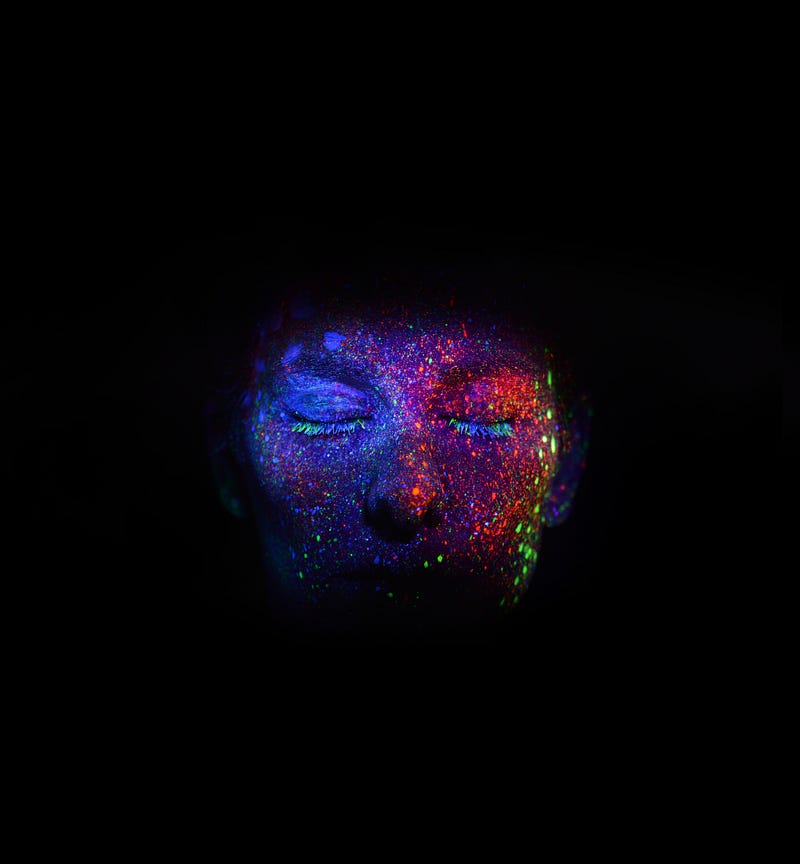
Deep under the thick layers of conditioned thoughts and beliefs, each of us is a child. A child that is kind, trusting and filled with unconditional love. More often than not we are socially engineered to hide this inherent nature as life progresses into adulthood.
Here is a thought experiment:
If you could think of the names of famous people who have accomplished much and at the same time are admired for their kindness and empathy what would your list look like? This is mine:
Fred Rogers
Eva Longoria
Nelson Mandela
Ratan Tata
Keanu Reeves
With hundreds of thousands of social media influencers, politicians, actors, and businessmen in the world why is it so rare to think of successful people who are respected and genuinely loved for who they are as a person? Some are admired for their business acumen and others for their success in the sports or cinema field.
Take for instance the late Steve Jobs of Apple, Jeff Bezos of Amazon or Elon Musk of X, they are considered the epitome of business success, but are they truly liked for their empathy and kindness? On the contrary, they are known for hiring and firing employees at will and for their singular and ruthless drive toward building their companies.
You might think, “One cannot be a nice guy/gal” to build a successful brand or business. That might be true if the only goal is wealth and power.
Human beings are inherently kind but in the name of success are socially engineered to be selfish and ruthlessly competitive - The paradox.
Let’s take two personalities from my list as case studies — Keanu Reeves and Ratan Tata, both influential people in their respective fields of cinema and business.
The case study of Keanu Reeves
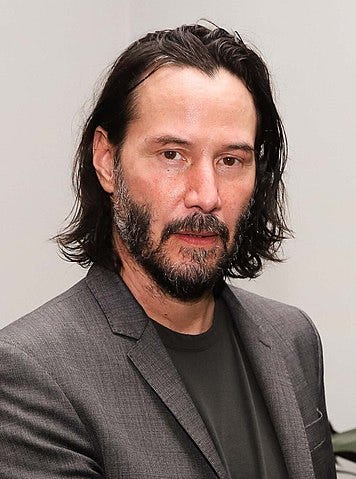
Reeves is generally known as the “nicest guy” in Hollywood. Born in Canada he hit popularity in the ’90s with Hollywood blockbusters such as Speed and The Matrix franchise.
What makes Keanu Reeves so special?
His fans find Reeves authentic, relatable, and more importantly, kind. He is known to not flash the ‘celebrity card’ to get things done his way. Generous and approachable by the common person he is often spotted in mundane places doing mundane things like common folks. From traveling in the subway (and giving his seat up for others) to shopping at the supermarket, and feeding the homeless all very unlike the run-of-the-mill celebrity. An interesting thing happens, people instinctively respect his privacy and do not make a beeline as they do with other celebrities. He is left alone.
He is also known for his calm and down-to-earth demeanour during interviews and for being very respectful with front-line colleagues in his field.
“The Keanu Phenomenon” is so rare in Hollywood that in a wealth-marinated, vulgar and toxic culture, the phenomenon is indeed refreshing.
The case study of Ratan Tata
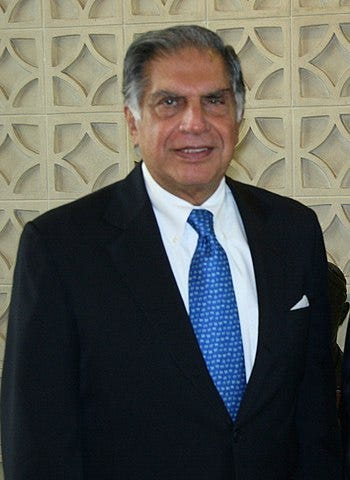
A trained pilot, philanthropist, and ex-chairman of the Tata Group, an organisation with a market capitalization of USD 300B, Ratan Tata is an accomplished businessman who also is lovingly called the “Millennial Dumbledore” by the younger generation.
In business, he was instrumental in expanding the Tata Group, which now owns brands across the industrial spectrum i.e. from software development to luxury hotels, cars, airlines, steel, and FMCG products. Popular brands such as Tetley, Land Rover, Jaguar Cars, Air India, Ritz Carlton Boston, Daewoo Commercial Vehicles, Miljo Grenland / Innovasjon — Norway, Serviplem SA — Spain, Hewitt Robins International — UK and Alti SA — France belong to this group. The Group also is one of the largest employers outside of India with over 100,000 people in Europe and the UK alone.
What makes Ratan Tata so special?
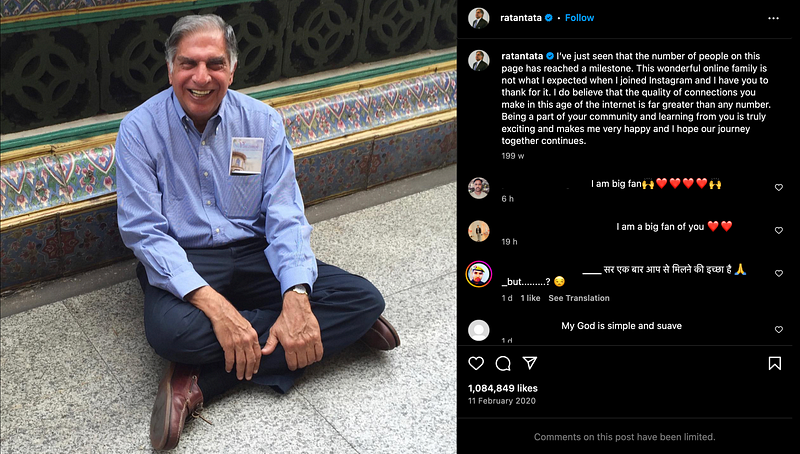
Ratan Tata is so loved in India that the products and services associated with his name are trusted. The “Ratan Tata Phenomenon” has mesmerized both the Indian consumers and the business fraternity alike. He is considered a leader with humility and a focus on employee well-being earning him the trust, respect, and genuine love of his staff. His unique heart-centric leadership style is a subject of case study by management students in business schools around the world.
Ratan Tata has a track record of giving back to the community. He is a supporter of education, medicine, and rural development. Apart from his innumerable donations towards rural development and education in India, his Group has also donated millions of dollars internationally in the fields of medical research and to premier institutions such as Carnegie Mellon University, Harvard Business School (HBS), and Cornell University in the form of donations and student scholarships.
In closing, here are some questions to ponder:
- Could the world use more heart-centric leaders?
- Should businesses and workplaces value kindness as an asset?
- In the age of AI will kindness be one of the main traits that separates human intelligence from Artificial Intelligence?
- Is kindness truly an underrated superpower?


