
Is It Worth Taking Beta Blockers Like Propranolol “Off-Label” for Performance Anxiety?
It depends. These are the reasons I did, what I learned, and why I stopped.

I knew it would happen and it was why I didn’t want to start taking propranolol in the first place. And I was right.
I got caught out.
The moment — “hey Julianne, are you free to step in and give an update to the partner leadership team? It won’t take long.”
Gulp.
Shit.
I can do this.
I am a Senior Manager for shit’s sake.
I start presenting and as soon as I open my mouth my brain starts conspiring against me. Your face is turning red. What are they going to think? They expect you to be in charge of this project and you can’t even make a simple project update?
I feel it happening. Blood creeps up my neck and burns into my cheeks.
My mouth goes dry.
I can’t swallow.
I try to choke out some words.
Everything I know about the project I have been leading for months is gone from my mind.
Blank. Panic.
This is what it felt like when I had a panic attack at work while making a minor presentation in front of colleagues after I stopped using the beta blocker, propranolol for presentation anxiety.
I stopped because I was trying to get pregnant and I didn’t want any chance that my baby would be affected by a drug I didn’t really need to take.
Also, I had been a management consultant for almost 10 years, given hundreds of presentations, and was well-known within the firm as an expert public speaker.
Surely I had overcome my fear and could manage without a pill.
Wrong.
What is propranolol?
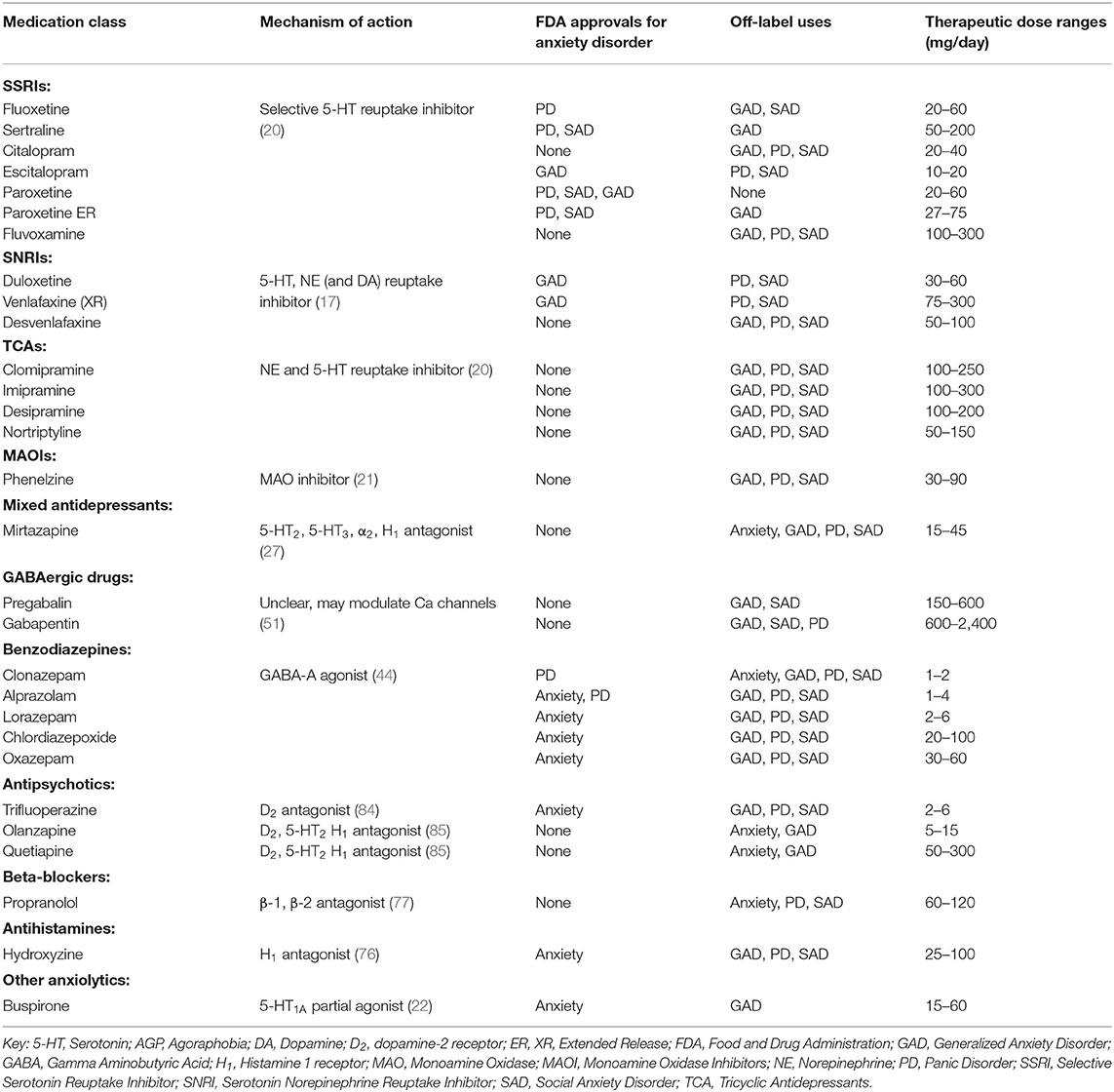
Propranolol is a beta-blocker that is prescribed to treat various heart conditions including high blood pressure, atrial fibrillation, and chest pain. It has also been prescribed “off-label” for decades for the treatment of presentation anxiety or stage nerves.
Propanolol is not included on the FDA's list of medications approved to treat any conditions of anxiety. Therefore, when prescribed to treat performance anxiety or as a public speaking aid, “off-label” means that it is being used to treat something other than intended.
Off-label use of propranolol for presentation anxiety has become so common that there is even a company, Kick, that offers propranolol prescriptions online, without an in-person consultation. As advertised:
Prescription beta-blocker medicine trusted by professionals to block racing heart, sweating, self-doubt, & symptoms of nerves. — Kick
As someone who has had a fear of public speaking going back as far into my childhood as I could remember, it was a miracle to me when I found propranolol.
Lucky for me, I didn’t find it until after I had worked for 15 years on overcoming my fear and becoming a professional public speaker or I probably never would have.
Why did I start taking propranolol?
At 17 years old I got accepted into nursing school and knew that I would have to face my fear of public speaking rather than run and hide from it as I had been doing for as long as my memory stretched back.
For the next 15 years, I made it my mission in life to overcome my fear and in the process, I became really good at public speaking. My “speaking resume” came to include:
- Participated in a three-month Dale Carnegie Course in public speaking and communication and eventually led the same course 4 times as a Graduate Instructor.
- Participated in hundreds of meetings and gave countless speeches with Toastmasters International over 15 years in 5 clubs across the UK, Canada, and the US.
- Designed and led a public speaking course in London for two years based on techniques that worked the best for me working with students, parents, and managers alike to overcome fear and present with skill and confidence.
- Wrote and published a book, Flip the Fear of Public Speaking, in 2012, which won finalist awards for both the Business Motivational and Self-Help Motivational categories at the International Book Awards 2013.
- Gave an interview with the BBC in Oxford about “flipping the fear” of public speaking principles and why they work.
- As a management consultant at a top 4 firm, I became known nationally as an expert public speaker and ran many workshops for internal consultants, clients, and non-profit organizations we worked with.
To say the least, I did everything possible to overcome my fear of public speaking without medication.
And then I got tired.
In 2015, living and working in Chicago, travelling 4 days per week, working 80+ hours per week, and rising through the consulting ranks from Senior Consultant to Senior Manager in 6 years, I was exhausted and burnt out and when my therapist suggested I try taking propranolol for anxiety, I relented and took the prescription.
Important to note, is that my therapist had initially suggested I take a specific anti-anxiety medication such as an SSRI like sertraline (Zoloft), but I preferred the idea that the beta-blocker, propranolol could be taken only “when I needed it.”
Somehow, this felt like less of a “failure” on my part to overcome anxiety on my own.
The main reasons I had never “given in” and taken a pill for anxiety before then included that:
- The more skilled I became at public speaking, the more I felt I would be a “fraud” if I took medication that made it easier.
- I knew one day I would be “caught out” and have to speak without access to a pill and then what? I didn’t want to become reliant on something that wasn’t within my own control.
And that is exactly what happened.
Beta-blockers are not for generalized anxiety
What I didn’t realize at the time, was that I was experiencing generalized anxiety vs specific performance anxiety (even though my anxiety was worse with public speaking).
As called out in recent research on the use of beta-blockers:
Although it is not approved for any psychiatric indications, it has been widely prescribed for SAD and performance anxiety. There is, however, a lack of research support for the use of propranolol in anxiety disorders.
As it turned out, I should have started with medication for generalized anxiety and not propranolol, as initially suggested by my therapist, but because of my own stereotypes against taking SSRIs, I did not.
If I had, I would have likely avoided the significant side effects that came with increasing propranolol dependence and use.
What happened when I took propranolol?
Hundreds of thousands, if not millions of people use and have used propranolol to ease performance anxiety. Many with no side effects and, I imagine, many with.
I was one of the latter.
The benefits, however, for the most part, outweighed the negatives, at least at first.
If I took a pill, 5mg at my 130lbs approximately 45 minutes-1 hour before I had to present, I would experience the following benefits:
- Normal heart rate. Compared to an otherwise racing pulse when I had to present.
- Dry palms. Which were usually sweaty in the same circumstance.
- Clarity of thought. My mind would feel quiet rather than racing into a blank terror fueled by adrenaline. I would be able to access information and speak to it clearly. A huge benefit in any working environment.
- Normal skin tone. This was the kicker for me. As an exceptionally fair-skinned individual, I lived in fear of my extremely efficient facial circulatory system, which would turn my normally pale skin a shade somewhere north of burnt red, bordering on eggplant purple within seconds of an unexpected social encounter.
However, besides these incredible, actually miraculous effects, I would also experience negative side effects including:
- Heavy exhaustion following any situation where my adrenaline would normally be up. In other words, once the anxiety-provoking situation was resolved and I no longer actually needed the beta-blocking effects, I would feel like I had been hit by a mac truck and be useless for enjoying or feeling enthusiastic for the rest of the day.
- Dependence. After I took my first pill and it worked, I knew I could never go back. It was as if a switch flicked inside my head and all the work and self-imposed exposure therapy I had done over the years went for nought. The reason why I didn’t want to start taking medication in the first place flipped into action with the first pill.
- Worry. Ironically, taking a pill to reduce my anxiety gave me significant anxiety of another kind. I worried about all sorts of side effects. Being a cardiac drug, I worried that taking the drug would somehow change the electrophysiological workings in my heart, which up until that point had worked without fault. What if somehow the drug screwed up my heart and I ended up having a cardiac arrest, or some other health failure as a result?
- Increasing tolerance. The more I took propranolol, the more I became accustomed to the feeling and thought I needed higher doses to maintain the same effect (whether this was actually the case or not). This led to situations on occasion where I overestimated how much I needed to take and created a situation where my heart rate felt too low, or I felt dizzy. In one case, I asked a former ER nurse on my team if I should be going to the hospital for taking too much (fortunately, I was fine and didn’t need to go).
- Increasing reliance. The more I relied on propranolol to combat my anxiety, the more I needed (or thought I needed) to take it. At first, I only took it for major speeches or presentations. However, it quickly got to a point where I was relying on it most of the week at work and even for minor social engagements. I felt unprepared if I didn’t have it with me or take a dose before any potential situation where I might want the coverage. All of my suit jackets had full and half-pills “for emergencies,” which I would have to empty before taking them to the dry cleaners.
- Reduced tolerance for alcohol. This might not be a problem in some cases, but as a management consultant, I went to a lot of work functions where there was high social pressure to drink (at least a glass of wine). Since I would usually partake, and because I liked wine, I would usually have at least one glass. I found out the hard way at a team dinner, that when I had taken propranolol the effects of any alcohol were magnified significantly. This made me feel ill and want to avoid situations where I would feel pressured to have a drink.
It got to a point where I dreaded taking a pill. Ironically, I began avoiding situations at work that might require me to speak in front of groups. However, I had become so reliant on the calming effects of the pill that I even started taking it for phone meetings when I worked from home.
I became depressed and felt like I had failed the person who had worked so hard to overcome a fear of public speaking and now needed a pill just to have a conference call.
Why did I stop taking propranolol?
Initially, I stopped taking propranolol only because I was trying to become pregnant and I didn’t want any drugs potentially affecting my baby.
However, after the panic attack that I experienced at work after I had stopped taking it, I realized I had a bigger problem and that something else had to change.
Taking the drug for the past few years had made me dependent to the point that without it, I felt even more anxious and depressed than I had initially.
What I realized was that I was dealing with more than a simple case of performance anxiety. What I had actually been suffering from for most of my life was significant generalized anxiety.
The propranolol had been enough of a cover for me at first, but I quickly became more and more dependent and incapable of dealing with the anxiety at all without medication.
At this point, I realized that I had been using propranolol inappropriately and agreed that the anti-anxiety medication would be helpful. I started taking sertraline (Zoloft), which is approved for pregnancy, as my therapist had originally suggested.
For the first time in my life, I started to feel “normal,” or at least started to realize that it was not normal to experience the high and consistent level of anxiety that was my previous normal and that I was not “a failure” or “fraud” for using medication to help.
The bottom line
The bottom line and point of sharing my experience with propranolol is to highlight that there are pros and cons to taking beta blockers to combat performance anxiety and that all options should be considered carefully and in collaboration with a medical professional before starting.
What I didn’t realize when I started taking it is probably exactly why it is not approved by the FDA for treating anxiety disorders — that it is not meant to treat generalized anxiety and that it can end up causing more problems than it solves if used inappropriately.
It is not something to be taken lightly or ordered on the internet based on advertised effects.
In my case, at first, the propranolol was a helpful short-term fix in a high-pressure career where my ability to speak in front of groups was essential for me to keep, let alone progress, in my job.
What it was not, was a long-term solution to the generalized anxiety that I had had my entire life but had labelled and treated as performance anxiety.
When I started to feel a bit of temporary relief from the propranolol, I started increasing my dose and usage (using it inappropriately) — when what I really needed was a generalized anxiety medication such as an SSRI.
The propranolol had been a bandaid for bigger issues of generalized anxiety and general burnout from high, ongoing, unsustainable pressure in a career that I eventually decided to leave.
What else works?
Since then, I have realized that the hard work I did to overcome my fear of public speaking worked.
Had I entered a career where I didn’t have as much pressure, I likely wouldn’t have found myself in a position where I sought out medication in the first place.
The techniques I worked so hard and long to perfect would likely have been adequate to get me through speaking events in a way that was enjoyable and had zero side effects.
Am I sorry I started taking propranolol for social anxiety? Not entirely. It did allow me to reach a level in consulting where I felt accomplished in a highly competitive field.
It also led me to a place where I was able to accept and start taking generalized anti-anxiety medication, which has made a positive change in reducing my anxiety overall and is a huge relief.
Would I recommend it to others?
If a person has performance-specific anxiety and has few occasions on which they would like to reduce nerves, then propranolol can likely be helpful.
Especially if they take an appropriate dose and find they don’t experience side effects.
However, if a person is like me, where they find and use propranolol as an ever-increasing crutch for undiagnosed generalized anxiety, it can lead to a place similar to where I found myself — depressed and feeling like a failure for “giving in” to medication that made me feel bad.
What I would have done instead, looking back, is exactly what I did regarding “flipping my fear” of public speaking. I also would have explored general anti-anxiety medication sooner, rather than going down the road with what should have been an occasional fix.
Another, bigger question at this point that I feel is worth discussing is — what is it about our society that huge numbers of the population require anti-anxiety medication just to survive in their day-to-day jobs?
Reflecting back on my consulting career and use of both propranolol and SSRI medication it is interesting that it wasn’t just me. I can’t think of a single person that I knew at work who was not taking anti-anxiety medication of some sort.
Arguably, this is a bigger issue in a field such as management consulting where the pressure is high by design.
However, it would be interesting to know how many people fall into the category of “off-label” propranolol use in other fields and what else can be done to help besides medicating.
Given that “Kick” has been around for over five years now, I would guess that number is significant.
What are your thoughts? Do you or someone you know take beta-blockers for performance or social anxiety?
For more like this, sign up here. Kind thanks for reading, Julianne