
Is it Time to Ditch Nationalities?
Do national identities perpetuate political and social inequality?
What your nationality says about you
A discussion this weekend raised the topic: do you identify as English or British? Yes, that is not the only option, but at a table with people born in England these were the only two. Had the UK still been in the EU, one could have added a third option…
Back to the table. To my surprise, a pro-EU, left-wing, open-minded and all-inclusiveness promoter said they were English. Not British. Where had the open-minded person gone? Out of the window was an option — the windows were open!
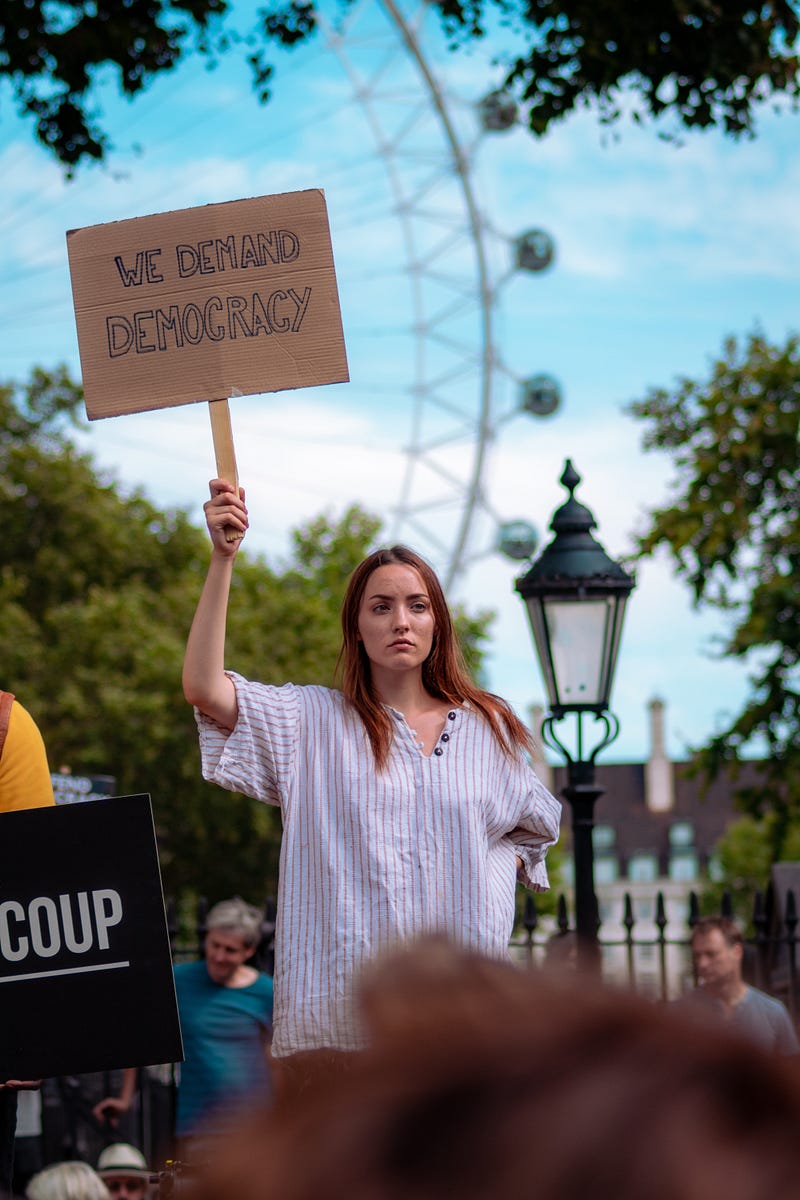
An explanation was given, and I have to say, was pressed upon us to make sure we understood where they were coming from. The ‘I am English’ proclamation was based upon them not feeling the current UK political system represented anyone but the English. Lack of democracy was at the heart of this remark. Their view was that London should not reign over Wales, Scotland, or Northern Ireland.
A Broken System?
What right has London to impose laws on Wales? What right do they have to oppose and block Scottish law? Remember earlier this year, when Scotland introduced the Gender Recognition Reform Bill? The British government blocked the bill; in a news bulletin from 16 January, the BBC stated:
UK ministers say the draft law would conflict with equality protections applying across Great Britain.
BBC Scotland political editor, Glenn Campbell, said in his analysis (same article, bottom):
This is a major and unique intervention from the UK government. They have successfully challenged Holyrood legislation before on the basis that MSPs exceeded their powers.
But they have never blocked a Scottish bill on the basis that they think it will have a negative impact on UK law, in this case the Equality Act.
Why would this specific bill have “a negative impact” on UK law? This bill does not talk about medical procedures or sex-changing surgeries, but purely about identification. It enables transgenders to live as the “acquired gender” and “intend to do so permanently”.
We’re not talking about “surgery tourism” (think of the Women on Waves boats for reproductive health services such as abortions) but about feelings, emotions, views of sixteen- and seventeen-year-olds. We’re talking about young people who are in an identity crisis, unable to connect to the person they are supposed to be. The gender that wasn’t their choice but was forced upon them, in their eyes.
By the way, did you know that the best moment to start medical procedures, including hormones and surgeries, is before puberty sets in?
…hormones could be started at age 14, two years earlier than the group’s previous advice, and some surgeries done at age 15 or 17, a year or so earlier than previous guidance. … It is unethical and harmful to withhold early treatment.
Following their advice, transgender youth have gone through psychological assessments, have started gender transition treatment all before the age of sixteen. But… when they then want to change their gender to feel one with their new identity, the UK government says, no, you are “negatively impacting the Equality Act”. Let that sink in for a bit.
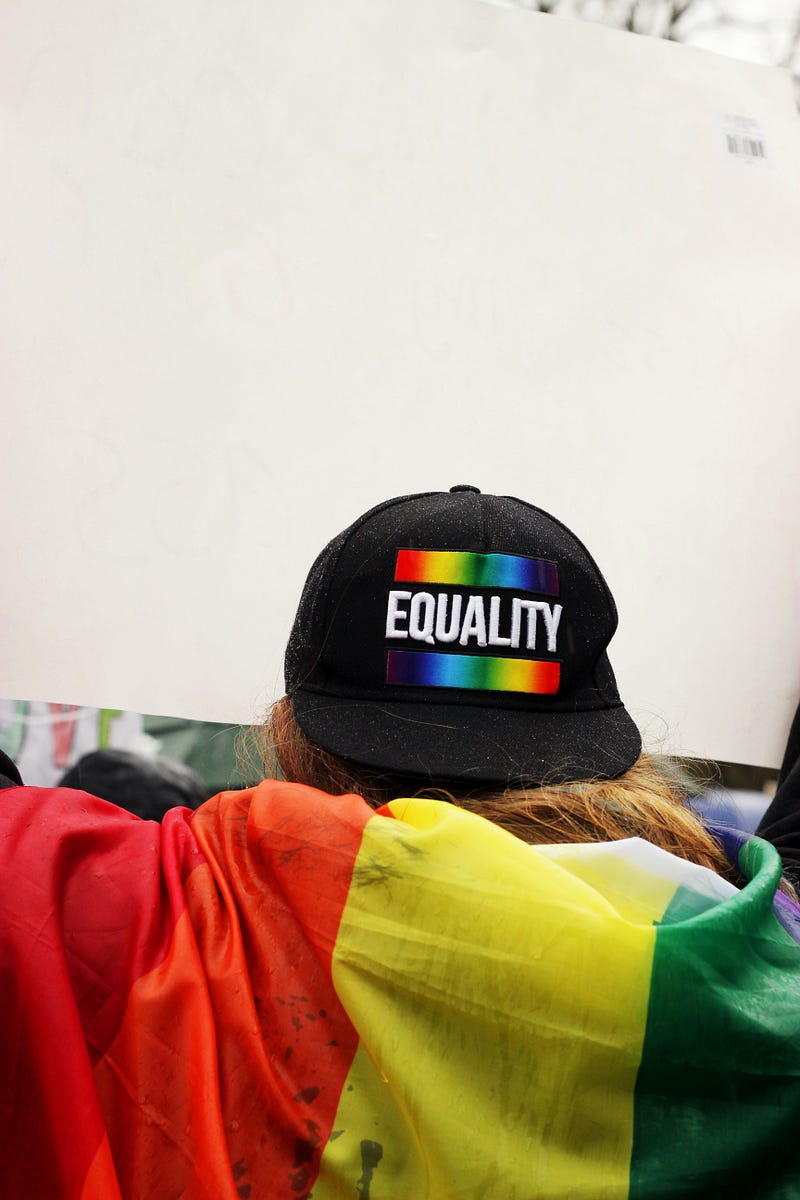
Where you’d assume an Equality Act is about equality for all, the UK government now says, that’s not true. It’s about their definition of equality. What is equality in the eyes of Whitehall? The Equality and Human Rights Commission explains:
The Act provides a legal framework to protect the rights of individuals and advance equality of opportunity for all.
It provides Britain with a discrimination law which protects individuals from unfair treatment and promotes a fair and more equal society.
Section 7 of the Equality Act 2010 concerns the topic of gender reassignment:
Gender reassignment
(1) A person has the protected characteristic of gender reassignment if the person is proposing to undergo, is undergoing or has undergone a process (or part of a process) for the purpose of reassigning the person’s sex by changing physiological or other attributes of sex.
(2) A reference to a transsexual person is a reference to a person who has the protected characteristic of gender reassignment.
(3) In relation to the protected characteristic of gender reassignment —
(a) a reference to a person who has a particular protected characteristic is a reference to a transsexual person;
(b) a reference to persons who share a protected characteristic is a reference to transsexual persons.
Where does it state that you have to be eighteen to gain the protection under this section? We cannot see it.
This is just one example of a situation where Whitehall clearly didn’t want to rock the boat by letting other parts of the UK determine their own law, rules and regulations. It’s also one of those situations that scream for more autonomy for the individual parts of Britain.
A Lawless Country?
The situation will become even more complex when, by the end of this year, “all EU-derived secondary legislation will expire under the Bill unless the British government takes positive steps to preserve it.”
While ministers can replace the bills due to expire, they themselves are unsure which ones exactly need updating. We’re talking a wide scale of laws, from rules on the proper collection of sewage in urban areas to employment law.
Especially when it comes to employment law, all existing employment laws to protect the rights of workers in general, including pregnant workers and equality in payment, you could say that the board will be wiped clean.
Not only that, but any jurisprudence, or case law, based upon those laws will be upended. Forget all jurisprudence, forget the rulings so far, none of that can be taken into consideration for any court case from 1 January 2024 on.
How will Scotland, Wales, and Northern Ireland take this? They have been far more pro-EU than England. You could argue that they will want to keep their jurisprudence and, if they have to, replace the secondary EU laws with similar ones. Any government would want that, you’d think. Not the Tories. They can feel the excitement of finally being able to abolish trade unions and limit employment laws. Woke, you can hear them whispering in Whitehall.
Power to the People
To come back to the table discussion about being English or British, one can see the argument that was made to pronounce themselves English and not British, with the political context given as an explanation.
I’d argue that yes, we need political change, we need to establish maybe a system like America with individual, mostly autonomous states, and Germany with its “Bundesländer” where — interestingly — judges have more scope. They are allowed to not only follow the law but to interpret it as they think fit. Which means that “the letter of the law” is not automatically what is ruled upon but rather the spirit of said law.
But no, saying you’re English not British does not automatically infer you are only saying it from a political point of view. I’d say, let’s abandon our nationality altogether and only refer to ourselves as world citizens, living in…[insert as applicable].
Nationality feels to me related to power and isn’t that what politics is all about? Power is what made Whitehall block Scottish law. Power is what turns democrats into dictators, and kind people into predators. Power should be delegated to the people it actually affects.
If you enjoyed Ink-Stained Hearts’ article, why not subscribe to our newsletter?
And here are a few more articles on Medium to pique your interest.


