
Is it possible to Regulate Blood Pressure Through Simple Exercise Routines?
Having practiced medicine for more than 30 years, I have witnessed how hypertension constantly emerges as a primary or secondary health problem. Any therapeutic approach to combat it can represent years of life and quality of life.
Here’s an intriguing thought: could merely dedicating a few minutes daily to isometric exercises significantly impact your blood pressure? It just might.
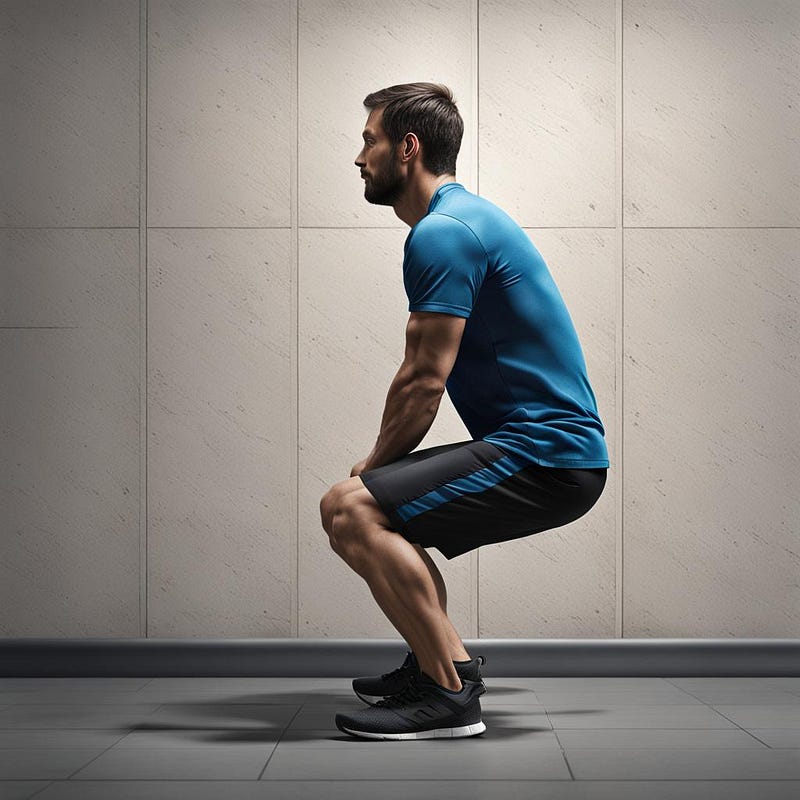
From their comprehensive evaluation of various exercise types, the researchers singled out one as the potential star player in battling hypertension — isometric exercises. These workouts, such as wall squats, typically involve a static position, where your muscles contract, but no joints move.
The Study
For example, a recent exploration published in the British Journal of Sports Medicine titled “Exercise training and resting blood pressure: a large-scale pairwise and network meta-analysis of randomized controlled trials” has brought to light specific intriguing findings.
A group of researchers looked at a considerable number of scientific studies — 270 of them, to be exact. They studied data from over 15,000 people to try and learn something new; it dug into the impact of three specific isometric exercises on blood pressure.
Imagine holding a wall sit position for two minutes, followed by a two-minute rest. Repeat the cycle four times, each with a break in the middle — a single cycle, including rest periods, would require just 14 minutes of your time.
The numbers presented by the research were quite optimistic. Individuals who consistently practiced wall sits as a part of their isometric routine witnessed a drop in their systolic blood pressure (the top number in a reading) by ten mmHg and five mmHg in diastolic pressure.
Nevertheless, suppose you’re adhering to guidelines, observing your blood pressure lingering slightly higher than you’d like, and you’re keen to steer clear of medication.
In that case, there’s been an exciting development in the exercise science sphere you should consider. Enter isometrics. This training could provide an edge in more effectively lowering your blood pressure. How do isometric exercises put a leash on blood pressure?
When you engage in isometric exercises, you contract a muscle and hold that position for a time, temporarily curtailing the blood flow to that muscle. Fascinating. But wait — the plot thickens.
Now, once you liberate that muscular contraction, a thrilling event unfolds. The blood flow to the muscle tissue escalates. This sudden increase sparks off vital signals that coax your blood vessels to unwind a notch more.
The result? A smoother and less rebellious blood flow with diminished resistance.
And what does this mean for your blood pressure?
Isometric exercises act as pressure valves, regulating and reducing your blood pressure.
The Wall Sit Exercise
Now, let’s put the theory into practice. Ready to try out the wall sit?
First, locate a solid, manageable fence/wall that you can lean against comfortably. Step away from the wall, taking just a couple of strides forward. Plant your feet on the ground, ensuring they’re hip-width apart.
Next, you’re set to slide your back down the wall. As you do this, visualize the action as akin to sliding down into a chair with your knees bending to a 90-degree angle.
Remember, however, that the lower you go, the more severe your workout becomes. So, start with your comfort level in mind. Work your way down to a 90-degree knee bend gradually. What if you find reaching a 90-degree bend challenging? No frets! It advises easing down based on your knee flexibility.
Hold that position firmly when you feel a lower-body muscle burn. Remember, there’s no rush. The strength you gain along the journey is just as crucial as reaching the endpoint.
Why should you try this? Isometric exercises like a wall sit target many muscles, augmenting your strength considerably. They’re also vital for enhancing balance and range of motion.
Primarily, you activate your key leg muscles, namely your quadriceps, glutes, and calves. Furthermore, keeping your back flat against the wall engages your abs, providing your stomach muscles with a rigorous workout.
It’s always prudent to retain a balanced routine of varied physical activities that suit your health conditions and preferences while considering your doctor’s advice.
Why not give isometric exercises a try?
They may start with a wall squat, carefully listening to your body and noting any changes. The role of exercise as a non-pharmacological intervention for hypertension is becoming more recognized, and isometric exercises certainly earn their spot on the list.
Are you pumped? Tie up those laces, turn on some motivating music, and master the art of the wall sit. Your overall well-being will thank you for it!


