
Is it Possible to Go 100% Flight-Free?
And here’s how you can go flight-free as much as possible
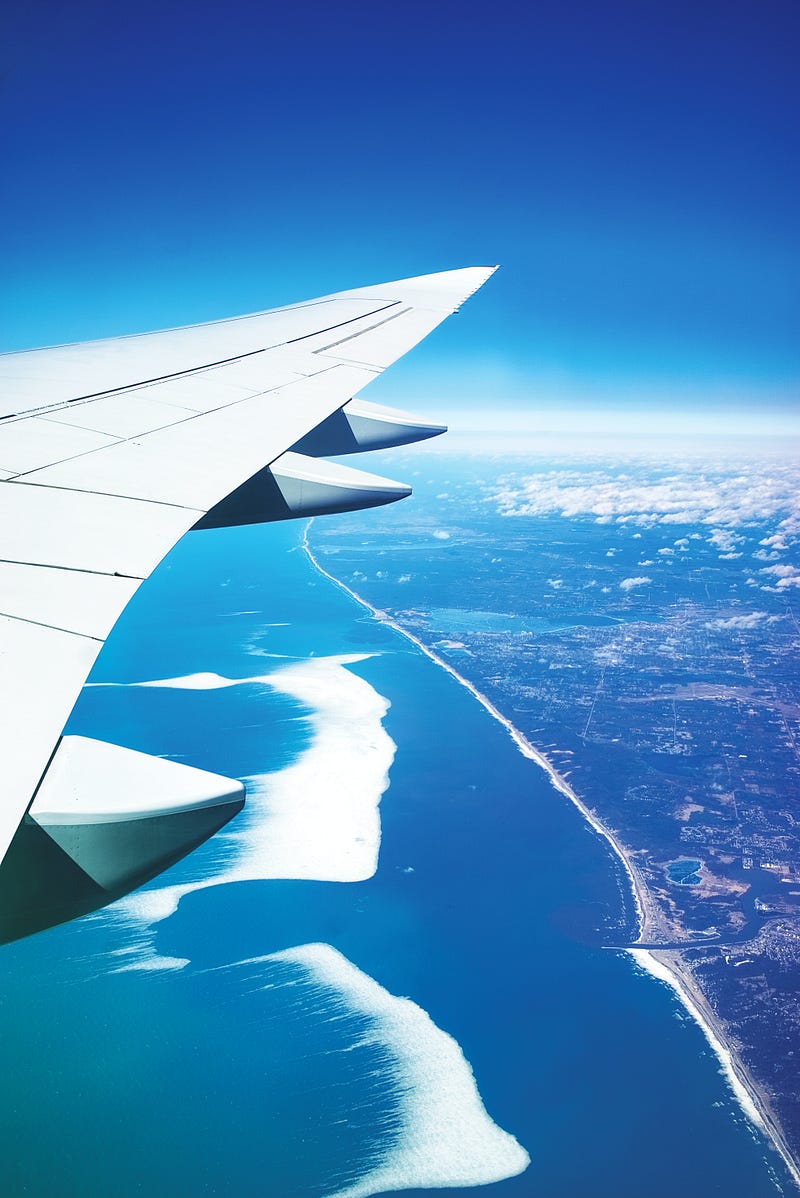
Commercial aviation has rapidly expanded over the last few decades, especially in North America and Europe. However, flying is a massive contributor to the climate crisis, which needs addressing more than ever. Travelling flight-free has increasingly become popular over the last several years, especially in Europe.
As somebody who has travelled internationally by plane and train and has taken an interest in travelling flight-free — is going 100% flight-free possible? If not, how can we make it happen?
The glorification of flying
You can tell a lot about any society by what it values. Flying is seen as the ultimate way to travel. This dates back to the 1950s jet age. As commercial aviation expanded, airlines had to build up a market of loyal customers to sell tickets; hence flying was pitched as a luxury. This extends to the upper-class interior décor you see on photos of aeroplane cabins from the time.
Even now, these values persist as many people have internalised them without question. One example is the many competitions offered by various organisations. These prizes often include holidays in some far-flung destinations, with flights included as part of the prize. Rail trips do not feature anywhere near as frequently.
You also see it when discussing the price of flights, as if the monetary value of a flight ticket is all that matters. There’s no discussion of the environmental impact of flying when covered in general and aviation publications. The exception is a largely unproven technology that will not be widespread for decades. While it may sound good that X airline is now flying to destination Y from their hub in city Z, do we really need another route? Just because an airline can fly somewhere new doesn’t mean they should.
There are more ways to stay grounded than you think
The masses have been conditioned to accept flying as the default because, thanks to advertising and government policies, they are unaware of the alternatives. Let’s go over some of them here:
The train
I’m biased as I live in Europe, which is by far the best-connected continent in the world for rail travel (arguably the safest). The trains here are great. Plus you can get almost anywhere by train. This isn’t the case in most other parts of the world; however, rail connections exist in more places than you think.
Sure, we all know of Amtrack in the USA, the Shinkansen in Japan, and the Trans-Siberian Railway in Russia, but do you know about New Zealand’s TranzAlpine service or Morrocco’s Al Boraq high-speed trains (the first high-speed trains in Africa)? Unless you either live there or follow railway news you likely don’t.
Rail travel allows you to see countries up close on the ground in a way that’s impossible on an aeroplane. The views are beautiful in the most scenic of locations. Plus, you can also book sleeper trains, enabling you to nap on your way to your destination, effectively doubling up as a hotel. It’s the best alternative for long-distance land travel.
The coach
This is another method of travel that is sometimes more accessible than taking a plane. I will also admit I’m biased as I struggle with bus trips. Hence, I usually avoid taking the bus if possible. However, it is an option I will touch on here — especially if you’re looking to travel on a budget.
There are loads of domestic and international bus routes you can take. Like with trains, Europe is among the most well-connected parts of the world. Usually, if trains don’t serve an area, buses do instead. For example, the tiny state of Andorra has no airport or train station. You have to take a bus from Toulouse or Barcelona. On a more continental level, South America doesn’t have an international train network. However, buses exist to fill this gap (as well as flying).
The ferry
This is the best flight-free option for short trips, especially in inter-island European regions like the British Isles, and Greek Isles, and further afield places like the Caribbean. By travelling on a ferry, you can see the sea close while relaxing with a wide range of facilities on board the ferry. Both of these are things you cannot do on an aeroplane. Much like sleeper trains, you can get affordable accommodation for a night or two. You can also bring your car as well.
Sometimes it’s possible to book a combination of train and ferry tickets that allow you to save money. One example is SailRail; enabling you to book combined ferry and train tickets between any station in the UK and the Republic of Ireland.
The freighter
I didn’t know this even existed till I started researching more deeply. Some freighter ships allow some passengers to join them for part or all of their journey.
You can disembark at most stops, enabling you to experience multiple countries in one trip. That said, this option is very expensive. However, it is a lot more sustainable than cruise ships (given that most items in those containers are essential). I want to try this one day after looking into it. This is a viable alternative to travelling via plane if you want to go extremely slow and have the money to spend.
When writing this post, most ships aren’t accepting passengers due to the coronavirus pandemic. However, examples of routes that have run in the past include an 83 around-the-world trip through the Suez and Panama Canals, Europe to Australia (via Mauritius / Reunion outbound and via Singapore / Sri Lanka inbound), and the USA / Mexico and the Mediterranean.
To encourage flight-free travel, government intervention is vital
Despite what advocates for the “free market” claim, you cannot trust private companies to build the infrastructure required to support flight-free travel at a reasonable price. Likewise, individual choices to be flight-free — while this drives interest and is also very important in changing the glorification of flying that I outlined earlier — is also not enough.
Some solutions include a minimum cost for flights effectively banning ultra-low aviation fares. Domestic flights must be banned wherever a viable alternative exists. And private jets must be banned altogether as they are the biggest source of emissions from aviation (as are the billionaires who own them). In exchange, transport costs for other methods must be much more affordable than they currently are.
Another aspect that needs to be considered is workers’ rights and wages. Ditching the aeroplane sounds good to a lot of people. However, the journey is slower and can eat into allocated holiday days. Plus, international travel is expensive (and fight-free often costs more). Hence, even those aware of the environmental impacts of flying still fly anyway. It’s either that or they don’t go at all. If people had more time off to take the slower flight-free journeys, more would take them.
Another alternative to this is to build a career that allows you to work remotely anywhere in the world. Whether it’s for yourself or someone else, the digital nomad lifestyle is one path ordinary workers choose to take back control of their time and location. Hence, digital nomads who want to travel the world can do so while ensuring they have a consistent income stream.
That said, there will always be some valid reasons to travel by air
Aviation is here to stay. It’s a wonderful human invention and can exist on this planet so long as it’s sustainable. Hence, cutting back on non-essential flights as much as possible is important. Otherwise, a horrible world event like in 2020 will force airlines to permanently scale back operations in a way that ends commercial aviation. If this happens, it will make essential flights almost impossible to access for those who need them. Here are some examples of situations where flying may be your only option:
Family emergencies
Dire situations like bereavement, medical care and missing person cases often require family members to book last-minute flights to travel to their last locations.
I saw a recent case on a flight-free page about a South African woman living in the UK who chose not to travel back to South Africa after her dad suddenly passed away due to concerns about the environmental impact of the flight there. This is extremely sad as this is the kind of situation where taking an international flight is acceptable (and should be encouraged as it’s arguably an essential trip). It also shows how strongly people feel about the climate crisis and that they must take drastic steps like this.
LGBTQ+ travellers
If you’re LGBTQ+, travelling through much of the Middle East, Asia, and Africa is dangerous due to colonial-era laws and attitudes. Hence, flying over these regions for your safety is the best way to reduce your risk of harm. Sadly, this means certain flight-free routes and experiences are off-limits, such as the Trans-Siberian Railway, and the various connections.
Work trips that cannot be done remotely
This ranges from employees of large companies having to attend events in person right the way through to politicians travelling around the world to confidential, important gatherings with other world leaders. Both especially apply when disasters or other unexpected events occur.
So is it possible to travel 100% flight-free?
In many cases, yes. However, like veganism, not everyone can become flight-free as their circumstances prevent this. Exceptions must always be approved for a variety of reasons. However, people must reduce their non-essential travel while supporting and participating in political campaigns designed to bring about the required structural change.
Final thoughts
Flying isn’t the only way to get to places. Travelling flight-free can be extremely enjoyable, especially when you’re prepared and see first-hand the beautiful views of the places you go through. After all, travelling is about the journey just as much as the destination when you go flight-free.
With that said, here are some resources to help get you started:
Resources:
The Man in Seat 61 (an invaluable resource with lots of links and resources for dozens of countries in and outside Europe)
Green Traveller (another good resource)
Flight Free UK (a climate charity advocating for flight-free travel):
Byway Travel (personalised flight-free travel agent, there are other orgs like this)
Freighter travel websites I found during my research:
Thanks for reading! If you want to support my work, you can:
- subscribe to me so you get an email whenever I publish something new at https://nomadmills.medium.com/subscribe
- follow me on Medium via my profile.
This ensures I can keep doing what I love. Thank you so much!


