
GENDER EQUITY
Is it “Getting Harder to Be a Man than a Woman”?
Young men’s attitudes toward feminism, and who is to blame
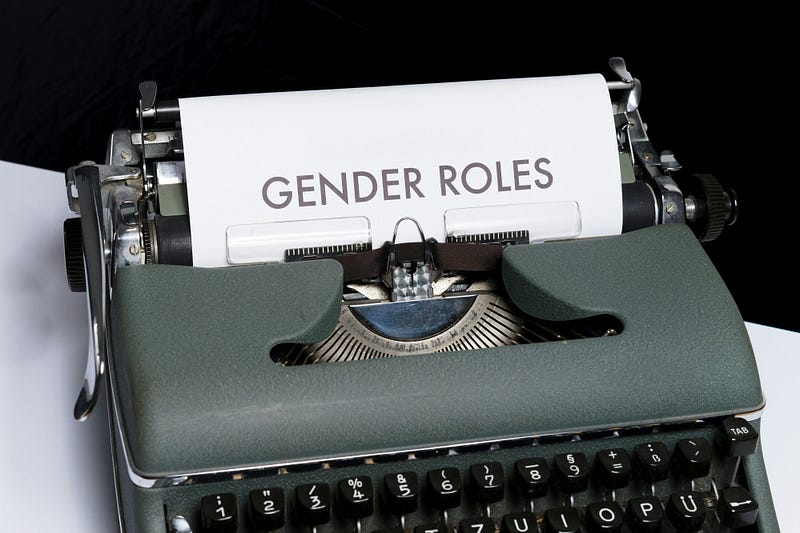
Not long ago, I came across an article that discusses the gender gap in attitude toward feminism among young people (16 to 29 years old). This is Gen Z, and the survey asked males and females how they view feminism.
The survey was done in the U.K., and perhaps we can extrapolate some of its findings to the United States.
“There’s a clear gender divide in the attitudes toward the concepts of feminism and equality between the sexes, and the divide is most jarring among young people, according to a new study conducted in the U.K.” — Josie Cox in Forbes
One in six of those surveyed said that they believed that in twenty years it will be harder to be a man than a woman.
Academics at King’s College London’s Policy Institute and the Global Institute for Women’s Leadership, in collaboration with Ipsos UK, surveyed 3,716 people above the age of 16 on their opinions and beliefs as they relate to feminism, gender equality, the barriers people face on account of their gender, and how these barriers are likely to evolve in the future.
Falling under the assumptions
We may have fallen under the assumption that younger generations are progressive when it comes to feminism and gender equality. But according to this survey, they are not.
Of people aged 16 to 29 years old, close to 65% of young men said that it was harder to be a man than a woman, especially when thinking about the future 20 years, according to the report.
Some of the Key Findings
“This is a new and unusual generational pattern — normally, it tends to be the case that younger generations are consistently more comfortable with emerging social norms, as they grew up with these as a natural part of their lives,” Professor Bobby Duffry, The Director of the Policy Institute at King’s College London, said in the story in Forbes.
“This points to a real risk of fractious division among this coming generation of young — and the need to listen carefully to both (men and women),” he concluded. “That includes much more work on understanding the challenges facing young men today, or we risk that void being filled by celebrities and influencers.”
Professor Rosie Campbell, Director of the Global Institute for Women’s Leadership at King’s College London, agreed: “What we are seeing is a polarization in the attitudes of young men and women towards gender equality that matches the gender split… We’re just at the beginning of understanding what’s driving this. But the fact that this group is the first to derive most of their information from social media is likely to be at least part of the explanation,” she told reporter Josie Cox.
Close to 65% of young men said that it was harder to be a man, especially when thinking about the future 20 years.
If young people are more in tune with social media influencers who explain feminism in a way that might perpetuate misogynistic views, for instance, or those who reinforce gender role stereotypes, then this group might be getting confusing information or even toxic information about feminism.
The survey also found that: “Overall, just over four in 10 respondents said that they thought feminism had done more good to society than harm, while only 12% indicated that they thought it had done more harm than good.”
So, that’s good news, I guess. But still — 12% thinking that feminism has done more harm than good, is not good. Especially in 2024. Shouldn’t we be ahead of that? Shouldn’t we be zeroing the divide on feminist views?

Bridging the generational divide
Gen Z is the next generation of people who are going to shape the modern world. When I read this article, it got me thinking. I wanted to understand why Gen-Zs are thinking this way. Some of the questions I asked myself were:
- Is feminism being misunderstood by the younger generation?
- Is there something wrong that older generations are doing in furthering feminism?
As a society, we still have a ways to go to make sure that younger generations are on the same page when it comes to being feminists. We need to redefine what feminism is and what it is not.
I would have liked to see the research go further and find out what those who said it was harder to be a man than a woman meant exactly.
The fact that this group is the first to derive most of their information from social media is likely to be at least part of the explanation.
Explaining to younger generations what today’s feminism is about is important to raise the next generation of leaders. And it begins with redefining feminism.
Being a feminist today is not just being a woman, or even fighting for women’s rights. It’s fighting for everyone’s rights in all their intersecting identities and gender expressions and acknowledging that not everyone is on a level playing field. Being a feminist is about advancing equal opportunity for all people and giving women what they need to unlock their potential. And we need more men to be feminists.
Shifting cultural norms
I once gave a talk at a high school on the topic of bias and stereotypes, where I asked the students to share some of the cultural stereotypes and biases they have witnessed or experienced.
I remember one of the students — a tenth-grade girl — who shared that in her family and community where her parents were from, girls were constantly told that they did not need to be good in mathematics.
She said: “That kind of messaging was internalized by my mother, and she never pressed me to do better in Math or Science, saying that only girls who are not beautiful need Math or Science.”
Being a feminist today is not just being a woman, or even fighting for women’s rights. It’s fighting for everyone’s rights in all their intersecting identities and gender expressions and acknowledging that not everyone is on a level playing field.
What the student said reminded me of my own culture of origin. There was little to no expectation for a girl to get good grades in math or the sciences. Parents who were progressive enough to even send their daughters to school wanted them to learn the basics. Girls were expected to be better in studies such as cooking, sewing, and other social skills than boys.
It is that social and cultural conditioning that made many women avoid fields that included math or sciences. Although nowadays many women have made strides in STEM fields, the stereotype that girls don’t do Math is still widely internalized — even in younger generations.
Rolling with the times
Has the feminist movement lost its original mission? Or is it simply still misunderstood across cultures and generations?
Cultures evolve and one can certainly ask if the feminist movement needs to change anything to catch up with the current times. The way feminism started may no longer be the way it needs to remain to benefit the next generation. In the words of Robert F. Kennedy:
“Every generation inherits a world it never made; and, as it does so, it automatically becomes the trustee of that world for those who come after.”
The previous generations did their part with what they had and knew at that time. Ending slavery and fighting for civil rights and women’s right to vote are just a few of the many things the previous generations have achieved. Today, we stand on their legacy.
But as younger generations discover their own potential to lead, they should realize that there are still some inequities in our systems and get involved in finding solutions to the most pressing issues of the current times.
Ending slavery and fighting for civil rights and women’s right to vote are just a few of the many things the previous generations have achieved. Today, we stand on their legacy.
Feminism is not about pitting men against women or raising women above men. It isn’t even about only women anymore. Feminism is about recognizing that ALL people deserve equal rights and opportunities. And Gen Z needs to hear that message to carry us into a better age.
Want to be notified when I publish new stories? Subscribe here Check out my other stories here.
For more stories about feminism, follow Fourth Wave. Have you got a story or poem that focuses on women or other disempowered groups? Submit to the Wave!