
Is Indy’s Ten Point Coalition what high-crime neighborhoods need more of?
The Indianapolis TPC helped reduce homicides in the Crown Hill neighborhood by 85% in two years. They’re run by community volunteers. Crown Hill was once one of the top-20 most dangerous areas in the U.S.
Late last year, an article by Sarah Bahr appeared in Indianapolis Monthly about the Indianapolis Ten Point Coalition (ITPC). I read it, knowing nothing about it Indy Ten Point — although I had lived relatively near to Indianapolis my entire life, had friends from Indy, and read the IndyStar and Indianapolis Monthly for several years.
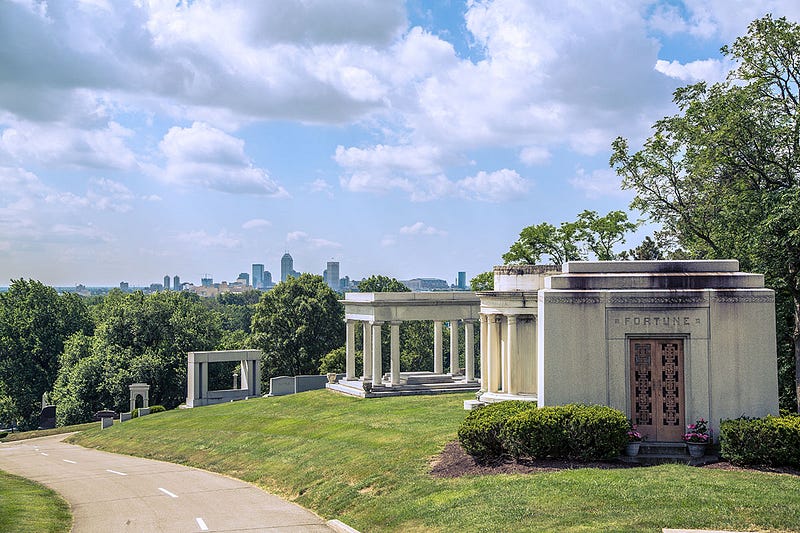
Indianapolis has long struggled with homicide and gun violence, especially in particular neighborhoods (like Crown Hill at one point) and parts of the north/east sides. So when I moved into the middle of the Butler-Tarkington and Crown Hill neighborhood during nationwide protests over police brutality, between Butler University and historic Crown Hill Cemetery, I remembered the article I’d read back in November of 2019 and decided to research more about the Ten Point Coalition.
One of the tenants of the protests, no matter where people agree they have turned violent or veered off-topic, is that police brutality — and neighborhood crime — can be fought by funding non-police organizations, like social workers. Or mental health workers. Or, let’s break it down further. No matter what your opinion is on Black Lives Matter, America has a policing problem and a gun violence problem, especially in inner cities. So, how do we combat that? More police? Less police? Something entirely different? People have plenty of answers, but some answers take years to implement — and some on both sides have no answers at all, or just anger — or they have answers, but they lack specificity.
Let me ask you this: what if there was a group whose focus was on preventing crime at the source — before it could happen — like Indy’s Ten Point Coalition? An organization that focused on preventing those at-risk of becoming a career criminal or getting involved in violence before it happens?
Indy Ten Point describes their vision as, “To be a catalyst and bring together the faith-based community, community leaders, businesses, law enforcement, and the court system to address critical issues in the community such as violence, chronic unemployment, and lack of education.”
Their mission: “to reduce violence and homicide threats through direct engagement, the promotion of education, and the fostering of employment opportunities.”
In other words, they’re supposed to be a good-willed middle-man.
—
And that’s exactly what we need, right? In every place of tension between two groups, a middle-man with good intentions, or in this case a middle-group, is needed.
Ten Point Coalition tries to reach at-risk youth before they are reached by systemic crime, gang violence, and drug trafficking. A middle-man. Ten Point serves as a point of communication for police and works closely with local police departments. Another role as a middle-man. And, they advocate for low-income and high-crime areas in front of the mayor of Indianapolis and the city-county council. Another role as a middle man. In each, they fight for those who could be considered at-risk of engaging in criminal activity and ending up on one side of a homicide or the other. They don’t fight criminals as police departments do. They try to direct youth towards lives of opportunity, enrichment, and fulfillment rather than letting them slip into crime and violence.
—
ITPC was founded in 1999 after watching a similar strategy work in Boston with Boston Ten Point. In their first year, according to their website, they targeted three “high risk” neighborhoods: Unwa, Mapleton-Fall Creek, and Haughville. Homicides were reduced by 40%. The IMPD and the Office of Public Safety credited ITPC with reducing violent crime. Since 2016, ITPC has helped reduce homicides by 85% in Crown Hill and Butler-Tarkington. Crown Hill was once the 17th most dangerous area in the country. It saw over 1000 days without a youth homicide (ages 14–25) since Ten Point came into the picture.
But what exactly is Indy Ten Point doing that’s working?
—
The view of Ten Point among Indy residents isn’t always so rosy. Since the November ’19 Indianapolis Monthly article titled, “Ten Point Coalition’s Turf War With the East Side,” ITPC has left the Post Road area of the east side altogether. It was in-fighting among other organizations in the neighborhood that led to them leaving, apparently. Ten Point wants to be alone in handling the streets, making other neighborhood organizations focus on community engagement. But east side orgs said that Ten Point doesn’t stick to one area of public safety and community involvement, so they shouldn’t either.
The feeling is that ITPC wants to take credit for single-handedly making the city a safer place while Indianapolis’ homicide rate has broken records five years in a row. That doesn’t sit well with residents or the far-left, who wince when they see ITPC leaders marching alongside Mike Pence. But that’s not the message that ITPC is trying to relay, as Indianapolis Monthly quoted from the President of ITPC, Rev. Charles Harrison’s speech to city officials and Indy law enforcement last year: “I have learned after doing this for 20 years that no one group, no one agency, can curb the pattern of violence alone. It takes a village I believe good things happen when community, the city, law enforcement, grassroots organizations, and faith-based [groups] come together.”
ITPC has faced quite a bit of social media backlash for seeming to claim that they’ve had more success than they actually have. Despite patrolling only 5% of the east side, they claimed in a poster that the far east side had “No Homicides in One Year.” Now, they’re entirely out of the east side. It was a failed mission. Then came nationwide protests, during a pandemic, calling for local, state, and federal governments to address policing and violence.
—
Next week, I will cover how ITPC is moving forward in 2020. Meanwhile, let’s think about how an organization like the Ten Point Coalition fits into a discussion on policing and decreasing crime in inner-city neighborhoods.
Community organizations that engage youth help curb violence. That’s a fact.
No one organization can turn an entire city’s gun violence or crime problem around. It takes multiple community organizations working together, tirelessly, and with plenty of historical, financial, and interpersonal obstacles.
Maybe ‘Fund Neighborhood/Community Organizations’ isn’t as catchy, but it’d probably work a lot better than ‘Defund the Police.’
Written by Stasis Staff based in Indy.