
Is Human Composting the Ultimate Environmentally Friendly Act?
A look at four types of funeral plans
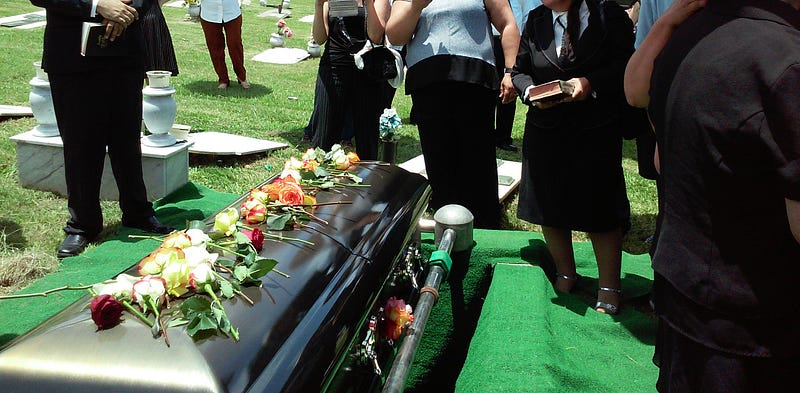
It’s human nature to avoid talking about death or dying, but they are essential conversations. Inevitably we will need to make arrangements for our own funeral or that of a loved one.
The impact on a loved one immediately after death is a breeding ground for hasty decisions. Therefore, it is more logical to have tough conversations before they are needed and when emotions are stable.
Of the current options, burial and cremation are the most popular; donating your body to science is gaining momentum and some like the notion of a Viking burial at sea. Now there’s a new option — human composting.
Burial
The idea is simple, a body in a wooden casket will eventually decompose, returning to the earth. But that process takes years. On average, a body will take 50 years to decompose to a skeletal state and a further 50 years for the skeleton to break down. Depending on the construction, the casket takes longer. The use of embalming fluids will eventually leach into the soil, creating a further environmental impact.
Green burial sites, those in parks without headstones, like Pinnaroo Memorial Park in Western Australia, provide an environmentally friendly option. Instead of stone monuments, each grave has a simple bronze plaque. Native animals roam the grounds, and the park is available for picnics and as a jogging track — a more practical use of the space than traditional cemeteries with headstones allow.
Cremation
While burial was once the most common option, cremations are fast overtaking as the most common method for disposing of human remains. The perception of cremations is that of an environmentally friendly option. Cremation initially creates five times the pollution of burial; however, the long term-maintenance of graves in traditional cemeteries creates more pollution long-term.
The biggest argument in favor of cremation is the low impact on land use and the ability to be creative with ashes.
You can keep ashes in urns, or they can be dispersed — however, you must use care when scattering ashes around water. Generally speaking, you shouldn’t spread ashes:
- in rivers or places where people swim or fish
- within the catchment area of drinking water
- in fragile ecosystems
Burying ashes under a new tree or plant is a popular option, as is converting them into jewelry. There is no end of ideas you can use — and now that shooting ashes into space is an option, not even the sky is the limit.
Viking Funeral
A Viking funeral carries illusions of romance and tradition. But the sad news is that having real Viking funerals with the ship built into a pyre containing all your treasures before being set on fire is a big no-no. Not only will sacrificing others land you in trouble with the law, but the possibility of a partly burnt body floating ashore will also cause some issues — and nobody wants that.
Instead, the compromise builds on cremation. Many crematoriums will allow you to include significant items in the casket. You can then send your ashes to sea in a small vessel, with a funeral pyre optional.
Leaving Your Body to Science
Many universities with a medical stream accept body donations. While some cadavers will suit research purposes, most cadavers are used in anatomy classes to educate medical students and practice surgeries.
Intake criteria for body donations are strict; at the University of Western Australia, consent forms for body donation should be completed before the donor’s death. However, a final acceptance of the body for donation only occurs after the donor has died. Certain factors can exclude donors, including:
- removal of organs for donation
- bodies that have undergone recent surgery or post-mortem exams
- specific medical issues including (but not limited to) obesity, emaciated, vascular disease
- if a body carries infectious diseases*
*COVID-19 caused a temporary cessation of the body donation program
Human Compost
Recompose, in Seattle, Washington, offers human composting services at three licensed facilities. Using a process Recompose have termed ‘recomposition’ or ‘natural organic reduction,’ human remains are sealed within a reusable vessel, covered with wood chips, straw and alfalfa. In a technique that took four years of research, Recompose uses heat, up to 55 Celcius, and oxygen pumped into the vessel, which creates an accelerated breakdown process that encourages the natural microbes to thrive.
The process to convert remains into soil full of nutrients takes thirty days, and it transforms the entire body, including teeth and bones. This method uses 1/8 of the energy used by the cremation process, making it an environmentally friendly option.
You have the opportunity to keep the soil after decomposition to plant a memorial, or you can choose to donate the soil to the Bells Mountain conservation.
What sort of burial is right for you?