
Is ‘Global Britain’ on the Retreat?
Boris Johnson’s vision for ‘Global Britain’ has dominated the narrative since Brexit. But is it now under threat?
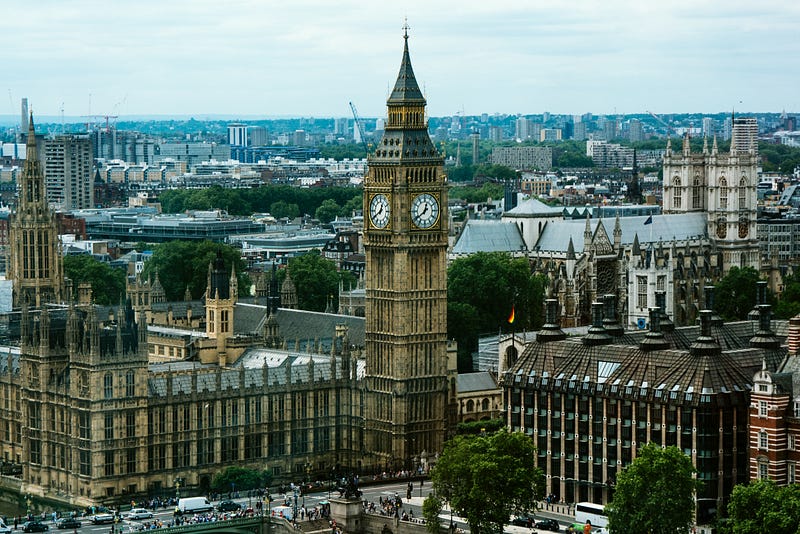
Since Britain voted to leave the European Union four years ago, the world has changed dramatically — and yet, the narrative behind Brexit has largely stayed the same. In the build up to Britain’s 2016 Brexit referendum, as both Brexiteers and Remainers put forward their respective cases, it was difficult to miss the stark difference in tone between the two sides. Remainers chose to emphasize the economic risks of leaving the EU — highlighting the huge financial threat faced by Britain if it chose to jump into the void. The Brexiteer vision of Brexit, however, could not have been more different. Those who wished to leave the EU spoke of a future Britain ‘unchained’ from Europe, that was to become globally powerful, economically prosperous and geopolitically influential once more.
Since the referendum, this positive vision for the UK’s post-Brexit future has come to be known as Global Britain — a concept that has been championed by both Theresa May and Boris Johnson. Mr Johnson in particular has not hesitated in extolling the virtues of Global Britain, with it becoming a key part of his 2019 election platform.
However, from China to the United States, the international mood has shifted considerably since 2016, with the Prime Minister now seeing his Global Britain project under threat. With the UK floundering in trade talks with the EU and the US, and an increasingly aggressive China breathing down its neck, does 2020 spell the end for Boris Johnson’s Global Britain?
What is ‘Global Britain’?
Pinning down what exactly Boris Johnson means by Global Britain is in itself no easy task. The term is intentionally vague, with it having a variety of meanings depending on who you ask. For some, Global Britain harps back to Britain’s imperial past — intentionally drawing parallels with the globally powerful Britain of the 19th century and playing into British fascination with its former empire. To others, Global Britain simply represents a more entrepreneurial outlook on Britain’s future, with Mr Johnson evoking terms like “opportunity”, “growth” and “global exporting spirit” to portray a highly optimistic view of post-Brexit Britain.
Put simply, the Prime Minister’s version of Global Britain envisages a Britain unshackled from geographic restrictions, with the nation able to pick and choose its trading and geopolitical partners based not on physical proximity, but on British needs and interests. In practical terms, the UK would look to secure a number of trade deals with countries outside of the EU — such as the US, Japan and China — to replace the type of deals that Britain had as an EU member state. Post-Brexit Britain would see itself pivot away from European trade and look for future trading partners in other areas of the world, with a particular focus on the Anglosphere and rapidly developing countries in Asia.
However, Global Britain would not see a total abandonment of Europe and the EU in the sphere of trade. The UK is still locked in negotiations with the EU over a future trade agreement in the short term, with Britain keen to maintain its soft power influence on the continent through specialized areas like technology and science.
Likewise, Britain’s decision to focus its attention outside of Europe may not necessarily represent such a marked change from its previous geopolitical strategy. As highlighted by Oliver Daddow, writing for the LSE Brexit blog, “Indeed, in or outside the EU, Britain’s grand strategy has always been to maintain a global leadership position in which “Europe” has played an ambiguous role at best” — with Boris Johnson’s Global Britain narrative representing more a change in rhetoric than any wider strategic pivot.
Among the lofty talk of Britain becoming ‘unchained’ from the EU and free to seek new opportunities elsewhere, it is not difficult to understand the enthusiasm of those Brexiteers who champion the cause of Global Britain. As noted by Jeremy Cliffe in New Statesman last month, Brexit “offered Britain — the country that had lost its empire but not yet found its role, perched at the crossroads of various alliances — an attractive vocation as the pioneer and standard-bearer of this new age. So much more invigorating than the rival, Remainer vision: cautious continuity as a semi-detached European player”.
As Brits went to the polls on 23 June 2016, the world looked a very different place than today. The European Union was in the midst of a massive refugee crisis, UK-US relations were strong under an outward looking Obama presidency, and the UK had a steady relationship with China. Globalization appeared to be on an unstoppable march forward, and a Global Britain looking beyond Europe seemed a reasonable — albeit ambitious — gamble on Britain’s future prosperity. However, in the four years since Britain voted to leave the EU, the geopolitical scene has changed dramatically.
Clouds on the Horizon
If 2016 could be described as a time of great optimism for those involved with the Brexit campaign, 2020 is perhaps less so. Faced with a global pandemic, mass unemployment and a deep recession, the Brexit project now appears less ambitious and more of a liability — with globalization on the retreat as borders go up around the world. For Britain, its three main strategic interests — securing trade agreements with the EU, China and the USA — are all under threat, with isolationism in Washington and growing aggression in Beijing putting Boris Johnson’s vision of a Global Britain at risk. To understand the challenges faced by Britain, it is worthwhile examining each of these three issues individually.
First up, the European Union. Both the UK and the EU are currently locked in negotiations over a future post-Brexit trade deal. However, the discussions have hit a brick wall in recent months. The standstill revolves around three key sticking points. Firstly, the European Union wants to secure access to British waters for European fishing fleets — with the UK unwilling to budge on the issue. Secondly, both sides are keen to ensure that similar levels of regulatory standards continue in the future, so as to avoid one side gaining a competitive advantage over the other by the lowering of industrial regulations. Finally, the EU wishes to maintain key rules for state aid and subsidies, which Britain is again opposed to.
As a result of the two sides inability to unite over these problem areas, a standoff has emerged. As put by one German official, there is a “need for more realism in London” over the talks — with Boris Johnson’s promise of an “oven ready” Brexit deal seeming increasingly unlikely. To quote Michel Barnier, the EU’s leading negotiator, “There have been no significant areas of progress” in the most recent round of Brexit talks, with the standoff likely to continue.
Across the Atlantic, things are not looking much better for Britain. Whilst trade talks are ongoing, the two sides have clashed over both agriculture and tax policy — with Donald Trump’s ‘America First policy’ leaving little room for compromise from a US perspective. Fundamentally, the US has looked to gain access to the UK market for its agricultural products, which many in the UK fear could leave Britain flooded with cheaper US imports as a result of their lower regulatory requirements.
The pessimism over a future UK-US trade deal has been underscored by America’s key trade negotiator, Robert Lighthizer, who has stated “there are very, very fundamental issues that we have to come to grips with” and that “I don’t want anyone to think this is going to be a rollover.” So much for the so-called Special Relationship between the two nations.
Finally, securing stronger links with China was seen as a potential avenue for British trade after Brexit — however, over the last few months Britain’s relationship with China has soured. Tensions between London and Beijing have risen over Chinese attempts to clamp down on Hong Kong — a former British territory — with the UK even going so far as to offer up to 3 million Hong Kong citizens the right to resettle in Britain. The move clearly struck a nerve in Beijing, with the Chinese ambassador to the UK describing the move as “gross interference” in its internal affairs. Additional measures by the UK to limit Huawei’s involvement in its 5G infrastructure have further inflamed tensions between the two countries — with any hopes of UK-Chinese cooperation after Brexit now looking increasingly unlikely.
The End For Global Britain?
Despite his enthusiasm for Global Britain, Boris Johnson is acutely aware of the challenges he faces in the near future. Earlier this year, when laying out his vision for the UK after Brexit, Mr Johnson warned that “The mercantilists are everywhere, the protectionists are gaining ground” — with the Covid pandemic driving nations to turn away from globalization and bring supply chains back into their domestic markets.
However, the Prime Minister is also keen to capitalize of the political advantages of his Global Britain project. The version of Britain portrayed by ardent Brexiteers — an entrepreneurial, forward looking and globally ambitious nation — contrasts well with the downcast narrative forwarded by Remainers of a Britain which is past its prime and has faded into geopolitical obscurity. Mr Johnson, whose strength lies in his political messaging, knows all too well that regardless of the geopolitical reality, his upbeat and optimistic vision for Britain plays well with the British public, despite the difficulties it faces in practice.
Ultimately, much has changed for Britain since the 2016 referendum — and much can change again in the coming years. Global Britain may find itself on stormy seas at the moment, but a more favorable geopolitical wind could well provide Mr Johnson’s plans with the impetus it needs to succeed in the long term.