
Is Fred Flintstone Better Equipped To Survive This Pandemic Than George Jetson?
A yabba-dabba-doo digital debate of hustle-vs-routine in 2020.

Cartoons, Ethics, and Operant Conditioning
The year was 1996. I was a kindergarten kid in Central India, with just three consumable vices — fast food, comic books, and Cartoon Network. Mrs Rowling’s debut novel hadn’t hit the stands yet, and I was still a good twelve months away from my eventual addiction to paperback misery. And (I realize this now), I had begun idolizing the “father figures” from my two favorite cartoon shows that used to air as reruns back then — Fred Flintstone, and George Jetson. To some extent, their on-screen behavior was as important as the moral footprint of my biological parents — in shaping me up as a child. My memories of Bedrock, Orbit City, and Jellystone Park (from Yogi Bear), although understandably less vivid when compared to more recent discoveries on Netflix, are still very important by themselves, as formative psychological constructs.
In other words, since my exposure to this (Cartoon) content happened before I had turned seven, their lasting impact over my general “approach” to life is much stronger than other events and content, which — although debatably severe or moderate in nature, I’ve experienced in adolescence, or as an adult. This is a proven fact — the scientific term for it is called “Operant Conditioning”.
In simpler terms, my decisions in life are more likely to be based on the takeaways that developed while watching these cartoons on TV, than let’s say the number of difficult situations I’ve witnessed and overcome as an adult, including heartbreaks, workplace problems, career learnings and everything else. Recently, I have found stronger merit in this statement when browsing through a psychological workshop presented by Kathrin Zenkina (sometimes known by her brand, manifestation babe). Her mentor, Mr Bob Proctor, of the Proctor-Gallagher Institute, calls this the “paradigm effect”. Whatever content or ethics that a child is exposed to till the age of seven (as a regular lifestyle construct), stays with him or her for an entire lifetime, subconsciously affecting all major life decisions, financial modeling, romantic interests, creative pursuits — everything.
Relying on the “Mind-Palace” to counter misery

Mr Gallagher (and many others like him) have produced a lot of digital content, disseminating ideas about how to “overcome” this conditioning, how to “shift” paradigms and how to “manifest” better realities based on regular verbal affirmations, but that is not the subject of discussion in this piece.
Instead, I intend to take a different approach and enter what the legendary sleuth Sherlock Holmes classifies as the “mind-palace” and tinker around with information that is hidden away — information, that is in equal measure a part of our operant conditioning, but seldom referenced in the daily pursuit of happiness and truth — information, like the knowledge gained subconsciously from Fred Flintstone and George Jetson. And I wish to explore that part of the paradigm to arrive at a distinct approach towards dealing with the rapidly changing circumstances of the world today.
The coronavirus pandemic has hit the world hard, where it hurts. Many technology companies around the world have laid off a significant portion of their workforce, defining human resources that can be replaced by automation, as “redundant”. And despite how that definition makes people feel, it is still very real, and it’s happening right now, whether we like it or not. Many client-vendor relationships across service sectors, have taken a hit because cashflow is affected. I still live in a third world country, so I can say this without sounding extravagant or colorful — People are dying hungry on the streets and there is nothing that anyone seems to be able to do about it.
And in part, my reasons of exploring this story have a little to do with the adage that doing things the same way over and over again, expecting a different outcome, is a sign of insanity. In order for you to have a different outcome, you have to change your approach. So in a way, this is my search for the right approach towards mental, financial and physical stability in a world that has seemingly put all of those things at risk. In order to keep things simple, I will proceed to examine the pros and cons of two distinct approaches — The “Hustler/Scrapper” philosophy (represented by Fred Flintstone), and the “Routine/Automation” method (represented by George Jetson).
Hustle-vs-Routine in the ongoing pandemic
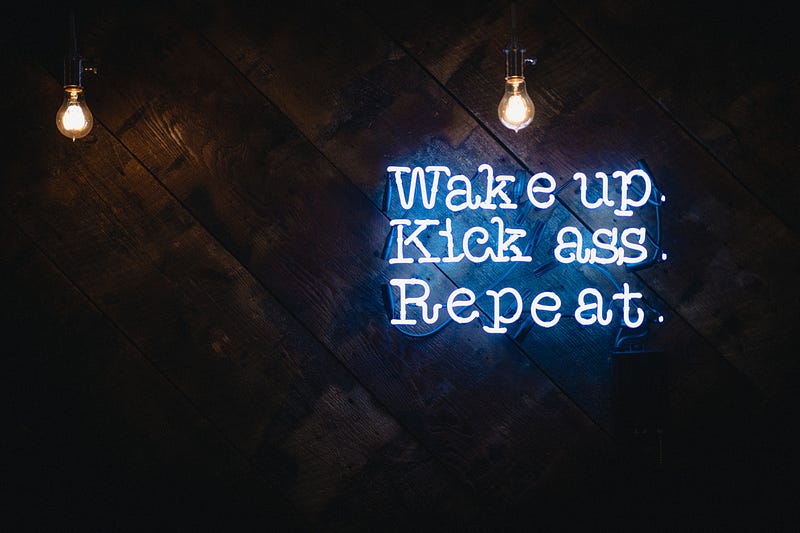
Everyone who is not a hustler at heart, seems to have an opinion about what the word “hustle” really means.
Reverting to the era of fictional Bedrock escapades, Fred Flintstone was the greatest on-screen hustler that ever lived. Depicted through the many trivial inconsistencies of an imagined stone-age, the problems he faced in life included the wrath of his wife, his kids, his boss, and sometimes, prehistoric reptiles. The creators of the show still allowed him to retain some semblance of “control” about what goes on in his life, for instance — keeping his family together, keeping his marriage intact, keeping his livelihood secure, and keeping his boss “happy”. In a consortium of complex emotional relationships, Fred displayed stoic balance of the highest order through no layer of organizational skills.
No fuel? No problem. Let’s walk the car home.
Kids unhappy about the additional exercise? No problem. Let’s Gamify survival. Let’s make it fun for them.
That was the philosophy which Fred championed, and kids like me around the world celebrated that divine balance. In many ways, Fred was closer in spirit to the father who raised me in real life. Fred was a hunter-gatherer-provider, and to me, that’s what made him a true hustler.
The Jetsons was a whole different story. Although the premise was described as a “Space Age” version of the Flintstones, this other show leapt through boundaries when it came to routine and automation. If you remember the title sequence of The Jetsons as well as I do, you will recall the perfectly coordinated gravity elevator shafts, the smooth-sailing aircrafts and the on-your-face affluence that translated into George Jetson being the ideal “provider”. Hunter? Gatherer? Not so much. (Opinion Alert)
In fact, our current predicament and the seeming inability to deal with the situation at hand through clear mental faculties, is linked deeply to our dependence on accessibility and convenience in the form of secure jobs, end-to-end managed ecosystems, salary credits, safe streets and healthy families. Our version of life in the year 2020 is (with good reason) a lot more similar to the functional dystopia that became known to cartoon enthusiasts as Orbit City. We are moving in circles, which definitely gives us the illusion of security and routine. But the moment something comes up and threatens to disrupt our “flow”, we lose our minds and start spiraling uncontrollably towards our anxieties about the future.
A general commitment that I’m trying to incorporate while exercising my passion (writing) is to try and help more people than I end up pissing off. That, and that alone is why I will spend lesser time elaborating the pitfalls of steady routine and technology-driven lives. I’m sure my intended audience has received the message by now.
The question is, what would Fred do?
Dino, Animals, and the Co-habitation Principle
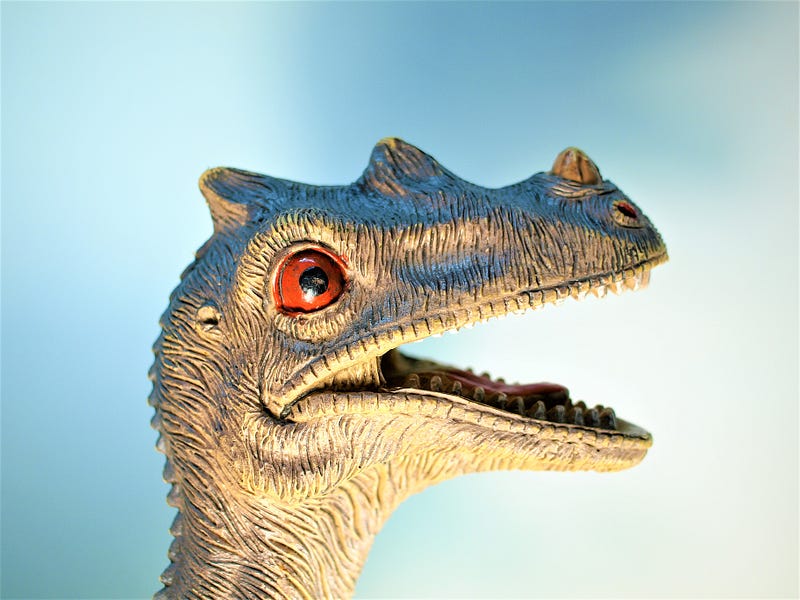
Hardcore Flintstone fans like me will remember Dino, the pet dinosaur who lived in Fred’s house with Wilma and the kids. And in every episode, unfailingly, Fred spends time playing with Dino, feeding Dino, throwing bones and crackers at him whenever he had a spare moment.
Personally, I grew up in a household without pets. So if I have to retrieve my understanding of the human-animal dynamic that I now hold so close to me, I have to rely on the earliest visions of Fred, locked out of his house by an upset wife, finally getting home and getting licked all over by Dino. Nearly thirty years later, when I was living by myself in a distant town, I found my first rescue dog — who has, in every sense of the word, changed my life and changed how I look at everything. When the pandemic first broke out, I was distracted from the ongoing crisis around me, by an illness that my dog was receiving treated for — he had tested positive for two lesser-known parasite strains called Babesia Vogeli and Ehrlichia Canis, which affected his metabolism to a point where he wouldn’t eat days at a stretch, and it kept me awake at nights, crying because I couldn’t bear the thought of anything happening to him.
Then, almost miraculously, once I had stopped thinking about everything else and started focusing solely on becoming a caregiver to my dog, my cashflow and overall economic situation automatically started changing. I witnessed the first sign of what I can only term god-sent intervention into my dwindling finances, and it gave me the capacity to pay for premium healthcare and timely medical intervention. Between December 2019 to May 2020, my dog remained the only thing that I was bothered about, and whenever I had access to extra money, I got into the habit of giving it away. I started feeding about ten to twelve other dogs who live on my street, initially as a way of disposing the food that my dog wouldn’t eat, and that later evolved into a daily practice. For the last three months, I haven’t skipped that one night time meal for all the neighborhood dogs, for even one day. Doing this has allowed me to maintain my freelance work ethic, my personal health (I have been exercising without fail every day since May 2016), and my emotional balance as far as dealing with adversities is concerned.
And this article came out owing to a simple realization. I’ve been doing what Fred would’ve done, and that alone has allowed me to live and thrive. Fred, the true hustler, did not create or subscribe to a personal dependency on technology and routines. Whenever faced with a really tough challenge, he would stop looking at the magnitude of the challenge and do something really nice for an animal that had no transactional benefit for him.
But he lived.
And he survived the stone-age.
And he did what is expected of all lead-character archetypes — he got the girl and he stayed happy.
To me, the idea of co-existing peacefully with animals today is a far more important aspect of human life than our other regular pursuits like romance and paychecks and social validation. Admittedly, these realizations have come in the wake of a global disaster that I believe is a direct result of mankind’s atrocities towards animals, or the general “indifference” that we show about the impact of our ambitions on the non-human world. We have built roads and highways which cause millions of accidental animal deaths every week, and it’s not something that even can be avoided as long as these roads exist.
Birds don’t want to walk on two legs amongst us. We have built airplanes and infrastructure that kills birds on a daily basis.
Cheetahs don’t want to run and compete with humans, or for that matter with anything that is not directly their food. But we have an obsession to ape every living being, go “everywhere” and mess things up to a point where all we can do is worry about how to keep this “routine” going. Maybe it’s time we took a different approach. Maybe it’s time we took a page out of Fred Flintstone’s book and started feeding our Dinos instead.
That’s the weird and awkward advice I’m going to leave you with. Maybe, this pandemic is a wake-up call. Maybe it’s time to let go of our old ways. Maybe it’s time to leave the roads and the airplanes and the fuel behind. Maybe it’s time to enter a new economy or way of life that does not revolve around human-to-human competition. Maybe it’s time to look at the other problems around us, the ones that we are busy ignoring, so that the planet continues to live and breathe happy, much like The Flintstones.
Till then, Yabba Dabba Doo!
If you gaze long enough into an abyss, the abyss will gaze back into you.