
Is Exxon-Mobil (XOM) worth $109.02?
Investors will question the $109.02 Mr. Market paid for Exxon-Mobil (XOM) on 11 March 2024 because the world’s second largest company makes less money.
For example, Exxon-Mobil’s quarterly revenues fell by -12.22% from $94.82 billion in December 2022 to $83.24 billion in December 2023. Similarly, Exxon-Mobil’s quarterly operating income fell by 40.16% from $12.75 billion in December 2022 to $7.63 billion in December 2023.
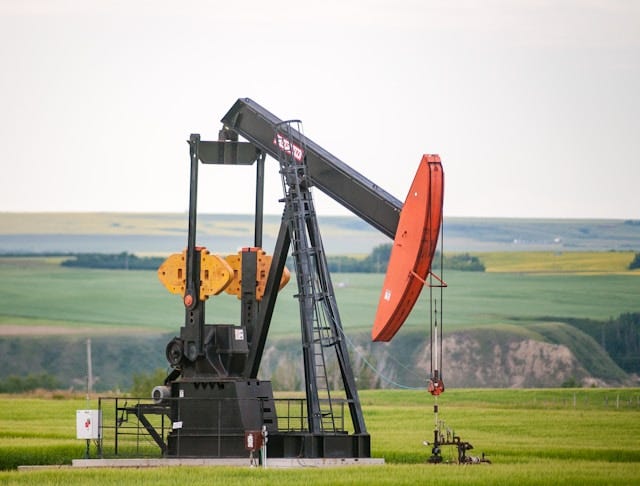
Exxon-Mobil is the world’s second largest oil company by market capitalization. The largest oil company is Saudi Aramco, which had a $2.058 trillion market cap on 11 March 2024. In contrast, Exxon-Mobil had a $432.57 billion market cap on 11 March 2024.
Is Big Oil Dying?
Tellingly, Exxon-Mobil was the 16th largest US company by Market Cap on 11 March 2024, Companies Market Cap estimates. Exxon-Mobil’s market cap was smaller than Visa (V), $575.30 billion, Mastercard (MA), $436.70 billion, and Tesla Motors (TSLA), $568.89 billion, on 11 March 2024.

Thus, Mr. Market could think technology and finance are the future. In particular, Mr. Market seems to place more faith in Elon Musk and electric vehicles than Exxon-Mobil’s oil.
Others will wonder if Exxon-Mobil’s declining revenues support the thesis: Big Oil is dying. It is hard to support this thesis.
Exxon-Mobil (XOM) makes less money
Exxon-Mobil (XOM) has less cash. Its quarterly cash from operations fell by -22.35% in 2023 to $13.68 billion in December 2023.
However, the quarterly free cash flow grew by 779.91% in 2023 to $6.09 billion in December 2023. Similarly, the cash and short-term investments grew by 6.41% in 2023 to $31.54 billion in December 2023. Thus Exxon-Mobil has more cash in the bank while its operations generating less cash.

Notably, Exxon-Mobil has a little more value. Its total assets grew by 1.96% from $369.078 billion in December 2022 to $376.32 billion in December 2023. However, the total liabilities fell by -1.69% from $166.59 billion in December 2022 to $163.78 billion in December 2023.
Is Exxon-Mobil (XOM) a Value Investment?
Hence, Exxon-Mobil finished 2023 with less debt, more cash, and more value. Thus, some people will consider XOM a value investment because it has some value characteristics.

For example, XOM’s share price is stable. Mr. Market paid $106.54 for Exxon-Mobil on 13 March 2023 and $109.05 on 11 March 2024. XOM hit a high of $120.20 on 27 February 2023.
Exxon-Mobil pays an excellent dividend. They have scheduled eight 95₵ quarterly dividends between 7 June 2024 and 10 March 2026. XOM shares offered a $3.80 forward dividend and a 3.5% forward dividend yield on 11 March 2024.
Will Electric Vehicles kill Big Oil?
Skeptics will wonder about Exxon-Mobil’s future because of the electric vehicle market’s growth.
The number of battery and plug-in hybrid electric vehicles worldwide grew from 3.18 million in 2020 to 6.61 million in 2021, to 10.25 million in 2022 to 10.64 million in 2023, Statista estimates. Those numbers will grow to 11.77 million in 2024, 12.97 million in 2025, 14.06 million in 2026, 15.35 million in 2027, and 17.07 million in 2028, Statista forecasts.
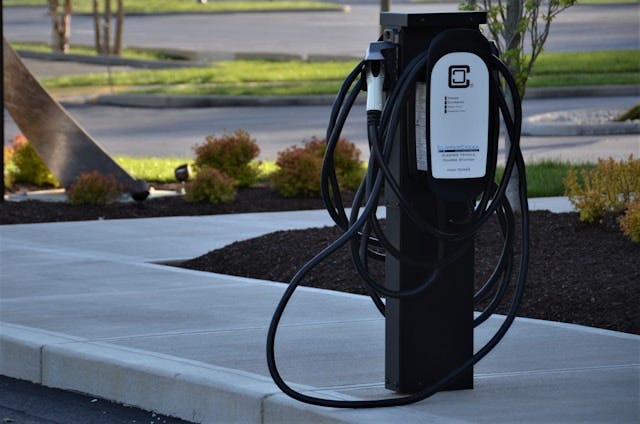
However, electrics still only make up a small percentage of vehicles. There are around 1.475 billion vehicles worldwide in 2024, Hedges & Company estimates. Hence, a little over 10% of the world’s vehicles are battery or plug-in hybrid electric if Statista’s numbers are correct.
The two largest electric vehicle makers are growing dramatically. China’s BYD Motors BYD (SHE: 002594) sold 526,409 cars in the fourth quarter of 2023. Comparatively, Elon Musk’s Tesla Motors (TSLA) sold 484,500 vehicles in the fourth quarter of 2023.
Are Electric Vehicles the Future?
BYD built 1.62 million battery only vehicles and exported 243,000 in 2023, the China Passenger Car Association claims. BYD is now shipping so many cars it has launched its own auto-hauling ship, the BYD Explorer No1, which can carry 5,000 vehicles to market.
Meanwhile Tesla built 1.846 million vehicles and delivered 1.809 million vehicles in 2023, a press release claims. Tesla claims its vehicle deliveries grew by 38% between 2022 and 2023. In contrast, Tesla’s production grew by 35% between 2022 and 2023.
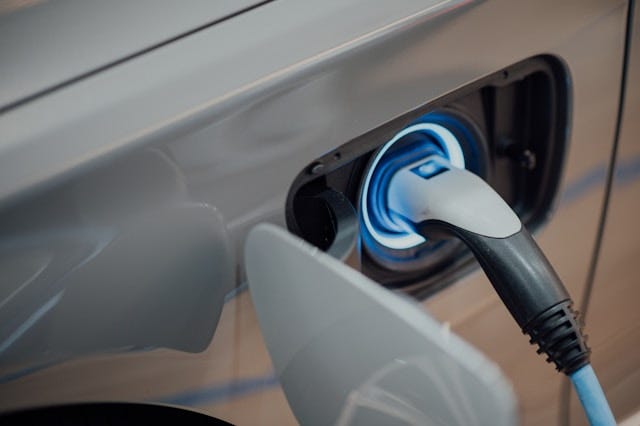
However, there are serious structural roadblocks to electric adoption. For example, there is a massive shortage of electric vehicle (EV) charging stations in the United States. News reports claim there are more vehicles than the existing chargers can handle.
Other reports note serious deficiencies in existing charging infrastructure. For example, chargers that cannot charge many EVs. Many drivers complain a lot of chargers do not work.
I think a greater challenge could be the electricity supply. However, we have technology to generate enough juice for all the electric cars. The technology is nuclear power and solar electricity. The actual problem is lack of political will to build, or approve, the infrastructure the EVs need.
Thus, Exxon-Mobil (XOM) can make money by selling oil and gasoline for many years to come. Investors who have no moral qualms about global warming could find XOM an interesting value investment. The rest of us will need to look elsewhere for dividends and value.
*https://companiesmarketcap.com/oil-gas/largest-oil-and-gas-companies-by-market-cap/
*https://www.statista.com/outlook/mmo/electric-vehicles/worldwide#unit-sales
*https://hedgescompany.com/blog/2021/06/how-many-cars-are-there-in-the-world/
Visit us at DataDrivenInvestor.com
Subscribe to DDIntel here.
Have a unique story to share? Submit to DDIntel here.
Join our creator ecosystem here.
DDIntel captures the more notable pieces from our main site and our popular DDI Medium publication. Check us out for more insightful work from our community.
DDI Official Telegram Channel: https://t.me/+tafUp6ecEys4YjQ1