
Physics
Is everything either black or white? (# 46)


One conclusion of this series of articles is that our reality is a type of game. We are watching a movie and we can influence what happens next through the intensity of our feelings associated with events happening in the movie. Two possible consequences of this perspective are: (i) accept that we are passively watching a movie; and (ii) deny we are watching a movie and live our lives as if we influence what happens next.
Our brains seem to be designed to want to interpret events in our world as either this or that. Features of our world, however, are part of a continuum rather than black or white. The choice about whether our reality is or is not a movie could also be a false dichotomy. We may be able to live our lives as if we are somewhere on the spectrum between believing and not believing. Maybe being half pregnant is possible; there is no single factor determining the creation of life, creation is the result of an Efimov effect.
Spiritual awakening
Ancient scriptures have suggested that we are witnesses to what happens in our lives. Many religions describe practices that can help us experience being witnesses. Realization of the state of being a witness is sometimes called enlightenment.
Achieving enlightenment by following specific spiritual practices can take many years. Enlightenment may not even be achieved in this lifetime. Nevertheless, doing practices to achieve enlightenment could be considered to be living somewhere on the spectrum between believing and not believing.
Rather than choosing what type of person you want to be, participation in spiritual practices could be to open up new possibilities. Many Indian spiritual traditions refer to the development of siddhis or psychic powers as a result of following spiritual instructions. Siddhis are examples of applications of Constructor Theory; examples of how physical laws can evolve. For example, according to practitioners of Transcendental Meditation, it is possible to self-levitate by controlling one’s thoughts.
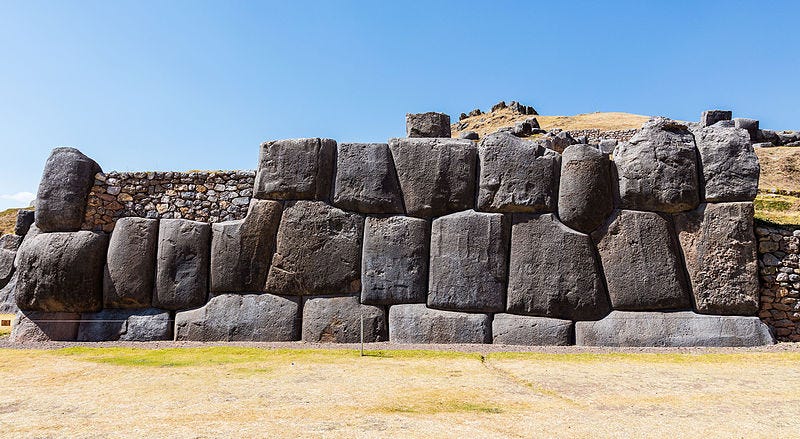

Some people who claim to have psychic powers also claim to be able to make the flame of a candle flicker or a chandelier rotate just by using their thoughts. Ancient civilizations built enormous structures like the Great Pyramid at Giza in Egypt where very heavy blocks of granite are so closely fitting that it is impossible to fit razor blades into the gap between the blocks. Did these civilizations have access to psychic powers such as levitation and molding the shapes of blocks of granite?
For our world, the process of spiritual awakening may be what is important i.e. live for the journey, not for the endpoint. If you have not experienced enlightenment, it is impossible to know what enlightenment is like; you can only imagine what enlightenment might be like.
Generative adversarial networks
Many events in our reality can be seen as examples of how difficult it can be to distinguish between true and false facts. The movie of our lives is not designed to provide definitive conclusions about whether or not we are watching a movie. Any leaning toward one conclusion could be offset by future events that favor the opposite conclusion.
We are being challenged to form conclusions. We could go along with the majority opinion or we could use our free will to make our own decisions.
Most of these articles finish with a question. There is no right or wrong answer to these questions. The objective is to encourage readers to get in touch with their intuition. Contemplating your answer could make you more aware of your adjacent possible.
The idea that we may be able to train ourselves to become capable of developing psychic powers opens up the possibility that the use of these powers could help us address impending crises like global heating. Could we discover how to move carbon dioxide molecules further into outer space to reduce the extent to which heat is reflected back to Earth?
Non-player characters
According to Wikipedia:
A philosophical zombie … is a thought experiment in philosophy of mind that imagines a hypothetical being that is physically identical to and indistinguishable from a normal person but does not have conscious experience, qualia, or sentience.
A non-player character (NPC) is any character in a game which is not controlled by a player. … In video games, this usually means a character controlled by the computer (instead of the player) that has a predetermined set of behaviors that potentially will impact gameplay, but will not necessarily be true artificial intelligence.
A combination of non-player characters and philosophical zombies could describe many features of our world. When we blindly follow the opinions of others, no matter how well qualified they seem to be, we may be failing to understand the purpose of our lives. We may be failing to identify solutions to existential crises.
One of the origins of the legend of Atlantis is recorded in Plato’s book ‘Timaeus’. According to Plato, there have been many different calamities that have destroyed mankind. Commentators on Timaeus have suggested Plato was using Atlantis as an allegory about the hubris of nations. In this context, the story of Atlantis may be fiction but it could have an element of truth.
In the context of this series of articles, existential crises may be one of the triggers for developing a better understanding of the nature of our world. Even though the Rio Conference on Climate Change was held in the early 1990s, action to address the increase in greenhouse gas emissions has been inadequate. Despite commitments to reduce emissions to zero, many politicians appear to lack the willingness to take the necessary actions. Are politicians too proud to admit personal failings in this regard?
Many cosmologists commend themselves on how well they have been able to understand the evolution of our universe even though around 95% of the universe consists of dark matter and dark energy which cosmologists cannot explain. Are cosmologists suffering from hubris?
There is evidence to suggest politicians and scientists propound particular points of view because many of their peers support the same ideas. To move forward, however, a greater willingness to commit to unconventional ideas may be required.
The question for this article is:
Are existing approaches adequate to deal with the existential crisis of climate change?
To view the headings of all the articles to be published in this series please click on https://readmedium.com/orbiting-stars-and-origin-of-our-universe-338906930f51
To obtain a copy of the book ‘Orbiting Stars’ which contains the first drafts of all these articles, please visit https://www.amazon.com