
Is ecotourism the solution to conservation after COVID-19?
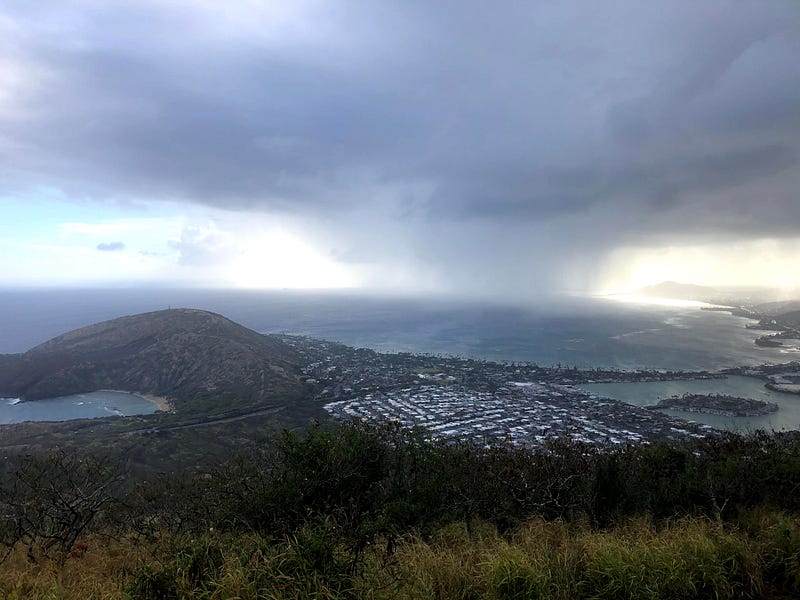
As I write this in Honolulu, the governor of Hawai‘i has put the state on an indefinite lockdown and everyone flying into the islands must undergo a 14-day quarantine.
Tourist arrivals have dwindled from about 40,000 per day to around 100. Major hotels are closing across the state and laying off workers by the tens of thousands. Restaurants and bars almost entirely dependent on the tourism industry are shuttered.
On the healthcare side, hospitals are bracing for a potential influx of coronavirus cases, and we are about to find out if the lockdown will be effective in containing the virus in the islands. Until then, the shut-down of the tourism industry continues.
The front-page story of the Honolulu Star-Advertiser today reads: “Hawaii really wants tourists to know that during the COVID-19 pandemic aloha means goodbye”.
The dramatic halt of tourism has been devastating to many workers in Hawai‘i. USA Today writes that Hawai‘i has the highest unemployment in the country now, and the state will be questioning its dependence on what tourism to Hawai‘i should look like once the lockdown ends. Now, with the entire state on lockdown, popular nature-based tourism destinations, such as Hanauma Bay, have been closed to the public since March 16.
But for some scientists, the sudden halt to tourism in the state offers an opportunity to understand the environmental impacts of the industry on popular ‘ecotourist’ places. Hanauma Bay, on the southeast corner of O‘ahu, is one of these places. The small bay is home to one of Hawai‘i’s most spectacular reef ecosystems. But the hundreds of thousands of visitors coming to snorkel here every year has raised concerns for conservationists that the reef, and its nonhuman inhabitants, cannot sustain this level of non-stop patronage.
Before the COVID-19 lockdown, Hanauma Bay closed every Tuesday, supposedly to give the fish and reef a breather. But reef ecologists say this one-day-per-week break is woefully insignificant to enable any kind of self-repair sustained from tourists trampling the reef. “It’s great for management,” says a reef ecologist studying Hanauma Bay now. “When they have no people there, they can clean up the area and they can do some of the maintenance that they can’t do when there’s a lot of people down on the beaches. But for the ecosystem, it makes absolutely no difference.”
On social media, some describe the COVID-19 as giving nature around the world space to breathe. For example, there are images of threatened wildlife reemerging to roam empty cities, sleep on desolate roads, swim through unpopulated cities, and communicate without disruption from the incessant noise of non-stop industry.
But the pandemic is also disrupting local social systems and economies with damaging consequences for wildlife. There are reports of rising poaching in Southeast Asia and Africa.
“Suddenly rural people have little to turn to but natural resources and we’re already seeing a spike in poaching,” says Colin Poole, WCS regional director in Phnom Penh, quoted in a recent BBC report.
For some conservationists, this signals the need to reinforce protected areas even more, perhaps even militarizing park borders to keep out local people poaching wildlife for food or money to survive. In this case, conservationists are calling on states to step up to protect nature, pointing to the failure of private funding or market-based solutions like tourism to keep working, at least at the level needed, when times get tough. “Conservation cannot be built and maintained only on tourism income or donor funding,” says Hugo van der Westhuizen, of the Frankfurt Zoological Society in the same BBC report. “COVID-19 is teaching us that we take nature for granted, together with clean water and air, and it seems we need to lose something before we realise its value. Nature cannot be recreated once it is gone.”
While seemingly different situations, COVID-19 has laid bare some of the underlying problems with current approaches to conservation. The fact that COVID-19 is giving nature space to breath in some places, and hastening its destruction in others, should raise questions about the underlying social and economic systems that have led to these situations arising in the first place. Why are conservationists excited about witnessing reef life thrive once again at Hanauma Bay, while in other places, conservationists fear this same disruption to social systems and economies will hasten the destruction of wildlife and nature?
I’d suggest that these examples mean that, once COVID-19 passes, other alternatives to conservation that rely less on prioritizing ecotourism as a solution to conservation, are needed. This isn’t to say that ecotourism won’t be a piece of the conservation puzzle. But many governments around the world rely much too heavily on the claims of the ecotourism industry as the solution to saving nature.
So what to do?
When Hawai‘i supposedly returns to ‘normal,’ what will happen to Hanauma Bay and other places where concerns about sustainability are in question due to ‘overtourism’?
And what will a ‘return to normal’ look like for those places around the world where ‘undertourism’ results in poaching wildlife and extracting natural resources as the means of survival for local people who depended on tourism, — or other private funding now vanished — as their only means of sustainable livelihood?
As tourism collapses around the world during the COVID-19 pandemic, the stories of wildlife thriving again, but also dying again, might be an opportunity for us to reimagine the role of tourism in conservation: a form of ecotourism that doesn’t require its absence for nature to thrive, but also doesn’t require its presence for nature to survive.