
Is “Don’t Hate Me Because I Am Successful” The New Feminist Rallying Cry?
Here’s the real reason why some men don’t want to date high-powered, successful women.
If you are aged to perfection, you might remember Pantene shampoo’s 1980s advertising campaign. A stunning Kelly LeBrock flips her hair over her shoulder with a nonchalant smile and coos the line that would define the feminine mystique of its day.
“Don’t hate me because I am beautiful.”
Women adored LeBrock’s audacity. She was confident enough in her beauty not to let others’ envy diminish it.
Today, women face other envy monsters besides the ones fed by beauty. The modern rallying cry from most young women is now, “Don’t hate me because I am successful.”
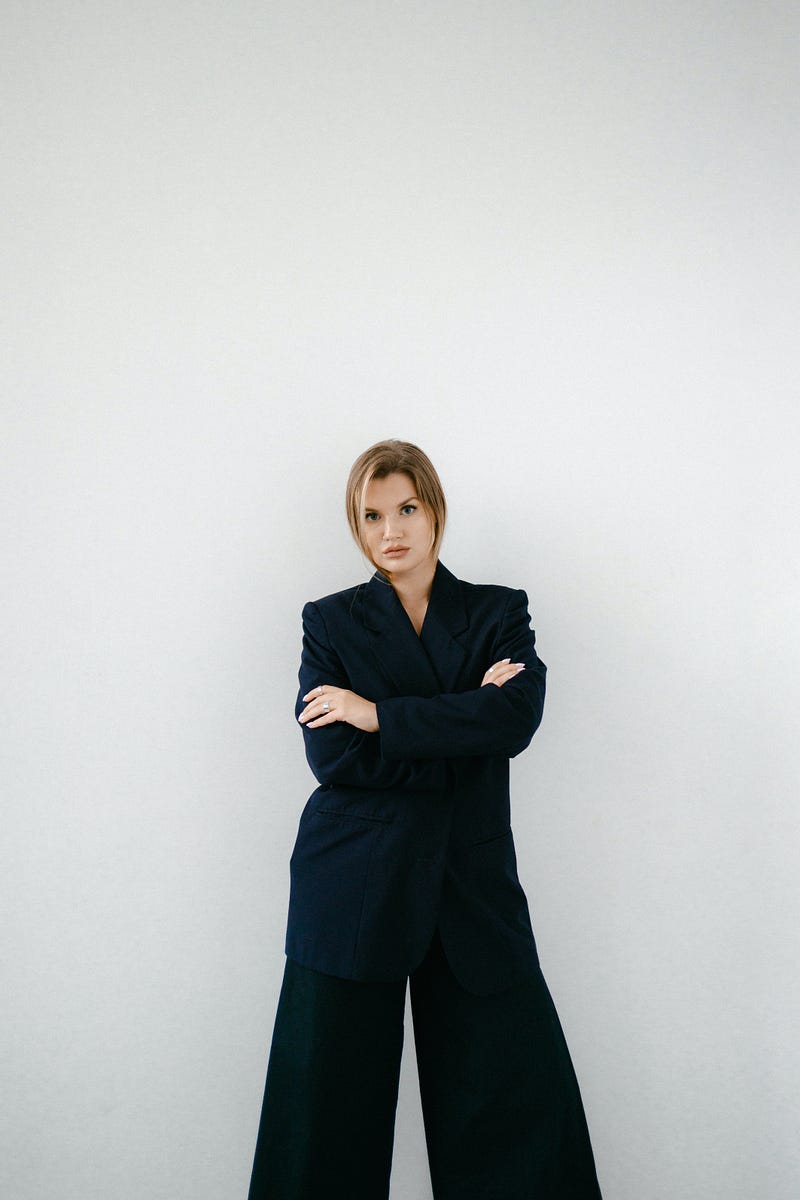
A recent TikTok video featuring a successful, beautiful woman went viral with this same theme. The twenty-something blonde bombshell sermonizes how her accomplishments garner haters from “regular” men.
She then defines “regular” by using herself as an example of someone who is “not regular” but rather extraordinary.
For those who don’t have a Communist regime tracking their GPS coordinates, here are the highlights for non-TikTok users.
First, Ms. Extraordinary clarifies that she is not “tooting her own horn.” (A statement only the loudest of blowhards make.) She then pontificates that it is not only her beauty that makes her extraordinary.
Instead, she is extraordinary because she is also intelligent and ambitious. She even bought her NYC apartment in her 20s. She is Russian, speaks four languages, has “lived all over the world,” and has visited “many countries.” She believes these qualities make her “cultured.”
Oh, the resume gets longer. She is a merit-based NYU scholarship winner, and she feels that a merit-based scholarship makes her worthy of more bootstrap-pulling respect than a financial needs scholarship.
She “pays her own bills” (who doesn’t?), and her career involves “high-profile” clients in a “referral business.” (I am not touching that one.)
Now, forgive me for playing armchair psychologist (minus the Freudian coke habit), but I see some holes in Ms. Extraordinary’s meritocracy narrative.
She mentions she could have become a “Russian mailorder bride” but escaped her fate. Ah, ok. The only way she could have come to this country without marriage is if her family had a modicum of economic means. (Thus, why she has traveled the world.)
Sorry, but you can’t brag about your meritocratic successes if you are born into economic privilege. That’s not how meritocracy works.
It’s yet another nauseating TikTok soliloquy, except we all know where this solipsistic plot curve is headed. Like many TikTok rants, her feminist diatribe is light on self-reflection and heavy on self-promotion.
Oddly, the comments from women are cultish. They call her a “queen,” an “icon,” and label her “inspiring.”
The comments from men…well, let’s just say I could smell the tar burning through my screen. (Note: she deleted all the negative comments as they appeared. An exhaustive effort for someone who claims to have a full-time job.)
Still, I am not dismissing that women must often downplay their achievements. The research is clear on this one. Men (on average) say they are attracted to successful women when it is presented as an abstract ideal (i.e., self-reported surveys). But once they are psychologically close to a successful woman, many are not as impressed.
But something more sinister might be happening here.
Many (not all) of these go-getter women claw their way to the top seeking status, fame, and wealth. Then once they reach the pinnacle of success, they erroneously believe their economic achievements increase their mate value. When it doesn’t, they become condescending and bitter.
And then, they form this fatuous theory that men envy them because they are rich, educated, successful, and just too darn fabulous to fathom.
In other words, men hate her because she is successful, and they are not.
Pleeeeeeeease. Most men could care less about the empowered girl boss’ academic degrees, four languages, and the house she bought on her hard-earned dime.
Men don’t care about a woman’s financial portfolio because most men are not that shallow. Sure, they can get shallow about beauty and youth. But education and financial success are what women want in men, not vice versa. This isn’t rocket science. It’s basic sexual selection.
Nor are (most) men trying to take Ms. Extraordinary down a peg because they lack confidence. Men don’t fear her successes will overshadow theirs. They fear Ms. Extraodinary’s successes will cause her to never even see his successes. And why wouldn’t they have that fear? She is too ego-centric and self-absorbed with her aspirations to see his dreams and fears.
I won’t sugarcoat this one. Any woman who defines herself through monetary success will measure her partner by the same barometer. And that’s a Faustian bargain no man wants to make.
Sadly, Ms. Extraoridnary never takes her foot off the gas. And by presenting herself as a woman defined by her resume, she comes off as a one-dimensional, self-entitled caricature of a “successful woman.”
To be clear, I am not saying that success doesn’t intimidate some men or that a woman should ever downplay her confidence. But confidence is a hook that quickly loses its worm when the waters get salty.
Here’s what does turn off men. Women who need a constant spotlight are exhausting at best and toxic at worst. And sadly, many women who place themselves on that lofty social media pedestal only have room for one.
Here’s the hard cold truth that young women refuse to accept. Nurturing is a huge turn-on for men. From the moment they are cradled in their mother’s arms, they are taught to seek a woman’s unconditional love, empathy, and protection.
The key word here is unconditional. Most men don’t want to be loved for how much they can provide. They want to be loved for who they are.
Sorry but it takes more than a merit-based scholarship or owning property to make someone choose you.
Here’s a personal example. One of the reasons why I fell in love with my ex-boyfriend is we had been dating for over three months before I learned he went to Cornell Medical School. I told him I was surprised he never mentioned it. (Most men would have worked that into the conversation within the first few dates.)
It then became a running joke between us whenever we had an intellectual debate that he was right and I was wrong because he “went to a little school called Cornell.”
Of course, he was only teasing, but there’s truth in every jest. His intellect was not defined by where he went to school. In other words, he was humble.
Trust me on this one. The most intelligent people don’t brag about how intelligent they are. Other people do the bragging for them.
Unfortunately, humility is a trait society has lost in our social media, hubris-crazed world. Instead, we have become a society that values the loudest voices in the room and envies them for all the wrong reasons.
Better yet, let’s examine the antithesis of Ms. Extraordinary — Audrey Hepburn.
Audrey did not use her fame, intelligence, wealth, or beauty to brag about her fabulousness. Audrey had class.
Nor did she equate being “cultured” with how many countries she visited. Audrey saw cultural intelligence as helping those in cultures less fortunate than hers.
As a UNICEF Goodwill Ambassador, Audrey repeatedly traveled to Ethiopia to care for dying children, bringing media attention to Ethiopia’s droughts and starvation. Audrey worked tirelessly to provide drinking water in Guatemala and Honduras and radio literacy programs in El Salvador. She helped establish schools in Bangladesh, health services for impoverished children in Thailand, nutrition programs in Viet Nam, and camps for displaced children in Sudan.
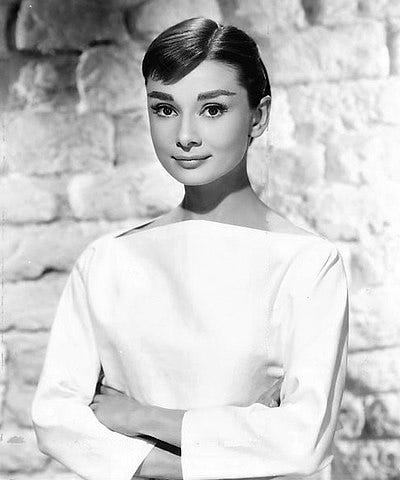
Audrey Hepburn was not regular. Audrey Hepburn was truly extraordinary. If young women think a narcissistic, twenty-something TikTok influencer is an “icon,” we have a messed up definition of that word.
Ms. Extraorinary is pretty darn regular—a regular insecure young woman who uses social media to heal her fractured ego instead of helping others.
So here’s how Ms. Extraoridnary could use her extraordinary intelligence and success. Instead of bragging about her accolades on TikTok, she should volunteer at a soup kitchen, mentor abused women, or use her language skills to travel to an impoverished country that isn’t a check box on her resume.
Make a TikTok video on how you are changing the world and not yourself.
At the end of the video, Ms. Extraordinary tells viewers not to hate her because she is successful.
I don’t hate her. I pity her. And pitying a stranger is an undeniably uncomfortable feeling.
I pity her because she chides viewers for wasting their time attacking her in a TikTok video when she wasted even more time making a self-promotional TikTok video and then removing all the criticism. Projection is a mother f*cker of a fun house mirror.
I pity her because she is a beautiful woman imprisoned by her beauty. No one ever sees her. They only see the sculpted body, big lips, and long eyelashes. Meanwhile, the body requires her to work out “twice a day,” the lips are cosmetically altered, and the eyelashes are glued to her lids. This is a woman trapped in a cage of her own making.
And lastly, I pity her because she has no clue what makes someone extraordinary.
Extraordinary people don’t brag about why they are extraordinary. They show you.


