
Is Disney Finally Progressing Past the Token Queer?
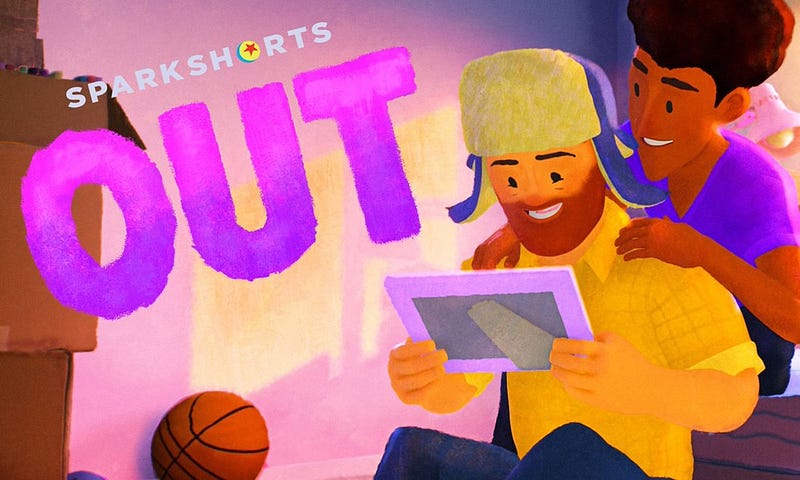
With the arrival of a prominent bisexual character on a Disney Channel animated series and a powerful Pixar short about a gay man coming out to his parents on Disney+, Disney finally shows signs that they might be willing to embrace sexual inclusivity after nearly a century of exclusion.
Despite enormous and undeniable progress with regard to LGBTQ visibility and equality over the past two decades, significant issues remain with respect to the quantity and quality of portrayals of sexual and gender minorities in film and on television. Although there are several high quality and high profile exceptions, media portrayals of LGBTQ people still tend to be few and far between and those that do exist are often mired in stereotypes and are little more than props.
Lack of LGBTQ representation harms members of our community in two key ways. First, it indirectly sends a slew of negative messages including: “you don’t exist in our eyes,” “your stories are not worth telling,” and “your lifestyle remains too controversial and taboo for us to depict in mainstream entertainment.” Second, it deprives LGBTQ people of having people to identify with. Most (but certainly not all) LGBTQ people are raised in predominantly heterosexual and cisgender environments where they receive little, if any, validation, empathy, or information about their burgeoning identity. As a result, people look to the world beyond their families and communities for acceptance and understanding. Needless to say it can be incredibly isolating and painful to go looking for these things and finding nothing (at least nothing positive).
I still remember how powerful it was for me as a teenager in the late 1990s to see the beginning of the LGBTQ revolution in media that featured Ellen DeGeneres coming out of the closet, Will & Grace becoming a pop culture phenomenon, blockbuster films like The Birdcage, and popular musicians like Melissa Etheridge producing unabashedly queer music. And as an adult, it has been thrilling to see people have similar experiences with shows like Schitt’s Creek, Pose, and Orange is the New Black and movies like Booksmart, Love, Simon, and Moonlight.
But there is still a long way to go. One media powerhouse that has been particularly slow to embrace LGBTQ inclusivity is Disney. And given the Disney conglomerate’s increasing dominance over the entertainment industry, this is a big barrier to LGBTQ inclusivity in media more broadly.
A Short Review of the Long and Very Traditional History of Disney
Disney has long been synonymous with traditional values, particularly its animated division. Up until fairly recently, the stories they told were almost exclusively ingrained in a Eurocentric and heteronormative framework that reinforced Western values and traditional gender norms, while almost exclusively featuring white and gender non-conforming characters.
Although many of the Walt Disney animated classics rank among my favorite films of all time, it is hard not to see problematic elements with the narratives many of them espouse. This is particularly true with regard to gender norms. For decades, female protagonists were wholesome, pure, and in desperate need of being saved (Snow White and the Seven Dwarfs, Sleeping Beauty, Robin Hood). Disney females became a bit more empowered during the second Golden Age, but even then they did things like sacrifice their families and voice to win the favor of a man (The Little Mermaid) and romance a man who literally enslaved her (Beauty and the Beast). More recently there has been progress with independent female characters who had aspirations beyond “true love” (The Princess and the Frog) and primary relationships other than romantic ones with a man (Frozen). But, even now, Disney is hardly a bastion of progress.
Various Disney subsidiaries have been somewhat more progressive with regard to progressive views of gender and sexuality. Pixar’s Brave featured a princess that defied her arranged marriage. Recent Star Wars and Marvel Cinematic Universe films have put women front and center as action heroes. But of all the Disney-owned entities, only ABC has actually made progress with portraying LGBTQ people. Shows like Modern Family and How to Get Away with Murder are obvious examples.
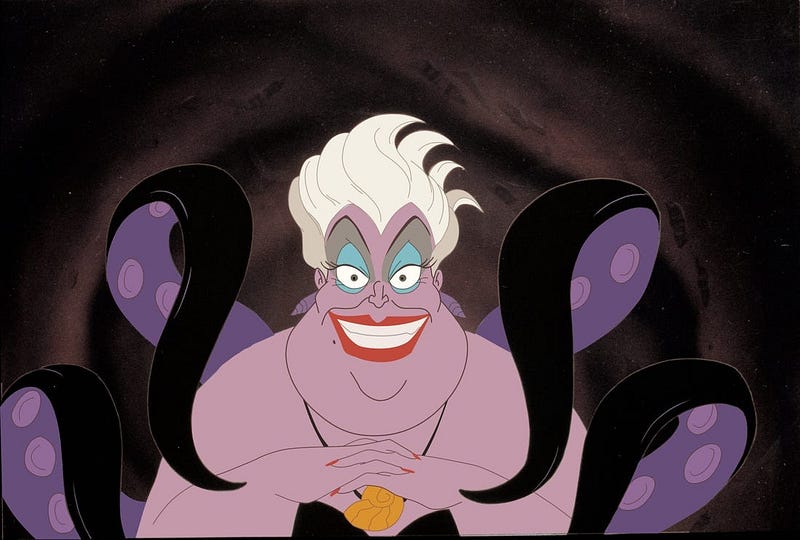
But where are LGBTQ people in big-budget, high-profile Disney movies? Well up until 2017, they were virtually nowhere. Sure, much has been written about the LGBTQ undertones of various Disney characters, including heroes like Finn and Poe (Star Wars) and Valkyrie (Thor), as well as classic villains like Cruella DeVil (101 Dalmations), Ursula (The Little Mermaid), and Scar (The Lion King). But as of 2016, no major Disney movie has ever featured an explicitly LGBTQ character in a significant role and fans began increasingly vocalizing their demands for this nearly century-long trend to end.
The Era of “Disney’s Token Queer”
Starting in 2017, Disney embarked upon a strange journey in which they started including LGBTQ characters in major motion pictures, but only at the absolute fringes. There were examples across all of their major franchises:
- The 2017 live action remake of Beauty and the Beast re-envisioned LeFou, the sycophantic sidekick of the narcissistic antagonist Gaston, as a gay man longing for Gaston’s affection. By the film’s end, LeFou has turned his back on Gaston and gleefully dances with another man during the climactic ballroom scene. It sounds bold (and in some ways is bold), but it is so brief and subtle that you could easily watch the film and miss it. And despite its brevity and subtlety, it caused a bit of a ruckus with several countries refusing to screen the film unless this aspect was edited out.
- Two particularly egregious examples came in 2019 from Disney’s two biggest franchises. After media discussion that Avengers: Endgame would feature the first LGBTQ character in the 22-film history of the Marvel Cinematic Universe, many were disappointed to find that the character under discussion was an unnamed male member of a support group grieving the loss of his male partner as a result of the events of the prior film (Avengers: Infinity War). In a film that ran over three hours and featured dozens of significant characters, that was the best they could do? Disney repeated the same insult with the release of Star Wars: The Rise of Skywalker later that year. There was speculation abound that two of the major male characters, Finn and Poe, would be romantically linked and this rumor was stoked by comments from the actors themselves who expressed a desire to see their characters get together. In the lead-up to the film’s release, there was also media hype that Star Wars would feature its first ever LGBTQ character (on the big screen at least; there have been LGBTQ Star Wars characters in the novels for years). Many were disappointed when the LGBTQ character in question turend out to be Commander Larma D’Acy, who had perhaps a half dozen lines in the sequel trilogy and is only seen briefly embracing her wife (Pilot Wrobie Tyce) in the film’s jubilant finale. Both films did the bare minimum of inclusion and offended many with their so-called “gay-baiting” (hyping LGBTQ inclusivity in the media and then failing to deliver in any substantive way).
- Disney finally brought an openly LGBTQ character to their animated universe with Pixar’s Onward, which premiered earlier this year. The fantasy film features Specter the Cyclops, a lesbian cop voiced by openly gay actress Lena Waithe. She is a minor character who makes a sole appearance in which she mentions having a girlfriend. Historically speaking, it was undoubtedly a notable appearance, but it was also remarkably slight — and naturally led to the film being banned in several countries with laws against homosexuality.
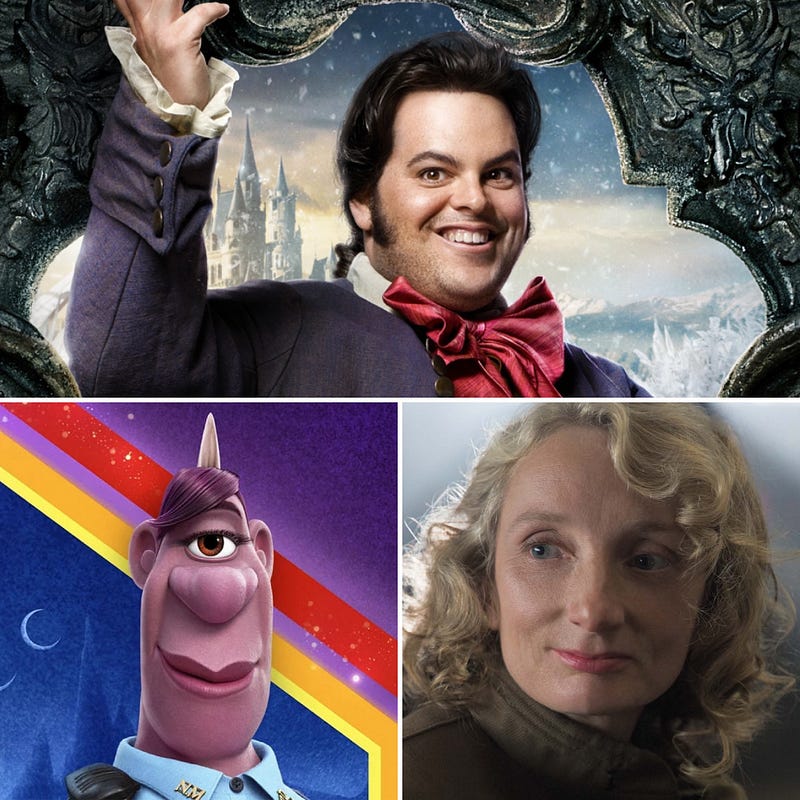
Around the time of Onward’s release, Disney sent fans more mixed messaging when they announced that series developed for its streaming service focused on a gay teen was being moved to Hulu due to its “adult themes.” Many suspected that this was a thinly-veiled way of Disney saying that they had caved to fears that they would get pushback for featuring LGBTQ content on their fledgling streaming service. And when the show in question premiered in June on Hulu, these concerns were validated. Love, Victor, the series spinoff of the first studio-backed motion picture to center on an LGBT teenage love story (2017’s Love, Simon), was heartfelt, clever, and wholesome and featured no “adult themes” (at least none more adult than in many other television shows and movies available on Disney+).
But in the summer of 2020, things started to change.
A New Era for Disney?
Two events from the summer of 2020 suggest that Disney might be ready to move past a century of exclusion and their recent trend of “gay-baiting” with what I like to call “the token queer.”
In May, a short film entitled Out premiered on Disney+. The 8-minute film is part of the SparkShorts series, a series of independent animated films financed and released by Pixar. Although it received a relatively quiet release, its very existence on the Disney+ streaming platform is bold. The extremely touching tale is about an adult man who is struggling to come out to his parents much to the chagrin of his male partner. On the day he plans to pack up and move to the city with his partner, his parents arrive and he gets magically swapped with his dog. (Trust me, it works in the context of the short.) The short has bold messages about internalized homophobia and fears of parental rejection and even features a romantic same sex kiss. It is a truly beautiful little film.
And then there is the announcement that truly motivated me to write this article. The Disney Channel animated fantasy series The Owl House, which premiered earlier this year, unequivocally featured not one but multiple queer characters with the recent batch of episodes that premiered this summer. The 14-year-old Dominican-American protagonist Luz has a slow dance with a female character named Amity and is clearly stated to be bisexual in a recent episode. Another major character, Willow, was shown in a prior episode to have two dads. Perhaps even more promising and hopeful than the fact that Disney allowed this to happen at all is the fact that it was received with relatively little controversy. In fact, most of the media coverage praised its boldness and inclusivity, noting what wonderful progress this was for queer children.
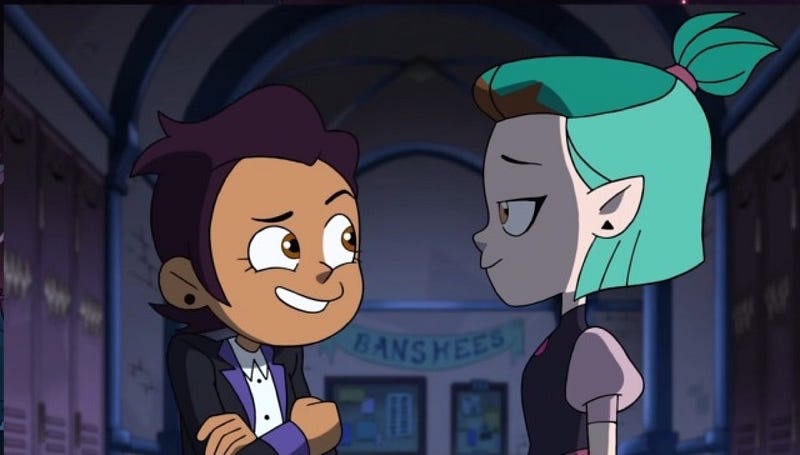
Although Out and The Owl House represent significant steps forward for Disney, it remains to be seen how much longer we will have to wait to see a prominent LGBTQ character in a Disney, Pixar, Star Wars, or Marvel film. My sincere hope is that the small steps they are taking on their cable network and streaming service are attempts to “test the waters” and build support for increasing LGBTQ representation in their high-profile, big-budget, wide-release projects. Not only does allowing LGBTQ to be included open up a new and exciting narrative opportunities, but it would also mean a tremendous amount to the millions of LGBTQ youth out there seeking acceptance, validation, and role models.
To read more articles like this, consider following the author of this article on Medium and Twitter


