Satire
Is Decluttering Really Good for You?
Last week we had a visitor from the UK and did the usual touristy things, which was very pleasant. Now he’s off to Melbourne for some city time and it seems very quiet.
After he’d gone, clearing up didn’t take long. He’s fairly tidy, and so are we. We tend to clear up as we go through the day, and never go to bed without washing the dishes and cleaning the kitchen bench tops.
We have to, otherwise in this place where the humidity is 95% and the temperature can top 35C, there’s every chance the cockroaches would pay a visit.
I must admit, though, whilst the open spaces on full view in the house are tidy, my cupboards are a different story. I think about decluttering often, but rarely do it.
Now I had some free time, I decided I might chance it. But first, I’ll just put my feet up, have a nice cup of tea and do some research. Gotta do it right, so iPhone at the ready, I sit down.
My first video article came from the BBC website and was entitled ‘Is decluttering really good for you?’
Ever hopeful that I might be given an excuse not to clean my cupboards, I clicked on the link.
The video clip had a maximalist and a minimalist talk about their lifestyle preferences. Sitting in his over-filled, jewellery box of an apartment, this maximalist’s general rule of life is ‘more is more’.
He was highly dismissive of minimalists:
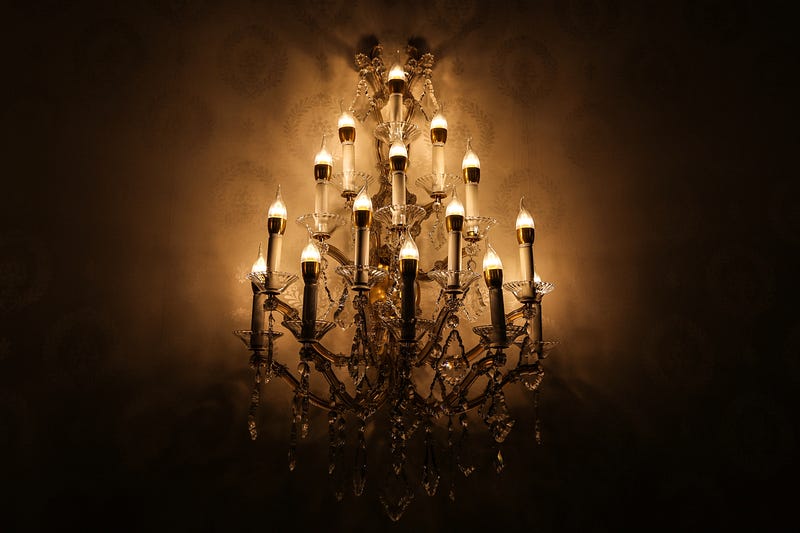
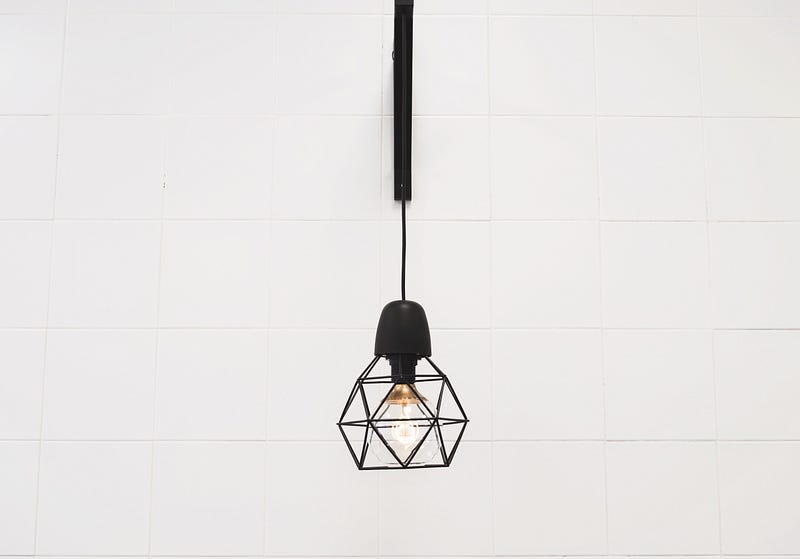
The minimalists are missing something in their lives with their beige or white rooms. How boring is that? I want to live in drama. Things like big chandeliers make you feel like Alice in Wonderland. I don’t want to walk into a sad room with one lightbulb.
How strange to want to feel like Alice in Wonderland. And he doesn’t mention who does all the dusting and cleaning of the million possessions he has in every room of his blood-red, baroque apartment. Not least the big chandeliers.
No. Sorry. That place would be my idea of hell. (And I wonder what his cupboards are like? I bet they’re a mess.)
The minimalist, sitting in the living room of her bare, echoing, white apartment, said she wanted only the essentials around her,
I like it this way because it makes me feel calm…only the essentials. I don’t think it’s boring.
She sleeps on a futon in the living room that doubles as a bedroom, and the camera shows her folding her futon up to make space in the living room during the day and evening.
She doesn’t have many cupboards. (And I bet the few she does have don’t have much in them.)
Turning to the camera, she says,
The less stuff you have, the more freedom you have. You can pick up and go.
She doesn’t say where she wants to go or if she wants to go anywhere at all.
I don’t want to sound smug, but I’m quite happy in my own home, thanks. I won’t be running anywhere anytime soon.
She opens a drawer in the one unit in the room and shows her few clothes, protesting against any criticism that she might have limited colour choices:
I not only wear white, I also wear black.
She hesitates at this point, realizing the stupidity of what she has just said, then laughs at herself.
I ponder on what it must be like to live in a place where you could just ‘pick up and go’ in five minutes. I conclude that it doesn’t sound like a home at all.
Living like a minimalist, I conclude, would give me post-traumatic stress! Where would you keep all your stuff? (Although I do concede it be would be really easy to clean.)
The minimalist sees her stance as a whole-life philosophy and uses Marie Kondo’s books on tidying up as her bible for life,
‘Keep only those things that speak to your heart. By doing this, you can reset your life and embark on a new lifestyle’
Marie Kondo – Tidying expert.
This minimalist not only practices the KonMari method, she’s actually a KonMari-certified tidying expert. The camera shows her with a client, who says admiringly:
I want her to help me because I felt lately that my life has become overwhelmed with stuff. And I was so impressed with the concept of keeping things that give you joy.
But in the end, I hear with glee, it turns out that neither the maximalist nor the minimalist are 100% happy with their lot.
The maximalist eventually confesses:
We worship at the altar of materialism, they worship at the altar of minimalism. I don’t think either are particularly healthy things. You have to find that balance.
The maximalist doesn’t agree with the minimalist philosophy, so there’s no chance that he’ll cross over to their camp anytime soon:
People are tired of beige rooms.
Lots of things bring me joy. I don’t want a Konmarie consultant to come into my maximalist rooms to take away my joy.
The last word goes to the minimalist, sitting on her sad, white couch, her voice echoing around the virtually empty living room lit by her one lightbulb. She says in a brave voice that I don’t quite believe:
I guess too bare doesn’t exist for me.
By the end of the video I knew I was neither maximalist nor minimalist, but I knew a bit of decluttering does one’s soul and mood a heap of good.
And it probably keeps the cockroach population at bay.